Six Nations Winners Race In Paris Sparks ITV Apology As England Stun France

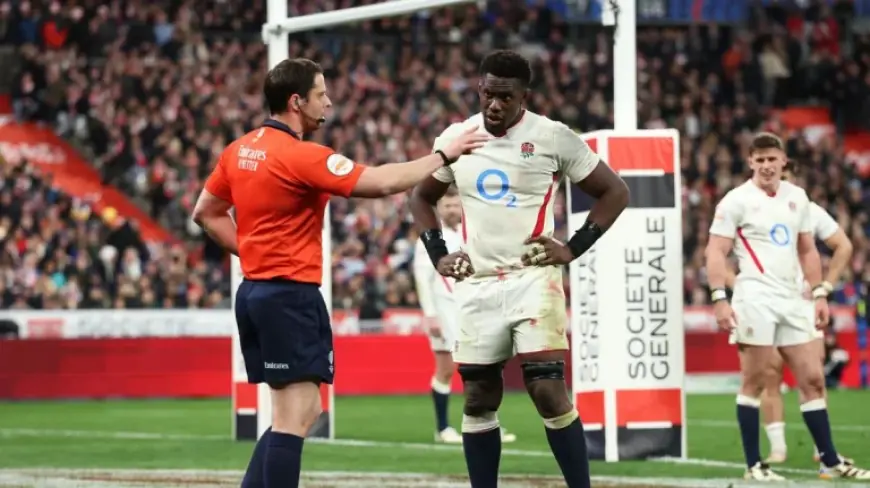
ITV issued two on-air apologies during England’s tense meeting with France in Paris, a match with direct implications for the six nations winners as Ireland monitored events after a convincing win over Scotland.
Hot Mics And A Heated Contest Lead To On-Air Apologies
The broadcast interventions came after strong language from the field was picked up by the referee’s microphone during a fiercely contested first half. Following a penalty won by Joe Heyes shortly before the half-hour mark, commentator Nick Mullins cautioned viewers for the language amid heightened tensions. A second apology followed after the restart as the intensity rose again.
On the pitch, England unsettled the hosts and opened a lead, briefly dampening the home support during a high-stakes clash. France needed a victory to keep control of the championship race ahead of Ireland, and the pressure told on both sides. England looked set for a healthier interval cushion before a penalty try cut the margin to three, with the game delicately poised at 27-24 in England’s favor by the break.
Discipline became a fault line for Steve Borthwick’s side. Prop Ellis Genge was shown a yellow card on the stroke of half-time, and the numerical gap told immediately after the restart as France surged into a 31-27 advantage. England hit back once restored to full strength, with Ollie Chessum lighting the spark for a response before Marcus Smith finished a crucial move and converted to reclaim the lead.
The swing in momentum mirrored the tone of a combustible contest in which field microphones captured the edge between the teams. The on-air apologies underscored the broadcast challenges of covering a match played at full throttle, where player reactions and technical proximity can occasionally collide.
Six Nations Winners Picture Hinges On Paris Result
The broader stakes were unmistakable. With France targeting a win to clinch the title ahead of Ireland, the closing stages in Paris carried weight well beyond the immediate contest. Ireland had already done their part earlier in the day with a commanding victory over Scotland and were left waiting on the outcome in the French capital. A drawn finish would have required France to secure four bonus try points, an equation that kept multiple scenarios in play as the scoreboard tightened.
Scotland’s recent defeat of France had blown the championship race open and added late-tournament jeopardy. That result, combined with England’s fast start in Paris, meant the identity of the six nations winners depended on a finely balanced final chapter. While the concluding scoreline in Paris was not immediately settled, the permutations ensured fans across the competing nations stayed locked to the broadcast despite the interruptions.
England’s Mixed Campaign Meets A Defining Night
Regardless of the final standings, the match captured the contradictions of England’s campaign. Borthwick’s team arrived in Paris after a stretch that yielded only two wins, inviting criticism about their trajectory. Yet they showed resolve and moments of sharp execution to rattle the defending champions, even as discipline issues left them vulnerable at key junctures.
The yellow card to Genge and the resulting momentum swing underlined how thin the margins were at this level. England’s ability to regain a foothold through Chessum’s score and Smith’s converted try demonstrated character that had too often been missing earlier in the tournament. For France, a seesaw night reflected both the pressure of defending a crown and the difficulty of subduing an opponent intent on spoiling the script.
With the title equation hinging on late developments, the broadcast narrative—punctuated by those twin apologies—became part of the evening’s story. Still, the decisive factor remained on the field: a volatile, high-tempo contest that kept the championship outcome, and the hopes of teams elsewhere, hanging in the balance.