Stuart Mccloskey Ireland Sparks Selection Debate After Osborne’s Try Streak

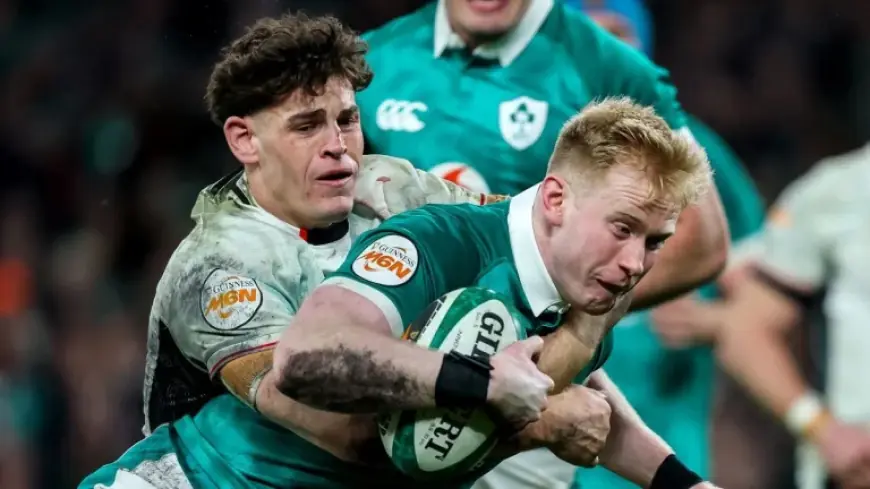
Stuart Mccloskey is central to a recent tactical conversation in Ireland after Jamie Osborne produced successive finishing displays that have raised fresh selection questions ahead of the next match. Coach Andy Farrell has highlighted Osborne’s knack for arriving on the shoulder of teammates — listing McCloskey among the players creating those opportunities.
Osborne’s Unexpected Rise and Scoring Run
Jamie Osborne, who does not hold a regular starting place at his club and has been deployed out of position at full-back for the national side, has scored in three consecutive matches. His tries against Italy, England and Wales have followed a promising showing in Paris and have been described as near-perfect performances in subsequent games.
Farrell has praised Osborne’s intelligence and adaptability, noting that the young back had been out of action for several months before re-entering immediate and continuous game time. The coach said Osborne is “a smart rugby player” whose positional awareness and quiet leadership have enabled him to play multiple roles effectively.
Stuart Mccloskey And Teammate Combinations
Farrell explicitly pointed to Osborne’s ability to get on the shoulder of a teammate and finish moves, listing McCloskey alongside Crowley and Stockdale as the sequence of players who linked with him. That pattern of interplay has been used to explain why Osborne has been able to convert opportunities into scores and why his recent form has prompted questions about how returning players should be reintegrated.
With established options unavailable for the current Six Nations phase, Osborne has been selected at No. 15 for the upcoming game against Scotland on Saturday. The coach and selectors now face the dilemma of whether to restore previously absent players when they return or to retain a player who has produced finishing reminiscent of a celebrated precedent in the sport.
Front-Row Versatility and Broader Selection Stakes
Selection conversations are not limited to the back three. Tom O’Toole has been redeployed from tight-head to loosehead for Ireland, a switch he does not perform for his provincial side while another player remains at that province. O’Toole is one of only two named players to have been selected in the same position across four matches, and his work has been described as spectacular.
Farrell highlighted the difficulty of switching front-row roles and praised O’Toole’s commitment to eliminate excuses and master the new role. That conversion has produced tangible scrummaging returns in training and resulted in penalties in match play. The emergence of a front-row player who can be deployed in two positions is being framed as an important asset for squad construction for future tournaments.
What Changes and What Remains Unclear
Confirmed now is Osborne’s run of matches, his No. 15 selection for the Scotland fixture, and public praise from the coach for both Osborne and O’Toole. It remains an open question whether established players returning to availability will displace in-form contributors, and the coaching staff’s decisions will determine how current momentum is balanced against long-term squad plans.
The immediate focus will be on how the combinations that produced Osborne’s tries — including his link with McCloskey — perform in the upcoming match, and whether positional versatility in the front row will continue to influence selection strategy.
Selection choices that follow this weekend’s match are likely to signal whether the coaching staff prioritise sustained form from breakout performers or the restoration of established personnel as the Six Nations progresses.