High Wind Warning Vs. High Wind Watch: What the Difference Means and When to Take Action

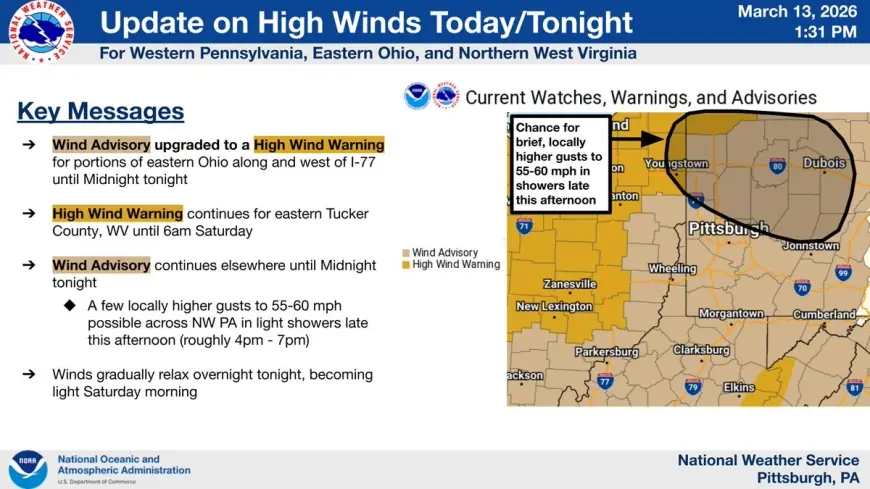
A high wind warning means dangerous winds are expected or already happening, while a high wind watch means conditions are lining up for that level of wind but there is still some uncertainty on timing, location or strength.
That distinction matters because the National Weather Service uses the two alerts at different stages of a wind event. In most cases, a high wind watch is posted first when forecasters see the potential for damaging winds within roughly the next 12 to 48 hours. A high wind warning follows when confidence is high that the event will meet warning-level criteria.
What a High Wind Warning Means
A high wind warning is issued when sustained winds of at least 40 mph are expected for an hour or more, or when gusts are forecast to reach 58 mph or higher.
At that point, the threat is no longer just possible. It is expected or already underway. These are the kinds of winds that can snap branches, knock down trees, damage roofs, scatter outdoor furniture and make travel dangerous, especially for trucks, vans, buses and vehicles towing trailers.
In mountain areas and other wind-prone corridors, the impacts can be even more serious, with stronger localized gusts and rapidly changing road conditions.
What a High Wind Watch Means
A high wind watch is an earlier-stage alert. It means weather conditions are favorable for a high wind event that could reach warning criteria, generally within the next 12 to 48 hours.
A watch does not guarantee the event will happen exactly as first outlined. Forecast models may still be sorting out the strongest wind corridor, how long the gusts will last, or whether the highest speeds will remain isolated. But the message is still important: residents and travelers should start preparing for the possibility of damaging winds.
That can mean securing loose outdoor items, charging devices, checking backup lighting and watching for forecast updates in case the watch is upgraded.
Why the Difference Matters
The practical difference comes down to confidence and urgency.
A watch means “be ready.” A warning means “act now.”
That is especially important for people with outdoor plans, high-profile vehicles, construction work, utility operations or travel through open highways, ridgelines and mountain passes. Wind events can create power outages, flying debris and road closures quickly, sometimes before rain or snow becomes the biggest concern.
Because of that, people should not dismiss a watch as minor. Many major wind events begin with a watch before moving to a warning as confidence increases.
How High Wind Alerts Compare With a Wind Advisory
Not every strong-wind event reaches warning level. A wind advisory is generally used for lower but still hazardous winds, often in the range below high wind warning criteria.
That means an advisory can still bring difficult driving, scattered debris and minor damage, but a high wind warning signals a more dangerous setup with broader or more severe impacts.
For many readers searching these terms, the key takeaway is simple: a warning is the more serious alert, while a watch is the earlier heads-up that dangerous winds may be developing.
What to Do During a Watch or Warning
When a high wind watch is posted, this is the time to prepare. Bring in patio furniture, trash bins, decorations and anything else that can become airborne. Reconsider travel plans if you drive a taller or lighter vehicle. Check flashlights, battery packs and weather alerts.
When a high wind warning is in effect, avoid unnecessary travel if conditions are bad, stay clear of trees and power lines, and move indoors if you are outside. Power outages and falling branches are common during stronger wind events, and the danger can continue even after the strongest gusts pass.
The most important step in either case is to monitor the latest local forecast because high wind alerts can be expanded, upgraded, canceled or replaced as the storm evolves.