Dominican Republic Baseball Roster In Miami Leaves Venezuela Reeling After 7-5 Pool D Finale Win

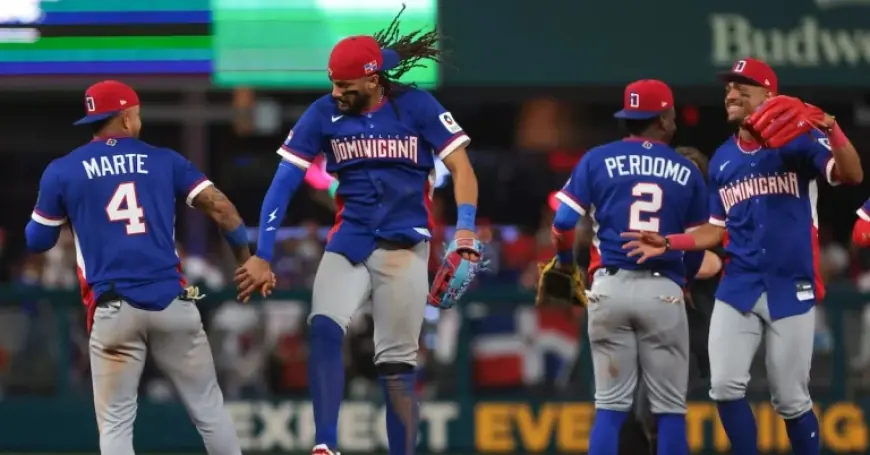
The dominican republic baseball roster outslugged and outlasted Venezuela, 7-5, in a raucous World Baseball Classic Pool D finale Wednesday night at loanDepot park in Miami, a game defined by relentless noise in the stands, emotional rivalry stakes, and a fresh measuring stick for two teams that had not yet faced much top-tier opposition in the pool.
Dominican Republic Baseball Roster Powers Through A 7-5 Rivalry Game
The matchup drew more than 36, 000 fans and unfolded in a “cacophonous” atmosphere, with air horns blaring and drums pounding for the entirety of the game’s three-hour run time. In that setting, the Dominican Republic’s lineup produced enough offense to hold off Venezuela in a 7-5 victory.
Dominican Republic manager Albert Pujols framed the rivalry as something generated externally rather than internally, describing it as “created by the fans” while emphasizing that the players do not focus on it. Still, the energy in the building underscored how much the game mattered emotionally to supporters of both baseball-obsessed countries, even with broader tournament implications remaining open regardless of the result.
Why The Pool D Finale Still Mattered—Even If It “Didn’t Matter Much”
On paper, the immediate stakes were limited: the winner would finish first in Pool D and avoid a quarterfinal matchup with reigning WBC champion Japan. At the same time, South Korea was also described as a formidable opponent, leaving the broader bracket implications less straightforward than a simple “win or go home” scenario.
The game also carried a longer-range consequence tied to Olympic qualification. The winner would have a better opportunity to secure one of the two spots in the 2028 Olympics reserved for non-United States teams from the Americas. Even then, the result did not end either team’s pathway; both still retained chances to earn the WBC title and an Olympic berth after Wednesday night.
But in the ballpark, the emotional stakes eclipsed the strategic ones. From one perspective, the contest “meant everything, ” because for fans on both sides, baseball itself “means everything. ”
A First Real Test Against Quality Competition
Beyond the crowd and the rivalry, the Pool D finale was positioned as the first serious evaluation point for both teams. The Dominican Republic’s lineup entered the matchup having seen limited major league-caliber pitching in its first three games. It had faced one current major league pitcher—Kenley Jansen of the Netherlands—and two others with some major league experience: Israel’s Zack Weiss and Jake Fishman, who were described as having combined for 38 1/3 innings in the big leagues.
Those earlier matchups came with overwhelming production at the plate. The Dominican hitters had collectively scored 34 runs on 29 hits, with nine home runs and 29 walks, while posting a dominant overall line against the pitching staffs of Nicaragua, the Netherlands, and Israel. The larger question hanging over the group was whether that same level of firepower would translate when confronted with better pitching.
Pujols expressed confidence ahead of the game, saying he believed his offense could hit against anybody and pointing to the depth of the lineup “from the top to the bottom, ” along with players’ major league track records. Wednesday’s outcome provided a positive data point: the dominican republic baseball roster generated enough offense to win against Venezuela, a team whose pitching had previously kept games under control in the pool.
Venezuela’s own lineup faced a similar “first test” framing. While it had not posted the same explosive scoring as the Dominicans in earlier games, its contests still felt lopsided thanks largely to pitching that “baffled opposing hitters. ” Venezuela had allowed five runs across its first three games entering Wednesday night, setting the stage for a showdown that could clarify how both clubs measured up once the competition level rose.
Early Innings Set A Dizzying Pace In Miami
Once the game began, much of the pregame context faded quickly. The first four innings were described as rip-roaring, with action moving at a dizzying speed. Venezuela starter Eduardo Rodriguez attacked Dominican hitters aggressively, challenging them with velocity and working up in the zone.
In the first inning, Rodriguez struck out Fernando Tatis Jr. and Manny Machado with four-seam fastballs up and away. The first changeup he threw, to Ketel Marte, was blooped into right field for the game’s first hit. Soon after, Juan Soto saw two fastballs up in the zone and swung through both, illustrating the tenor of the early confrontation: premium stuff, high-intensity swings, and little time to settle.
By the end of the night, the Dominican Republic had done enough damage at the plate to escape with a 7-5 win in one of the tournament’s loudest environments of the week, while both teams remained in position to pursue bigger prizes still in front of them.