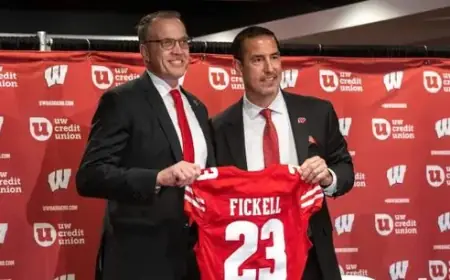
Boozer Twins lean into a ‘here and now’ approach as March draws closer

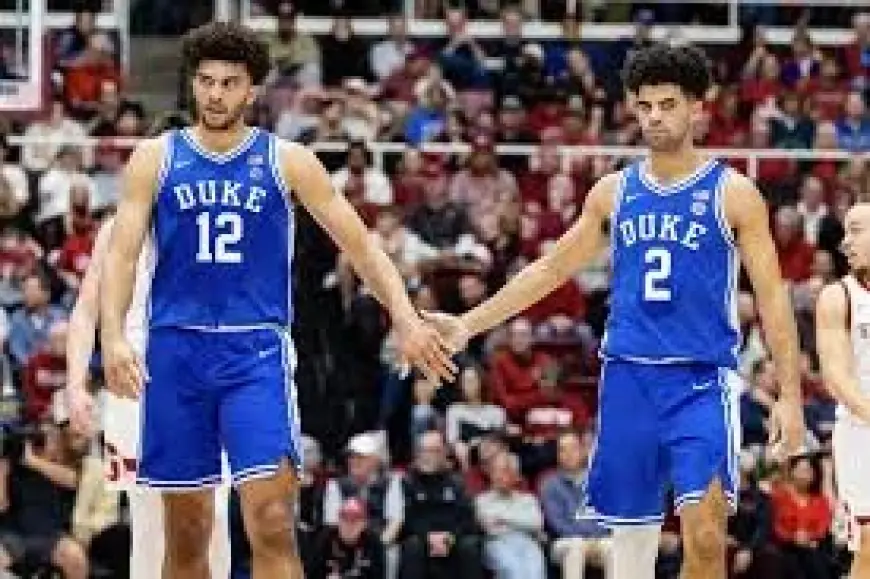
The boozer twins, Cameron and Cayden Boozer, are publicly reinforcing a simple competitive principle: stay present, and do not get pulled too far into what comes next. In a recent interview conversation, the pair framed that mindset as a learned skill shaped during high school, and as a tool they still rely on as they move from the high school stage into the college ranks.
Cameron and Cayden Boozer describe staying grounded through recruitment pressure
Cameron and Cayden Boozer joined Kevin O’Connor to discuss what they called a “here and now” mindset, describing it as a way to stay grounded despite the pressures that come with elite basketball recruitment. Their account centers on a familiar tension for top prospects: offers arrive, recognition grows, and the temptation increases to fixate on future destinations rather than current performance.
In the conversation, one of the twins described the “really big” turning point as high school, when the attention and offers made it “very easy to look ahead. ” Their framing was less about blocking out ambition and more about managing it: dreams and aspirations can exist in the background, but “overly” focusing on them can disrupt what an athlete is doing in the present.
That emphasis on immediacy is also a subtle indicator of how the pair is choosing to speak publicly at this point in their development. Instead of spotlighting long-range goals, they are presenting a philosophy built around day-to-day execution, enjoyment of the current stage, and resisting overwhelm.
High school coaches Andrew and George emerge as key drivers of the Boozer message
The most concrete force behind the Boozers’ mindset, as they described it, is coaching. When asked whether anyone specific influenced Cameron’s approach, he credited their high school coaches, naming Andrew and George. He said the message was repeated often: “be where your feet are, ” “be present, ” and “don’t look ahead. ”
That detail matters because it shows the mindset is not being framed as a trend picked up from social media inspiration or a spontaneous personality trait. The conversation explicitly contrasted potential outside influences with the coaching environment, and Cameron pointed back to the same source: the daily reinforcement from Andrew and George, and ongoing conversations that continue “to this day. ”
The twins also tied the message to the time-bound nature of each playing stage. Cameron emphasized that “especially with college, you’re only gonna be here one time, ” which positions presence not only as performance strategy but also as a way to experience the moment fully. In practical terms, it’s a philosophy that can travel with them as the stage changes, because it’s not dependent on one particular milestone.
The ‘here and now’ mindset signals how Cameron and Cayden Boozer may navigate the college transition
As a trendline, the Boozers’ public framing suggests a deliberate effort to keep attention on process rather than projection. The context points to a clear before-and-after arc: they learned the approach when they were younger, it sharpened in high school when recognition and offers accelerated, and it is now being presented as a tool for the college ranks. That continuity is the signal: the mental model is being carried forward, not left behind with high school.
Another visible trajectory is the way their message is being shared. The twins joined the conversation on behalf of State Farm, placing the mindset discussion in a setting where athletic identity and public-facing partnerships can intersect. That combination can amplify a specific kind of athlete narrative: grounded, coach-influenced, and oriented around the present rather than external hype.
- Based on context data: The Boozers describe the mindset as learned young, emphasized in high school, and still used as they move into college.
- Based on context data: They link the pressure point to receiving offers and recognition, which made “looking ahead” easier.
- Based on context data: They credit high school coaches Andrew and George, and say the message is still reinforced in conversations today.
If this trajectory continues… Cameron and Cayden Boozer may keep centering public comments on controllables—presence, daily work, and enjoying the stage—rather than defining success through future aspirations. The context supports this scenario because their core argument is that over-focusing on what comes next “ruin[s] what you’re doing” in the present, and because they attribute the approach to repeated coaching reinforcement.
Should a specific factor shift… if the external pressures they referenced—offers, recognition, and the broader weight of elite recruitment—begin to dominate their attention again, their stated framework sets up a different kind of adjustment: returning to the “be where your feet are” cue and re-anchoring to the present. The context does not provide evidence of such a shift happening now; it only outlines the stress point that originally made the mindset necessary.
The next concrete signal in the context is that the full conversation is available through “The Kevin O’Connor Show, ” where the twins expand on their approach in their own words. What the context does not resolve is how this mindset will translate into measurable outcomes at the college level, since the discussion focuses on philosophy and influences rather than on-game results. For now, the boozer twins are making a clear bet that staying present is the best way to handle the spotlight that follows them from high school into their next stage.