Tyler Bilodeau and Donovan Dent push UCLA past Rutgers in Big Ten Tournament

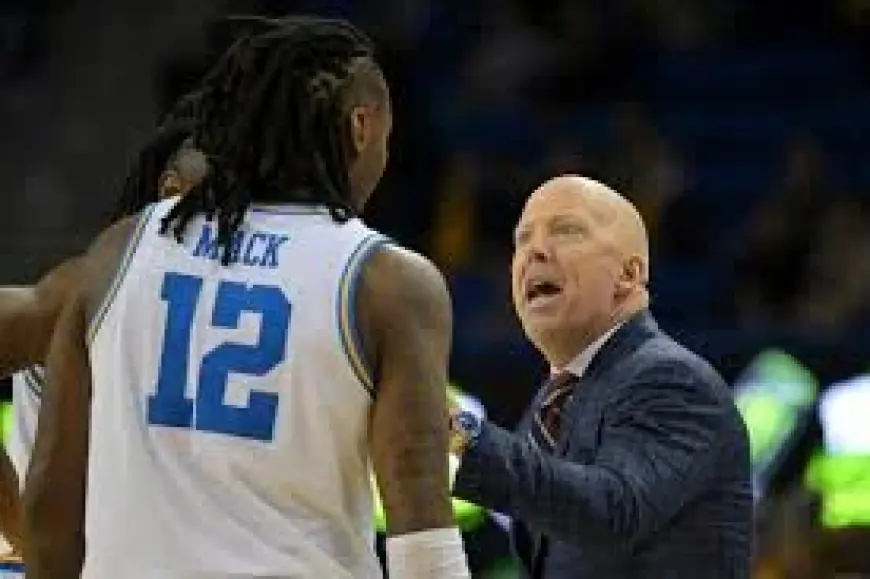
In Chicago, tyler bilodeau watched UCLA guard Donovan Dent produce a historic line Thursday night: 12 points, 10 rebounds and 12 assists in a 72-59 Big Ten tournament win over Rutgers. The result pushed the Bruins to 22-10 and into a quarterfinal against Michigan State on Friday night. Just as important, Dent’s stat line revealed a specific lever UCLA can pull under pressure: guard rebounding tied directly to playmaking efficiency.
Donovan Dent’s Big Ten first
Dent’s triple-double was the first in Big Ten tournament history, and it arrived with a twist that made it more than a clean box-score milestone. Dent, listed at 6-foot-2, reached 10 rebounds only after a late nudge of awareness; he said he did not know he was close until an under-four media timeout, when a teammate told him he needed one more rebound. Dent acknowledged he was “hunting for it” at the end.
The figures point to a performance built on a behavioral shift rather than a hot shooting night. Dent entered the game averaging 13. 6 points and 2. 6 rebounds, while ranking third among Big Ten players in assists per game (7. 5) and fourth in steals (1. 6). Against Rutgers, the outlier was rebounding—precisely the category least associated with his season profile. That imbalance matters because it suggests UCLA’s guard play can swing games without relying solely on scoring spikes.
Mick Cronin’s halftime demand
UCLA coach Mick Cronin provided the immediate trigger: at halftime, he pressed his guards to attack the glass. Dent responded with four offensive rebounds in the second half, all during a 14-2 run before the first media timeout. UCLA’s players described it as a mindset flip—“crashing with the offensive rebounds”—and the timing indicates it wasn’t a slow drift in effort but an intentional, rapid adjustment that produced points and momentum.
The pattern suggests UCLA’s identity in this tournament setting may hinge on whether its guards can create extra possessions on demand. When a 6-foot-2 guard delivers four offensive boards in a stretch that coincides with a decisive run, it reframes what “execution” means: not just ball security and shot selection, but also how aggressively the backcourt participates in the possession battle. In a 72-59 game, those hidden possessions can function like an alternative scoring source.
That through-line also connects to who is sharing the floor. With tyler bilodeau in the mix, Dent’s rebound-driven triple-double reads as a teamwide directive rather than an individual novelty: Cronin asked for a response, and the response arrived from a player whose usual statistical strengths sit elsewhere. Even without a detailed breakdown of every rotation, the cause-and-effect sequence—halftime emphasis, second-half offensive rebounds, immediate run—shows how quickly UCLA can translate coaching instruction into on-court outcomes.
UCLA vs Michigan State next
Friday night brings the next confirmed checkpoint: UCLA will face Michigan State in a Big Ten tournament quarterfinal. Dent enters that game with a clearly defined recent trend line. Beginning with UCLA’s 95-94 overtime win against Illinois, he has produced 65 assists against just four turnovers over a six-game stretch, with at least 12 assists in three games. UCLA is 5-1 over that span.
The figures point to a specific kind of stability that travels in tournament play: high-assist creation paired with unusually low mistakes. Last year at New Mexico, Dent had 108 turnovers; this year, he has cut that number to 60. Cronin framed that change as a non-negotiable adjustment—“there’s only one person in charge, ” he said—and credited Dent for signing on to a stricter approach to ball security and decision-making.
Dent’s triple-double was also the fifth in UCLA history and the first since 2013, which adds institutional context without changing the immediate task list. The open question heading into Friday night is whether the same formula that powered the Rutgers win—elite assist production plus guard rebounding sparked by halftime emphasis—can be repeated against Michigan State. If Dent sustains anything close to the 65-assist, four-turnover pace, the data suggests UCLA’s offense can stay organized even when the scoring margin tightens.