Ken Griffey Jr vs. credentialed photographers: what viral WBC photos reveal

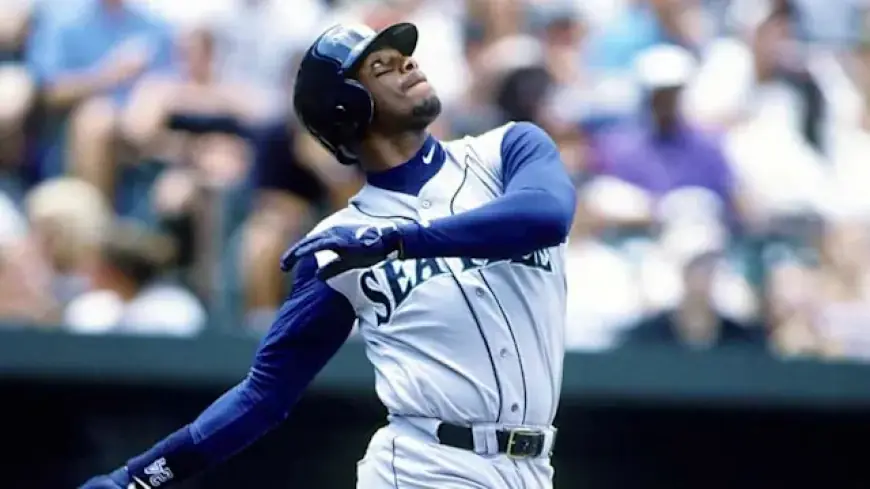
ken griffey jr showed up to the World Baseball Classic this week with an oversized camera and produced images that quickly drew major attention. At the same time, the moment set up a direct comparison: what happens when a Hall of Fame player’s photography is celebrated alongside the work of credentialed photographers who have spent years building careers for the same events?
Ken Griffey Jr and the World Baseball Classic sideline role
At a USA World Baseball Classic game, Ken Griffey Jr was described as fully locked in on the sideline while photographing the action. He was credentialed for multiple games in Houston, and one particular image circulated widely: his shot of Kyle Schwarber celebrating with Aaron Judge after Team USA’s win over Brazil. The photos were framed as “genuinely incredible” and “genuinely good, ” with the Schwarber-Judge image singled out as “awesome. ”
That reaction was not presented as a one-off. The same context notes that Ken Griffey Jr has been doing photography “for a few years, ” and that strong public enthusiasm has followed him from event to event. The pattern described is consistent: he shows up with a camera, photographs a major sports moment, and the response becomes a story of its own.
Lionel Messi 2023, the 2025 Masters, and the recurring media-pass effect
The World Baseball Classic attention was placed beside two earlier examples: Ken Griffey Jr having a media pass for Lionel Messi’s MLS debut in 2023, and Ken Griffey Jr bringing his camera to the 2025 Masters. In each case, the reaction was described as essentially identical: widespread amazement that a famous former athlete is taking photos, followed by praise for the results.
Those prior moments matter because they add a second subject to compare against the WBC: not a different person, but the same approach repeating across different events. The comparison highlights that the current wave of attention is part of a longer-running cycle—one in which his presence, his access, and his output keep producing a similar public response.
Houston WBC access vs. career craft: a comparison of advantages and expectations
The strongest contrast in the context is between Ken Griffey Jr’s experience at events and the experience of “credentialed photographers who have spent their entire careers mastering this craft. ” Both groups work at the same kind of high-stakes settings, but the context argues that the conditions are not the same. Ken Griffey Jr is described as having the best equipment money can buy, unlimited field access that no regular photographer could ever get, and a built-in audience that will “go crazy” for anything he posts.
Set against that, the career photographers are depicted as grinding for access and spending years mastering the work. The tension is not framed as whether the images are good—the context explicitly says they are. The tension is about how credit, attention, and the tournament spotlight distribute when a Hall of Fame baseball player enters the same space with elite equipment and extraordinary access, then becomes “the talk of the tournament. ”
| Comparison point | Ken Griffey Jr at the WBC in Houston | Credentialed sports photographers |
|---|---|---|
| Access | Credentialed for multiple games; described as having field-level access | Described as grinding to get access over long careers |
| Equipment | Described as having top-tier gear, including a “$15, 000 lens” | No comparable equipment claim stated in the context |
| Audience | Described as having a built-in audience that reacts strongly to his posts | Audience advantage not described; focus is on craft and years of work |
| Outcome | Schwarber-Judge celebration image went viral after Team USA beat Brazil | Work risks being overshadowed when attention concentrates elsewhere |
| Quality assessment | Photos described as “genuinely good” and “awesome” | Craft described as mastered over careers, but individual images not evaluated |
Analysis: Placing these two sides next to each other produces a clearer finding than praising the images alone. The context suggests the public is not only responding to the photographs; it is responding to the combination of fame, access, and gear that surrounds the photographer. The photos can be strong, yet still raise a fair question about whether the attention is proportional when compared with photographers who have built their reputations through years of work without the same structural advantages.
The comparison also clarifies what is not being argued. The context explicitly avoids calling the photos bad, and it does not dispute that Ken Griffey Jr is capable behind the camera. Instead, it points to the mechanics of visibility: who gets the clicks and praise when the tournament audience sees a familiar sports icon on the sideline producing images.
The next test of this dynamic is straightforward and already implied by the pattern described: the next time Ken Griffey Jr appears at a major event with a media credential and high-end equipment, the same distribution of attention can be measured again. If Ken Griffey Jr maintains the combination of elite access and a built-in audience, the comparison suggests his images will keep becoming headline moments—while the work of long-tenured credentialed photographers fights to be seen on equal terms.