Kansas Vs Houston sets a toughness test after Kansas’ uneven TCU win

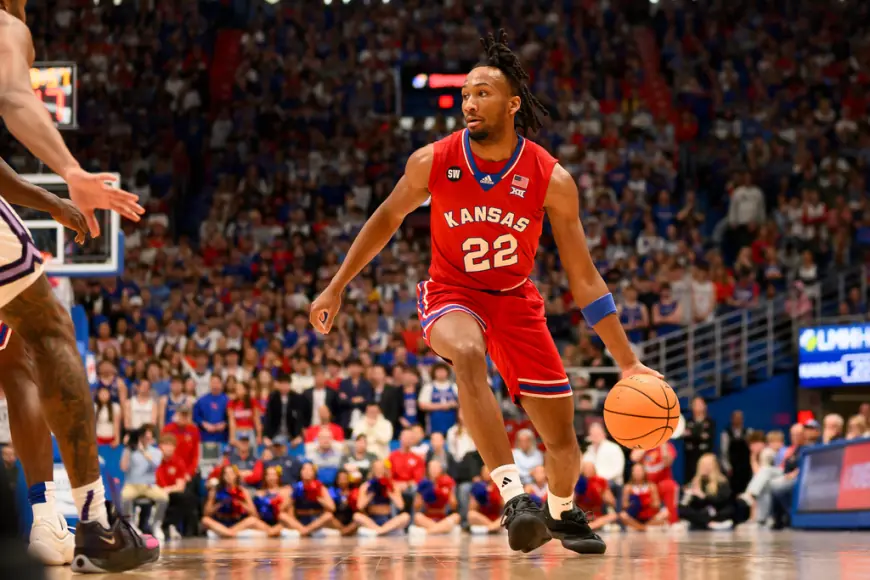
kansas vs houston is now the immediate focus after Kansas’ Thursday night win over TCU in Kansas City, Mo., a performance that senior forward Tre White said could serve as a “stepping stone. ” The shift from TCU to Houston is not just a bracket turn; it signals a matchup in which Kansas believes it must play tougher, limit giveaways, and hold up against a defense built on pressure and extra possessions.
Kansas’ TCU win in Kansas City, Mo., sets up Friday’s Houston matchup
Kansas’ victory over TCU on Thursday night came with a clear internal assessment: it “was hardly a masterpiece. ” Still, within the locker-room framing, it mattered as preparation for what comes next. White pointed to stylistic overlap between TCU and Houston, describing both as teams that “create havoc on defense” and play with strength and aggression on offense. That similarity is the main reason Kansas is treating Thursday’s game as a usable reference point rather than a finished product.
The immediate challenge Kansas identified from the TCU game centered on physicality in the paint. Nearly everyone Kansas put on TCU forward David Punch was outmuscled, and he finished with 24 points and 10 rebounds. Kansas also faced problems when it “went small, ” especially because Flory Bidunga dealt with foul trouble “all night, ” which limited Kansas’ ability to stay consistent with its preferred defensive structure around the rim.
Yet the staff’s evaluation resisted easy explanations based on lineup labels. Bill Self argued that Kansas’ issues were less about height than force, emphasizing that the group’s “standing height was the same as Punch regardless who was in the game. ” His point carried a direct implication for Friday: Kansas cannot treat physical play as optional, regardless of which combination is on the floor.
Kelvin Sampson’s Houston profile: top-five results driven by defense and possession
Houston arrives with context that clarifies why Kansas is emphasizing toughness. Under head coach Kelvin Sampson, the Cougars have built an identity around defensive disruption and disciplined ball security, and this season’s metrics reinforce that. Houston is the second-best team in the Big 12 and owns the best scoring defense, ranked No. 3 in the country. The Cougars force turnovers at a rate of 12. 7 per game while committing “a mere 7. 6” themselves, a combination that points directly to how they tilt games: take the ball, keep the ball, and squeeze opponents into uncomfortable possessions.
Those underlying drivers have matched the results. Houston holds a top-five ranking and a 27-5 record, and it advanced Thursday night with a 73-66 win over No. 10 seed BYU. Self’s description of Houston focused less on any single star and more on a repeatable sequence: tough defense, guards who can create their own shots, and a relentless approach to extending possessions. Self singled out how Houston “keep balls alive, ” not necessarily by clean rebounds, but through “crashing and back-tapping and creating extra possessions that way. ”
That detail matters because it connects directly to Kansas’ pain points from Thursday. Kansas just saw how quickly a physical forward could turn near-the-rim play into points, fouls, and pressure. Houston’s profile suggests a different mechanism, but a similar requirement: win the gritty, in-between moments, especially when the initial defensive stand does not end the possession.
Kansas vs houston: the trend line points to a grit-and-adjustment game
The most visible direction heading into kansas vs houston is Kansas’ own emphasis on playing “even grittier, ” as Elmarko Jackson put it. Jackson’s checklist was specific: “limit turnovers (and) offensive rebounds” and make “the right adjustments on the fly. ” Each part maps cleanly to what Houston does best, and to what Kansas cannot afford to repeat from the TCU game, particularly the fouls and physical disadvantages that showed up around Punch.
Still, Kansas did find a workable lever late against TCU. Jackson and Darryn Peterson drew “sufficient fouls” in the second half, which helped Kansas keep pace at the free-throw line. That detail suggests Kansas can generate pressure of its own, but it also comes with a hidden constraint: if Friday turns into a possession game shaped by turnovers and second chances, free-throw volume alone may not be enough to stabilize the scoring.
Based on context data:
- Houston turnovers forced: 12. 7 per game
- Houston turnovers committed: 7. 6
- Houston scoring defense: best overall, ranked No. 3 nationally
- Houston record: 27-5
- Houston Thursday result: 73-66 over No. 10 seed BYU
- TCU’s David Punch: 24 points, 10 rebounds vs Kansas
If Kansas’ Thursday issues continue… the most likely pressure point is the interior, especially when foul trouble alters who anchors the defense. Bidunga’s foul trouble against TCU forced Kansas into more small segments than it wanted, and the team “had issues defending the paint” in those moments. Against a Houston team that also thrives on extending possessions through crashes and back-taps, extra trips can compound quickly if Kansas cannot end plays cleanly.
Should Kansas execute the adjustment Self and players emphasized… the matchup could pivot on where Houston’s bigs and drivers receive the ball. Self and multiple players stressed starting by making big men catch the ball in less favorable positions, a direct response to the way Punch established himself. That tactical priority, paired with Jackson’s focus on limiting turnovers and offensive rebounds, sketches the clearest path Kansas sees: reduce the easy catches, cut down second chances, and keep the game from becoming a sequence of repeated defensive stands.
The next confirmed milestone is Friday’s meeting with Houston, the opponent Kansas has already tied to Thursday’s lessons. What the context does not resolve is how Kansas’ rotation and foul management will hold up against Houston’s pressure-and-possession style, particularly after Bidunga’s foul trouble and the physical issues Self highlighted. For now, the trajectory is clear: Kansas is treating this game as a test of toughness, with ball security and finishing possessions as the measurable priorities.