Jazz Vs Trail Blazers: tanking stakes clash with Play-In urgency

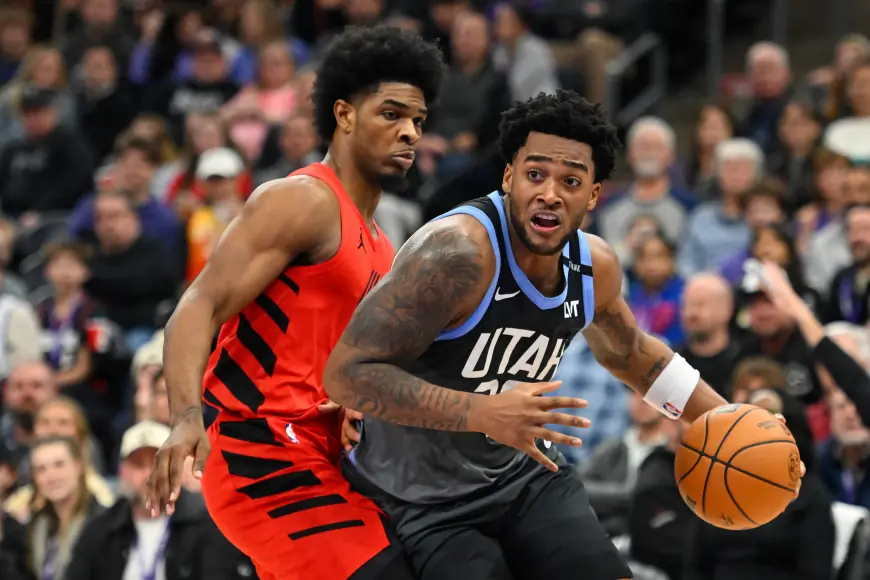
The jazz vs trail blazers matchup on March 13, 2026, pairs two Western Conference teams moving in opposite directions in the standings and, more importantly, in incentives. Utah enters at 20-46 with lottery positioning in view, while Portland sits 31-35 with the Play-In Tournament and the 2026 NBA Playoffs as the stated target. The comparison answers one question: how do their short-term goals shape what this game is, and what it is not?
Utah Jazz: a 20-46 season focused on evaluation and lottery position
Utah’s context is explicit: the Jazz are framed as a “bottom feeder” and “blatantly-tanking” team, with the NBA Draft Lottery in May hanging over the final weeks. With the 5th worst record in the league, Utah is described as unlikely to move much from that spot, and “every game is a must-lose” for a roster built to test young talent rather than maximize late-season wins.
That approach is reinforced by availability and rotation focus. Lauri Markkanen is listed as out with right hip impingement, and another note suggests Markkanen and Keyonte George are likely out for the remainder of the season. The emphasis shifts to players being “showcased, ” including Ace Bailey (described as shooting decently in recent games), Brice Sensabaugh, Isaiah Collier, and Cody Williams. Utah also made late-season adds in Anderrson Garcia, Blake Hinson, and Bez Mbeng, framed as part of the effort to “see what they have” before a hoped-for return to relevancy next year.
Portland Trail Blazers: 31-35 and aiming at the Play-In Tournament
Portland’s current-season motivation runs in the opposite direction. At 31-35, the Trail Blazers are positioned as chasing the Play-In Tournament and the 2026 NBA Playoffs, putting immediate value on wins over draft positioning. The March 13 meeting at Moda Center is also described as the fourth matchup between the teams this season, adding familiarity to a game where the standings stakes differ sharply.
Even with that urgency, Portland’s injury and availability picture complicates the path. Shaedon Sharpe is expected to be out for this game, and Damian Lillard is described as having yet to suit up this season, with a separate listing marking him out for the season due to an Achilles injury. Robert Williams III is listed as questionable with a knee issue. Still, Portland has been characterized as an “up-and-coming mid-tier team, ” and Deni Avdija is highlighted as a first-time All Star this year, with an expectation of “a lot of free throws” for him in this matchup.
Jazz Vs Trail Blazers: same opponent, different incentives and different timelines
Set side by side, the clearest split is not record alone, but the strategic value each team assigns to a March game. Utah’s framing centers on lottery odds and development reps for younger players, while Portland’s framing centers on maximizing wins to reach the Play-In Tournament. That distinction matters because it changes how each team can reasonably judge success: Utah can treat competitiveness and evaluation as outcomes, while Portland is judged by whether it converts urgency into a result. Comparison point Utah Jazz Portland Trail Blazers Record entering March 13, 2026 20-46 31-35 Stated near-term priority Lottery positioning; evaluation Play-In Tournament; 2026 NBA Playoffs Key absences noted Lauri Markkanen out; Walker Kessler out for season Shaedon Sharpe out; Damian Lillard out for season Players highlighted for on-court role Ace Bailey, Brice Sensabaugh, Isaiah Collier, Cody Williams Deni Avdija Next-season framing Additions expected, including a high selection in a “stacked” draft “Likely look the same” barring trades; draft outcome depends on playoffs
Analysis: the injury lists and roster emphasis reveal a structural difference in risk tolerance. Utah can absorb absences and still achieve its internal aims because its late-season priority is discovery and positioning. Portland, chasing the Play-In, has less margin: missing a pure scorer like Sharpe and not having Lillard suit up all season raises the bar for the remaining core to deliver results now.
Yet the longer comparison running through the coverage is also about trajectory. One view suggests Portland may carry a similar look into 2026-27 barring trades, with its draft situation hinging on whether it makes the playoffs. Utah, in contrast, is described as bringing back Lauri Markkanen, Keyonte George, Ace Bailey, and potentially restricted free agent Walker Kessler, while also adding Jaren Jackson Jr. plus a high draft selection. At the same time, a separate listing marks Jaren Jackson Jr. out for the season with a knee injury, underscoring how much of that next-season picture depends on health and timing rather than intent alone.
The immediate takeaway from jazz vs trail blazers is not a single-player matchup, but a collision of incentives. The comparison establishes a clear finding: Portland enters the game with the stronger need to win and the more direct consequences for failing, while Utah’s priorities allow it to treat the same night as a developmental checkpoint tied to May’s lottery. The next confirmed test point is the March 13 game at Moda Center; if Portland maintains its Play-In push despite the listed absences, the comparison suggests its current-season urgency can still translate into enough execution to hold off a Utah team playing for a different kind of progress.