Mercedes Command in China: What the F1 Sprint Revealed About Dominance

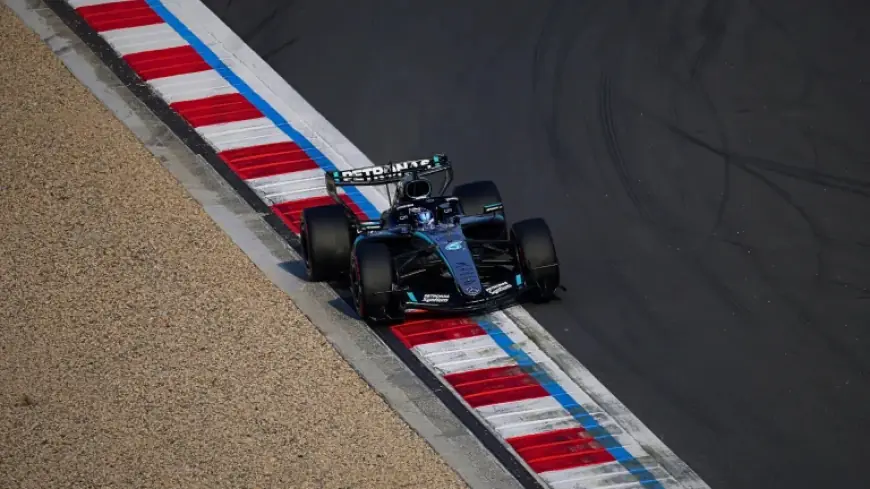
George Russell took a commanding pole for the Sprint in China, stepping from his Mercedes to huge cheers after a qualifying performance that left Ferrari outgunned and Red Bull uncomfortable. That f1 sprint result signals Mercedes may set the early benchmark this weekend, while debates over electrical boost rules and Ferrari’s rotating rear wing point to a weekend of technical tests as much as racing.
George Russell and Mercedes in China: Sprint Qualifying dominance
Russell sealed an impressive pole for the Sprint in China and was fastest across each segment of Sprint Qualifying, after looking comfortable in FP1, the only practice session of the weekend. Crowd reaction highlighted how decisive that qualifying lap felt, and Russell’s team mate Kimi Antonelli finished behind him in the order identified by Sprint Qualifying, showing intra-team pace but clear leader-laggard separation.
Comparisons to recent races underline the narrative: Russell arrived in Shanghai after a dominant win in Australia last week, and coverage suggests Mercedes is the class of the field at this stage of the campaign. Ferrari was outgunned by McLaren in Sprint Qualifying, while rivals at Red Bull looked deeply uncomfortable during the session, reinforcing the impression of a performance gap on this weekend’s setup.
F1 Sprint: electrical boost issues and driver concerns revealed in Australia
Drivers and teams have openly debated how meaningful recent overtaking numbers are, and Max Verstappen captured that concern by calling it “a jungle out there” while joking about adapting to electrical power boosts. For now, an operational detail has emerged as a core technical problem: drivers cannot stop the regular power deployment in typical straight-line driving, and can only add an extra boost.
That setup produced concrete problems in Australia, where cars finished the formation lap with empty batteries and lacked pace at the start. Verstappen described that outcome as “not a lot of fun and also quite dangerous. ” A related issue ended Oscar Piastri’s race before it began in Australia, when extra power kicked in unexpectedly and tipped him into the barriers prior to reaching the grid.
Those same electrical constraints will be probed during the f1 sprint and the rest of the Shanghai weekend as teams try to balance pace with battery management, and as drivers push for clearer control over when and how much boost is deployed.
Ferrari’s flip-flop wing, the FIA and the lead-up to the Japanese Grand Prix
Ferrari plans to use a unique rear wing in first practice that rotates upside-down for more straight-line speed, a device nicknamed the “flip-flop” or “Macarena” which was used briefly in testing and dropped for Australia. Team sources expect it could help Charles Leclerc and Lewis Hamilton take the fight to Mercedes, though the rotating wing could also disrupt airflow and hinder cars following close behind.
Regulatory oversight is already on the table: the FIA could take stock of how the racing and technical solutions are working and make changes, potentially even in time for the Japanese Grand Prix later this month. If races in Bahrain and Saudi Arabia cannot proceed next month, the resulting five-week gap in the calendar would create additional time for teams and regulators to refine any rule adjustments.
Driver and market dynamics add texture. There has not been a Chinese driver on the grid since Zhou Guanyu left his previous team at the end of 2024, but he now serves as reserve driver for Cadillac and could lend extra recognition to that new team after its solid but unspectacular debut in Australia.
Scenario A — If Mercedes momentum continues: If Mercedes repeats its Sprint pace through qualifying and the race, the team could convert clear speed into weekend dominance in Shanghai and reinforce Russell’s status as the driver to beat following his Australia victory. That continuation would put immediate pressure on Ferrari to make its flip-flop wing perform reliably in practice and race trim.
Scenario B — Should FIA intervene or electrical issues persist: Should the FIA move to change how electrical boosts are deployed, or if the boost problems that caused battery drain and pre-grid crashes continue, teams could see the weekend and the next events reshuffled by regulatory tweaks or technical fixes. That would alter development priorities and could narrow the current on-track advantage Mercedes now enjoys.
The next confirmed signal is the first sprint race of the season on Saturday, which will provide direct on-track evidence of how qualifying pace translates into race performance and whether electrical and aerodynamic innovations hold up under race conditions. What the context does not resolve is whether the FIA will make any rule changes before the Japanese Grand Prix later this month, and Saturday’s Sprint will deliver the clearest immediate answer to both technical and competitive questions.