Twisted Yoga vs Apple TV’s earlier true crime originals: what the rollout reveals

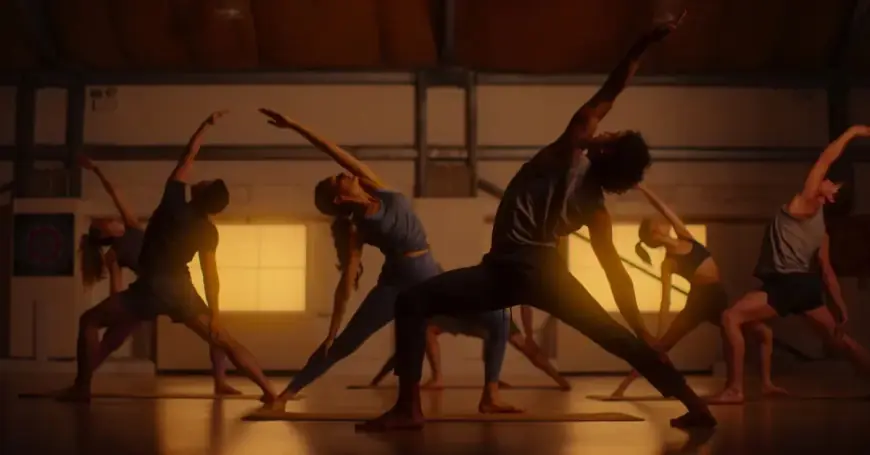
twisted yoga has arrived as a three-part documentary series on Apple TV, centering on women drawn into tantric rituals linked to Romanian guru Gregorian Bivolaru. Placed beside Apple TV’s two earlier true crime originals, the release raises a narrower question: is the bigger shift the platform’s true crime volume, or the way twisted yoga balances lurid detail with survivor-led accounts and an active legal backdrop in France?
Twisted Yoga and Rowan Deacon’s survivor-centered structure
Across three parts, the series follows women who describe being exploited after entering yoga communities specializing in tantra, a practice framed as a search for inner peace and purpose. One early on-screen story focuses on Ashleigh, an Australian who moved to London in her 20s and reconnected with a friend who recommended a tantra-focused yoga studio. Her path takes her to a grim “villa” in Romania and later toward Paris, where she is drawn closer to Bivolaru, described within the yoga community as “the guru. ”
The documentary’s tone, as described in the review, leans into “astonishing detail” while remaining sensitive to interviewees. It depicts a chain of events that includes strict secrecy demands, unusual controls, and an “initiation” expectation. The review also identifies director Rowan Deacon and describes her approach as mapping a “complex psychological landscape, ” presenting interviewees as articulate and astute rather than naive. That framing matters because the on-screen accounts include women who say they sought guidance and community, then encountered coercion that presented itself as spiritual development.
Beyond Ashleigh’s refusal to have sex with an elderly man described as part of a “transfiguration” expectation, the series includes claims from other women who did take part in a “sexual initiation” with Bivolaru. One interviewee describes being transported to Prague and doing shifts, for no pay, on a camgirl site, while being told the work served a higher spiritual purpose. The review draws an explicit contrast between the rhetoric of “love” and “auras” and what it calls “cold, calculating capitalism. ”
Apple TV’s true crime slate: Twisted Yoga compared with The Big Conn and Hollywood Con Queen
Apple TV positions twisted yoga as a rare true crime entry within its catalog, which is described as better stocked with sci-fi hits, thrillers, and comedies. In that context, the series is labeled the streamer’s third true crime original after 2022’s The Big Conn and 2024’s Hollywood Con Queen. Unlike a slow-burn weekly release model, the full three-part season is available at once, with episodes ranging from 42 to 50 minutes.
The platform also frames the show in a docuseries style likened to “Netflix hits like Making a Murderer, ” emphasizing a real-life case and an alleged criminal at its center who is “currently facing charges in France. ” The official summary describes young yoga students from around the world who fall under the influence of “reclusive” Romanian guru Gregorian Bivolaru, the spiritual leader of an international network of yoga studios specializing in tantric rituals. As the students begin to fear they have joined a cult, the summary says they discover Bivolaru has a “dark past, ” and that he faces charges in France including human trafficking, kidnapping, and rape—allegations he denies—while the women work with French authorities to convict him.
Twisted Yoga and Ashleigh Freckleton’s account: details vs. the platform’s broader scarcity
Set next to Apple TV’s overall scarcity of true crime originals, twisted yoga stands out less because it exists and more because of how much it leans on participant testimony to explain compliance, doubt, and exit. A separate account from Ashleigh Freckleton describes joining what she believed was a yoga school in London in 2018 after a bad breakup, seeking coping techniques. She describes early stages as “simply all about yoga, ” before things “snowballed” because she “trusted them, and trusted their judgement. ”
Her description adds concrete “red flags” that match, and sharpen, the review’s depiction of control: at a Romanian villa, she says women were placed under numerous rules, including curfews, bans on swimming, not being able to go in the sun, and being forced to hand over a passport and sim card, with public shaming when rules were broken. Later, she describes being made to swear secrecy with her hand on a bible. Yet she also describes how returning to classes could dissolve her doubts through the calming experience of meditation, recounting a moment where serenity made her internally dismiss the idea it was a cult.
That pairing—platform framing and survivor detail—creates the clearest contrast with Apple TV’s simple numeric claim of rarity. The service’s earlier true crime originals are named only as two titles and years; by comparison, twisted yoga arrives with unusually specific, on-screen claims about methods of control, secrecy, and the psychological push-pull between fear and belonging. In analysis, the documentary’s “wild” detail does not function only as shock value; it also becomes an evidentiary style choice that keeps returning the story to mechanisms, not just outcomes.
The comparison yields a direct finding: Apple TV’s “rare true crime” label is accurate by count, but twisted yoga is defined more by its level of granular, survivor-driven detail and its explicit placement alongside an ongoing legal situation in France. The next confirmed data point that will test that finding is audience engagement with the full, three-episode drop—if Apple TV maintains true crime as a small-category strategy, the comparison suggests it will prioritize high-specificity docuseries that can sustain attention through direct testimony rather than volume alone.