The Bachelorette 2026 vs. Season 22: What Taylor Frankie Paul’s ending teaser reveals

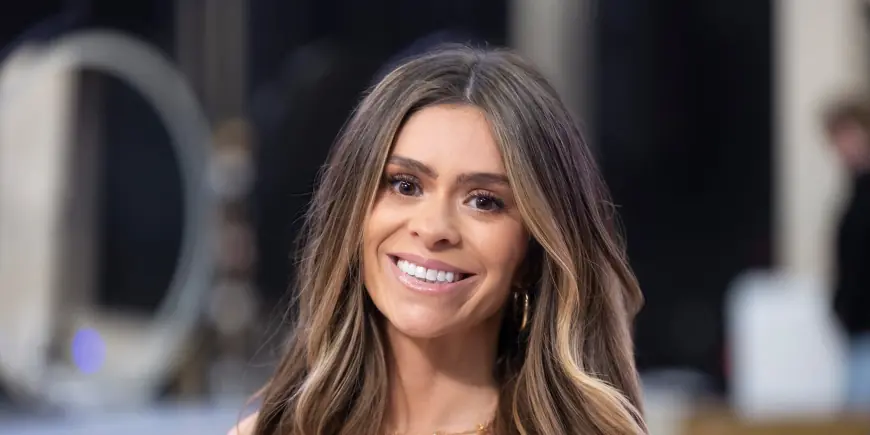
the bachelorette 2026 is being shaped, in real time, by what Taylor Frankie Paul is willing to say before viewers have seen a single episode, while The Bachelorette Season 22 is being framed by the basic premise that someone arrives intending to find a lasting partner. Put side by side, the question is whether Taylor’s unusually open-ended mindset changes how the season’s ending should be read when it arrives after the March 22 premiere.
Taylor Frankie Paul and The Bachelorette 2026: a deliberately open-ended goal
Taylor Frankie Paul, described as a reality star, has said she is “gearing up” for the release of two projects: The Secret Lives of Mormon Wives and The Bachelorette. After filming The Bachelorette, she gave what is described as her first interview since production ended, and she kept the final outcome unresolved: “No one knows if Taylor found love in the hallowed halls of Bachelor Mansion, ” as the context puts it.
What Taylor did provide was a description of the emotional temperature and the tone of the ending. She said she felt “lots of different emotions for lots of different reasons, ” and added, “It ended in a Taylor way. Some people may know what that means, and some people might not. ” The substance of that tease is its ambiguity: rather than signaling a standard endpoint, she framed the ending as personal and potentially hard for outsiders to decode.
Her stated objective also avoids locking the season into a single traditional outcome. Taylor said, “The goal was to find my person, and I didn’t really have any vision of how it had to go — an engagement, we leave together or we’re trying dating. I didn’t set any other expectations. ” In the context of the bachelorette 2026, that statement matters because it sets a threshold for “success” that is broader than one specific relationship status.
The Bachelorette Season 22 and Bachelor Mansion: the expectation of a clear finish
Season 22 is positioned, in the same context, as a story that will “unfold” for viewers when the show premieres on March 22. The setting is named directly as “Bachelor Mansion, ” which anchors the familiar format: contestants compete within a contained environment, and the audience watches a romantic narrative build toward an ending that typically answers a straightforward question—did the lead find love or not?
That expectation is reinforced by the way Taylor’s own uncertainty is treated as newsworthy. The context explicitly stresses that “no one knows” what happened at the end of filming. The emphasis on suspense suggests a baseline assumption that the ending is usually legible enough to summarize, even if it is kept secret before airing.
Season 22 also arrives with clear personal stakes, because Taylor went on the show “hoping to move on from her ex, Dakota Mortensen. ” The context adds that “it looks like her mission was accomplished, ” but it does not confirm how, or with whom, any outcome lands. Still, the premise of moving on from an ex introduces a simple measuring stick that viewers often apply to the season as it airs: whether the lead’s on-screen choices represent a clean break, a new attachment, or a return to something unresolved.
March 22 and Taylor Frankie Paul: how the two frames collide
Analysis: Comparing Taylor’s “no other expectations” approach with the audience-facing build toward the March 22 premiere reveals a tension in how Season 22 may be interpreted. If a season is commonly expected to produce a clear label—together, engaged, or not—Taylor has already argued for a different standard: finding “my person” without requiring a specific format for the relationship at the final moment.
Taylor’s additional tease complicates that further. She said “Yes” when asked about being in love with more than one person, adding: “I think you can be in love with more than one person. I think you always love someone more, but I think you can be very confused about multiple people. ” That framework does not map neatly onto a clean, singular conclusion, because it normalizes confusion and overlapping feelings as part of the process rather than a detour from it.
Finding: Placing Taylor Frankie Paul’s comments beside the basic Season 22 setup establishes one clear takeaway: the season is being pre-framed as a story where the lead may judge the ending by internal resolution, while viewers may be primed to judge it by external labels. The next confirmed test of that gap is the March 22 premiere; if Taylor maintains her open-ended definition of “find my person, ” the comparison suggests the finale will be debated less on whether it is conventional and more on whether it feels “Taylor” in the way she has already promised.