Uci protest case moves toward trial after judge rejects dismissal

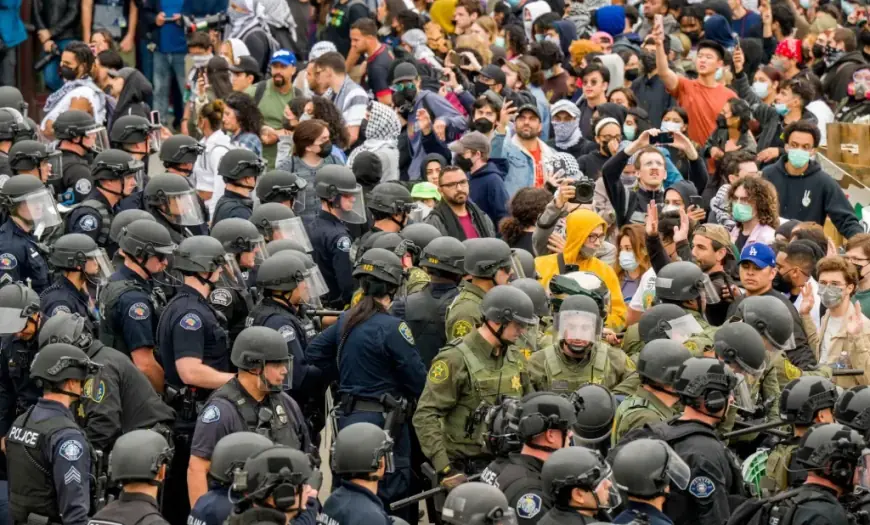
An Orange County Superior Court judge declined to dismiss criminal charges against three people accused of refusing to leave a pro-Palestinian protest at UC Irvine, setting up a jury trial to weigh whether the campus dispersal order was constitutional. The ruling keeps the case centered on a high-stakes clash between law enforcement authority and claims that university and police leaders aimed to suppress protected speech.
Uci defendants set for trial
The defendants—Adel Shaker Hijazi, 41; Malik Alrefai, 25; and Jacob Andrew Hernandez, 33—are scheduled for trial next week on misdemeanor charges of failure to disperse. The charges stem from a police order to leave a campus encampment on May 15, 2024, during a demonstration connected to the Israel-Hamas war. Orange County District Attorney Todd Spitzer’s office filed the protest-related cases, framing the enforcement response at the time as a line drawn against “criminal activity” that went beyond peaceful assembly.
Judge Eric Scarbrough did not rule on the substance of the defendants’ constitutional challenge. Instead, he said the issue is likely to be the heart of the trial and should be decided by a jury rather than resolved by a judge through a pretrial dismissal. The pattern suggests the court is treating the dispute less as a narrow procedural matter and more as a fact-intensive question about what officers and university leaders knew and why they acted when they did.
Judge Eric Scarbrough leaves jury role
At a hearing in a Santa Ana courtroom on Thursday, March 12, defense attorneys argued that the dispersal order was not a lawful response to violence or imminent danger. They contended it was instead part of an effort by law enforcement and UCI leaders to shut down protesters’ First Amendment rights. Alternate Defender James Henshaw, representing Alrefai, called the dispersal order a “sham” and argued there was no violence and no threat of imminent violence. He also pointed to police waiting about 2½ hours from the first dispersal order to the arrests, an interval he used to question whether there was an urgent safety threat requiring an immediate crackdown.
Deputy District Attorney Matthew Bradbury countered that there was evidence of violence or potential violence that led officers to issue the dispersal order. While the court did not decide between these competing narratives at the hearing, Scarbrough’s decision effectively pushes the constitutional debate into the trial itself, where jurors will have to assess the justification for the dispersal order and whether enforcement crossed constitutional lines. That dynamic raises the stakes for both sides: for the defense, an opportunity to argue intent and context; for prosecutors, the need to persuade a jury that the order and arrests were grounded in legitimate public safety concerns.
May 15, 2024 encampment crackdown
The May 15 response came after a makeshift encampment had stood for two weeks, beginning in late April 2024. Protesters sought university divestment from companies and institutions with ties to Israel and weapons manufacturers, support for an end to the Israeli occupation of the Gaza Strip, and reinvestment of funds toward students and workers, among other demands. By the afternoon of May 15, the crowd had swelled to roughly 500 people when officers in riot gear from more than a dozen law enforcement agencies swept through the area. The sweep followed reports of a small group barricading itself into the Physical Sciences Lecture Hall adjacent to the encampment.
Around 50 people were charged in connection with the same protest, with the vast majority accused of misdemeanor failure to disperse. More than 40 defendants have already resolved their cases, most agreeing to participate in a diversion program rather than face a conviction or time behind bars. The figures point to a legal landscape in which most cases are being funneled toward negotiated outcomes, while a smaller subset—like the three headed to trial—could become the test cases that define how the dispersal decision is judged in public and in court.
UCI leaders have said they exhausted alternatives before calling in law enforcement, while civil rights groups and some faculty members condemned the decision to involve police and to file charges, describing it as a politically driven effort to silence pro-Palestinian activism. The next confirmed milestone is the trial scheduled for next week for Hijazi, Alrefai, and Hernandez, where jurors will decide whether the police order at the Uci protest site was constitutional under the circumstances described in court.