Bachelorette reunion special spotlights lasting couples, while records show most splits

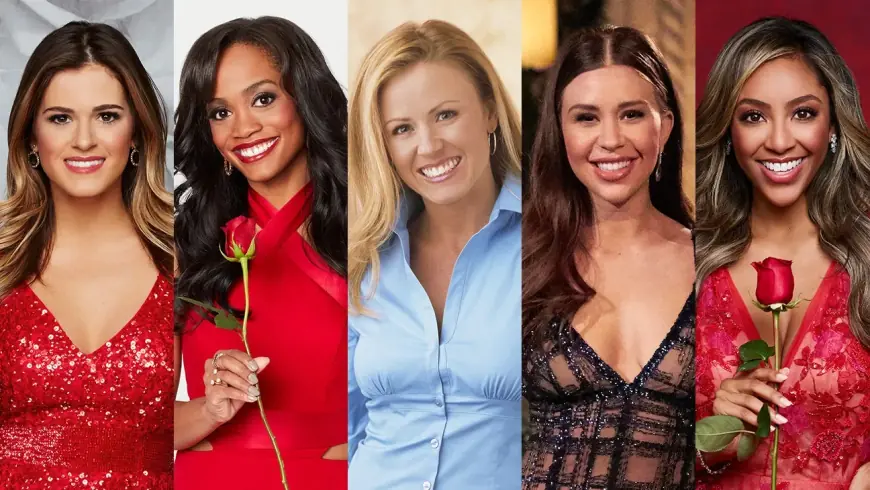
Season 22 of The Bachelorette is being framed as a franchise milestone, with Taylor Frankie Paul set to lead and a reunion special scheduled directly after the Oscars. Yet the franchise’s own historical record complicates the celebratory tone: a list of past final picks shows that “final rose” outcomes have rarely translated into lasting partnerships, even as the series continues to present engagement as a culminating promise.
The Bachelorette Season 22 and the March 15 reunion plan
Confirmed details in the context place Season 22 at the center of a broader franchise moment. Taylor Frankie Paul is described as taking the lead role, and the franchise is “celebrating the women of its past” with a special reunion following the 2026 Oscars. A separate account identifies the program as The Bachelorette: Before the First Rose, airing on March 15 directly after the Oscars, with 18 former leads slated to participate, including Golden Bachelorette star Joan Vassos.
The reunion’s premise is also described in clear terms: former leads will look back on their journeys to find love on TV and offer advice to the newest lead. The context frames this as both a nostalgia play and a handoff ritual, pairing a new season launch with a retrospective that elevates the franchise’s history of romance and commitment.
Trista Rehn, Jen Schefft, and the record of final picks
Alongside the reunion promotion, the context provides a detailed list of leads and their final picks, while also stating a headline statistic that sits uneasily with the show’s engagement-centered structure: “Although receiving a final rose is supposed to signify somewhat of a lifelong commitment, only four of the pairs on this list are still together. ” That claim establishes a documented gap between the symbolic weight placed on the final rose and the longer-term results highlighted by the same compilation.
Confirmed examples within the context illustrate both ends of that spectrum. Trista Rehn is described as the first-ever Bachelorette, with her season placed in January 2002 in one account and a January 8, 2003 premiere date in another. Both accounts align on the core outcome: she gave her final rose to Ryan Sutter, they became engaged on the show, and they remain together. The context further describes them as the longest-lasting couple in Bachelor Nation, and notes a televised wedding and two children, Maxwell and Blakesley.
Other seasons in the same record underscore how often the final moment did not hold. Meredith Phillips is described as leading Season 2 and getting engaged to Ian McKee, with the relationship ending about a year later; one account specifies a split announced in February 2005, and another adds that she later married Michael Broady in 2011 and has since split. Jen Schefft’s outcome is documented as an early structural break from the engagement narrative itself: she chose neither of her final two men, and turned down Jerry Ferris’s proposal at a “live” final rose ceremony, making her the first lead to end without an engagement or relationship. DeAnna Pappas got engaged to Jesse Csincsak and later terminated the engagement in November 2008, while Jillian Harris got engaged to Ed Swiderski and the relationship ended in July 2010. Ali Fedotowsky’s season ended with a proposal from Roberto Martinez by August 2010, followed by a breakup announced in November 2011.
Taylor Frankie Paul’s season launch meets a franchise-wide commitment gap
Taken together, the context documents a pattern: the franchise promotes the final rose as an endpoint meant to signal permanence, but the compiled outcomes emphasize how frequently engagements end after the cameras stop. The tension is not hypothetical; it is embedded directly in the phrasing that the final rose is “supposed to signify” lifelong commitment, paired with the statement that only four pairs remain together.
Still, the context does not confirm key details that would allow a more precise audit of the franchise’s promise versus performance. It does not identify the full list of 24 leads referenced, does not name the four couples still together, and does not provide a season-by-season accounting for all 24 women said to have led the show. Even within the limited excerpts, the record is also presented through two overlapping timelines, including conflicting premiere-year references for Trista Rehn’s season. That mismatch is a narrow but concrete example of how the franchise’s long history can be packaged for a celebratory special without fully reconciling every detail inside the public narrative.
Stakeholders’ positions in the context are promotional rather than defensive. The reunion is described as a “wonderful” gathering of past leads, and the overall framing treats the franchise as an ongoing pipeline from dating to marriage. What remains unclear is how the reunion special will handle outcomes that contradict that premise, including seasons that ended without engagement, relationships that ended within months, and the stated reality that most final-rose pairs did not last.
The clearest evidence threshold for resolving the central tension will be the on-air content of The Bachelorette: Before the First Rose on March 15: if the program directly addresses the “only four” statistic and clarifies which couples those are, it would establish whether the celebration is built on a transparent accounting of results or a selective retelling focused on the franchise’s most durable examples.