Spacex Rocket Launch Schedule points to a faster Starlink cadence from Vandenberg

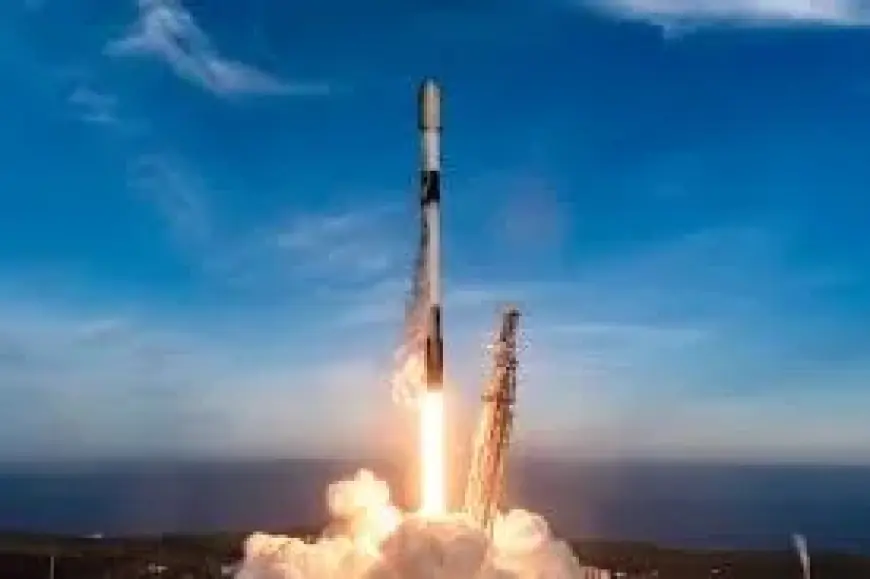
SpaceX’s spacex rocket launch schedule gained another confirmed data point Friday morning, when a Falcon 9 lifted off from Vandenberg Space Force Base carrying 25 Starlink satellites. The flight’s timing, rapid booster recovery, and rising 2026 satellite count signal a trajectory toward more routine, repeatable Starlink missions tied to a well-worn launch-and-land pattern.
Vandenberg Space Force Base launch at 10: 57: 59 a. m. ET sets the baseline
Liftoff occurred from Space Launch Complex 4 East at 6: 57: 59 a. m. PDT (10: 57: 59 a. m. EDT) in California, sending 25 broadband internet satellites toward low Earth orbit. The mission is identified as Starlink 17-31, and it marked SpaceX’s 25th mission supporting its low Earth orbit constellation so far this year.
The launch also adds a clear, time-stamped marker that can anchor near-term expectations for operations out of Vandenberg. While the context does not list any future dates, the combination of a morning liftoff and a completed end-to-end mission sequence reinforces that the company is sustaining a steady operational rhythm at this site.
Falcon 9 booster B1071 reuse and landing data tighten the spacex rocket launch schedule
The Starlink 17-31 mission flew on the Falcon 9 first stage booster with tail number 1071. Its stated flight history reached 32 flights after earlier missions that included NASA’s SWOT, five missions for the National Reconnaissance Office, and five SmallSat rideshare missions. That reuse record functions as a visible driver in the current pace: the same hardware returning again and again reduces the number of unknowns that typically slow down launch processing.
Recovery happened quickly. A little less than 8. 5 minutes after liftoff, B1071 landed on the drone ship “Of Course I Still Love You” in the Pacific Ocean. The landing tally adds scale to the operational pattern: it was the 183rd landing on that vessel and the 584th booster landing for SpaceX. Each additional successful recovery expands the set of boosters and recovery assets that have demonstrated repeat performance, supporting a direction of travel toward more repeatable, schedule-driven flights.
Starlink’s 2026 totals and deployment timing point to repeatable mission blocks
Satellite deployment occurred a little more than an hour after launch, and the context notes that the mission brought SpaceX up to 674 Starlink satellites flown so far in 2026. Paired with the statement that this was the 25th constellation-supporting mission of the year, the numbers show a system built around consistent batch delivery rather than occasional spikes. In trend terms, the confirmed count is less about a single launch and more about a rolling accumulation that depends on launches completing on a predictable cadence.
Signals of broader activity also appear in the same context. SpaceX and SES agreed to place the SES 10 television relay craft aboard the first launch of a reused “flight-proven” Falcon 9 from Cape Canaveral as soon as October, and another passage describes an all-new Falcon 9 firing its engines Friday night on launch pad 40 at Cape Canaveral, characterized as part of a “busy weekend of SpaceX launch preps” leading up to “a pair of blastoffs Sunday and Tuesday” from California’s Central Coast and Florida’s Space Coast. Even without specific times or payload details for those upcoming launches, the repeated references to preparations and multiple planned blastoffs reinforce a direction toward tightly sequenced operations across coasts.
Spacex Rocket Launch Schedule scenarios tied to Friday’s Vandenberg result
If B1071-style reuse continues… the spacex rocket launch schedule could keep leaning on high-flight-count boosters, because B1071’s 32nd flight still ended with a successful landing on “Of Course I Still Love You” in under 8. 5 minutes after liftoff. In that conditional path, more missions can follow the same operational template: launch from Space Launch Complex 4 East, recover to a Pacific drone ship, then proceed to satellite deployment a little more than an hour after liftoff.
Should flight-proven Falcon 9 launches expand to more non-Starlink payloads… the schedule could become more interleaved between Starlink missions and outside customers, based on the stated SES plan to fly SES 10 on the first reused Falcon 9 launch from Cape Canaveral as soon as October. That scenario is conditional because the context does not provide the final launch date or confirm completion; it only establishes the agreement and the intended timing window.
The next confirmed signal in the context is the completed Starlink 17-31 sequence itself: liftoff at 10: 57: 59 a. m. ET, landing in under 8. 5 minutes, and deployment a little more than an hour after launch. What the context does not resolve is the exact timing for the referenced Sunday and Tuesday blastoffs, or how many additional Vandenberg launches are queued immediately after Friday’s mission; still, the confirmed 25th constellation-supporting mission of the year and 674 satellites flown in 2026 keep the trajectory pointed toward sustained, repeatable Starlink launch blocks.