Snoqualmie Pass Conditions vs. US 12: Closures show different safety playbooks

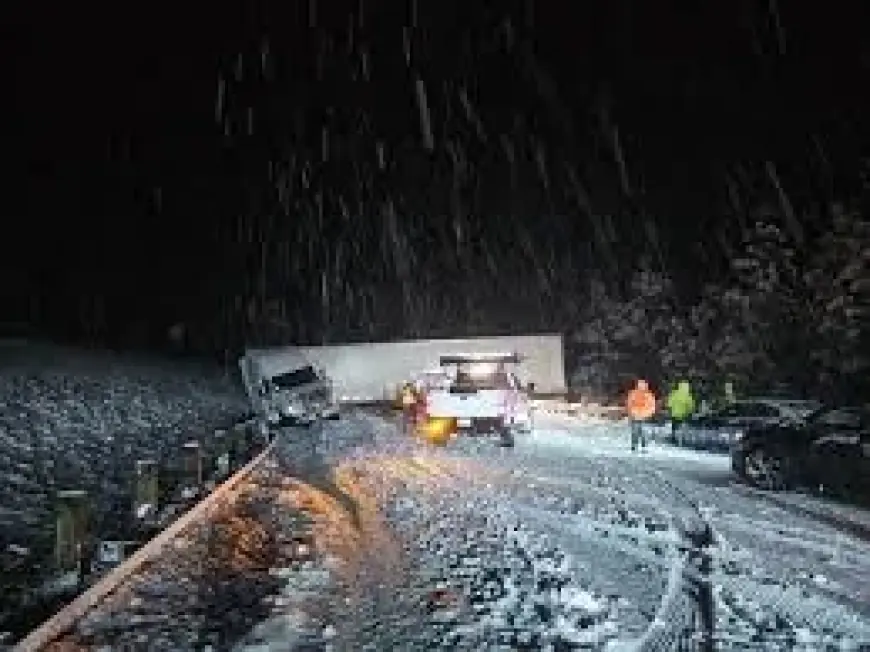
snoqualmie pass conditions were part of a broader set of travel disruptions as the Washington State Department of Transportation closed roads and highways across western Washington while snow continued to fall Friday morning. Alongside I-90 issues tied to crashes, US 12 faced a planned closure for avalanche assessment. Placing those two responses side by side answers a practical question: what triggers an immediate shutdown versus a scheduled one?
I-90 at Easton: crash-driven shutdown under Snoqualmie Pass Conditions
I-90 westbound was closed at Easton at 7: 05 a. m. ET due to crashes, marking a rapid response to incidents already on the roadway. At the same time, chain requirements tightened: chains were required eastbound for all vehicles except all-wheel drive. Together, those measures show a two-track approach on I-90—closing one direction where collisions had already occurred while still allowing limited movement in the other direction under stricter traction rules.
That I-90 action appeared within a fast-moving sequence of alerts during the morning, as multiple corridors saw disruptions that were attributed to immediate hazards such as collisions and downed trees. The I-90 closure, specifically tied to “crashes, ” fits that pattern of reacting to conditions that have already produced spinouts or wrecks rather than waiting for risks to develop further.
US 12 near Packwood and Naches: a planned closure for avalanche assessment
US 12 was set to close at 8: 30 a. m. ET in both directions for avalanche assessment, with eastbound closing near Packwood and westbound closing near Naches. Unlike the I-90 shutdown at Easton, this action was scheduled ahead of time and tied to evaluation of avalanche danger rather than a collision already blocking travel.
The US 12 plan sits alongside other closures attributed to snow-related hazards, but it stands out for its timing and purpose. While some roads were described as blocked due to collisions or obstructed by fallen trees, US 12’s closure was framed as a preventative step—stopping traffic so an assessment could be carried out before travel continued through the affected area.
Washington State Department of Transportation actions: collisions versus preemptive risk control
Comparing I-90 at Easton with US 12 near Packwood and Naches highlights two distinct triggers for restricting travel during Friday morning’s snowfall. On I-90, the westbound closure was tied to crashes already happening, while eastbound movement continued with chains required for most vehicles. On US 12, both directions were scheduled to close specifically for avalanche assessment, a preemptive measure designed to manage risk before an incident is described on the roadway. Road segment Time noted (ET) Direction affected Primary reason stated Immediate travel rule stated I-90 at Easton 7: 05 a. m. Westbound closed Crashes Chains required eastbound except AWD US 12 near Packwood / Naches 8: 30 a. m. Both directions closing Avalanche assessment Closure planned for assessment US 2 at Tye River Road NE 7: 19 a. m. Both directions blocked Collision Blocked SR 410 at Mud Mountain Road 7: 39 a. m. Both directions closed Fallen trees Closed SR 900 at SE 83rd Place 7: 55 a. m. Both directions closed Fallen tree blocking both directions Closed SR 18 diverted at Tiger Mountain 8: 05 a. m. Traffic diverted Diversion noted by WSDOT cameras Detour/diversion in place
Analysis: The divergence suggests WSDOT was juggling two categories of threat at once: reactive controls after collisions (I-90 at Easton, US 2 near Skykomish and east of Stevens Pass) and proactive controls where conditions demanded verification before traffic continued (US 12 avalanche assessment). The closures tied to fallen trees—SR 410 and SR 900—add a third category where the hazard is physical obstruction, leaving less room for partial operation.
Under snoqualmie pass conditions, that mix matters because it changes what drivers encounter from corridor to corridor: a full stop caused by crashes, a timed shutdown for evaluation, or a detour around a blockage. Yet, the comparison also shows a consistent principle across the system: when the immediate risk is either active (crashes) or unavoidable (trees blocking lanes), closures happen right away; when the risk is potential but serious (avalanche conditions), closures can be scheduled to enable a specific safety task.
The finding from this comparison is that Friday morning’s disruptions were not a single type of shutdown repeated across the map, but a set of targeted interventions matched to different hazards—crashes on I-90 at Easton and an avalanche-assessment closure on US 12. The next confirmed test of that approach comes at 8: 30 a. m. ET, when US 12 was set to close in both directions; if that schedule holds while I-90 remains constrained by crash response and chain requirements, the comparison suggests WSDOT will continue tailoring restrictions to the specific threat rather than applying one uniform rule everywhere.