Purdue Vs Nebraska sets up a Big Ten quarterfinal built on rebounds

Purdue vs nebraska is back on the board in Chicago, and it arrives with one number still hanging in the air: 21 offensive rebounds. That was Purdue’s count the last time these teams met, when a 24-point Boilermaker lead vanished and the game ran into overtime. Now, after Purdue’s 81-68 win over Northwestern on Thursday night, the rematch waits on Friday night with a Big Ten Tournament quarterfinal at stake.
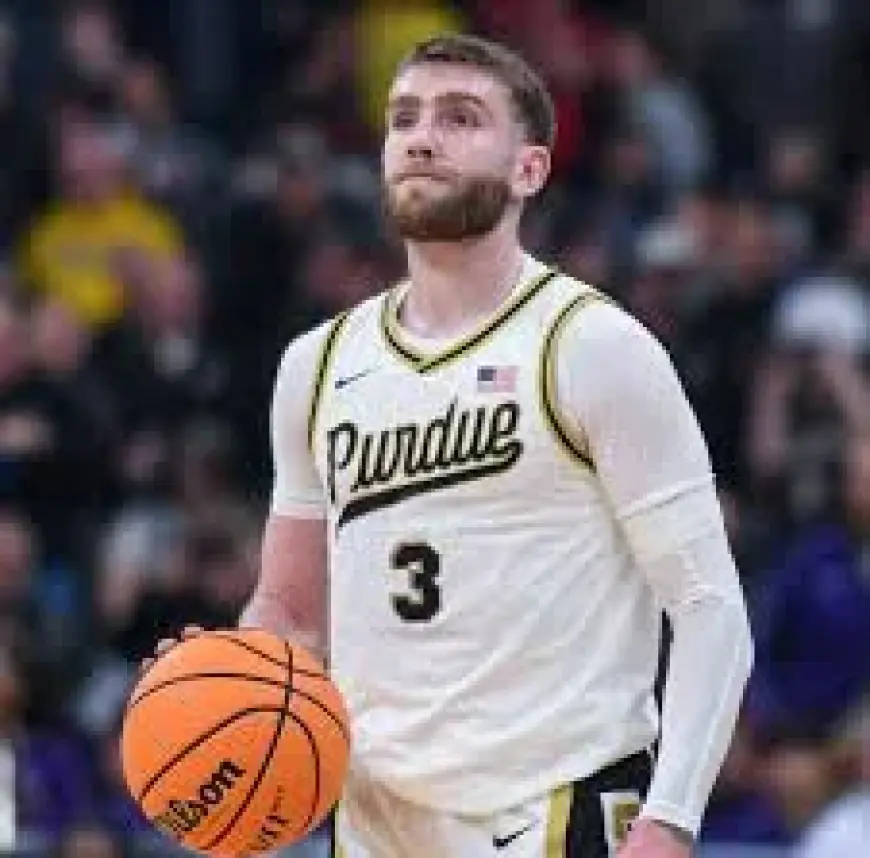
Braden Smith and Oscar Cluff carry Purdue out of Thursday night
Purdue earned the next step the hard way, closing its third game in three days with an 81-68 win over Northwestern in the third round of the Big Ten Tournament in Chicago. The box score detail that defined it was Braden Smith’s 16 assists, paired with Oscar Cluff’s line of 19 points and 10 rebounds. Purdue’s defense and offense both clicked in the first half, enough to create separation before Northwestern tried to tug the game back into reach after the break.
That second-half wobble sounded familiar, because Purdue has already lived through it once in its only meeting with Nebraska this season. Against Northwestern, Purdue’s lead shrank, but the circumstances were different: Northwestern played without its starting center and did not have the firepower to keep pace. Northwestern also leaned on senior Nick Martinelli in what was described as his last college game, a last push that still could not close the gap as Purdue’s offense continued to hum.
For Purdue, Thursday’s win did not just extend its stay in Chicago. It carried two clear storylines into Friday night: Smith’s ability to orchestrate possessions and Cluff’s ability to turn misses into extra chances. Those weren’t side notes in the first matchup with Nebraska. They were the reason Purdue survived it.
Purdue vs nebraska turns on the same tug-of-war from the first meeting
When Purdue and Nebraska played earlier this season, Purdue’s response to Nebraska’s defensive approach became extreme. Nebraska’s overloaded, keep-the-ball-out-of-the-paint defense pushed Purdue to the perimeter, and Purdue took the invitation again and again: 46 three-point attempts. The volume did not translate to clean efficiency, with Purdue making 13 of those threes, below 30%. Yet the shooting numbers only tell half the story of why Purdue still found a way to win in overtime.
The other half lived at the rim after the shots missed. Purdue collected 21 offensive rebounds, with Cluff grabbing 10 of them by himself. Purdue finished with a 54-37 rebounding edge. Those extra possessions gave Purdue space to hold on when the game tightened, even as Nebraska found its way back from that 24-point deficit in the second half.
Nebraska’s own stat line from that game shows why the comeback stood out. The Cornhuskers did not shoot particularly well from three, going 12 of 32. They lost the rebounding battle and turned the ball over 14 times. Still, Nebraska’s defense sharpened late, holding Purdue to 80 points by the end of overtime after allowing 40 points in the first 20 minutes. It was a reminder that even when Nebraska isn’t winning the margins, it can change the texture of the game late.
Individual scoring also mattered in the comeback: Pryce Sandfort scored 15 points, Jamarques Lawrence had 16, and Rienk Mast scored 18. Mast also hit a couple of major threes late to even the game at the end of the second half. Those moments turned a game Purdue seemed to control into a game Purdue had to survive.
Nebraska and Purdue chase momentum as Smith nears Bobby Hurley’s mark
Friday night’s quarterfinal sits inside a broader attempt by both teams to steady themselves after uneven finishes. Purdue went 6-7 in its final 13 games, a stretch that accounted for all of its conference losses after it opened league play by winning its first seven conference games. Nebraska went 6-5 over its last 11 games after winning its first nine conference games of the season. As they slid in the Big Ten standings, the tournament offered a chance to regain momentum heading into the NCAA Tournament and possibly improve position, with both described as competing for a 3 seed.
Smith’s role in that push has a second layer: a record within reach. His 16 assists on Thursday tied his career-high. It also moved him to 31 assists shy of Bobby Hurley’s all-time assist mark. At Smith’s season pace of just over eight assists per game, the math points to a multi-game chase, unless he produces another night like Thursday.
Nebraska’s defensive philosophy is part of why the pursuit feels connected to this specific opponent. Keeping the ball out of the paint can leave open shooters, and Smith’s job is to find them. If Purdue shoots better than it did in the first meeting, Smith could again pile up assists quickly. If Purdue misses again, the game could return to the same blunt question it asked earlier this season: can Purdue keep winning by living on the offensive glass?
In the end, Purdue vs nebraska is not arriving as a clean sequel. It comes with Thursday night’s evidence that Purdue can generate points through Smith’s passing and Cluff’s physical work, and with the memory of how fast a big lead can disappear against Nebraska. Friday night in Chicago offers both teams the same thing they have been searching for since their late-season slides: a way to turn one game into momentum, rather than another narrow escape.