Jennifer Griffin vs. an ‘All-Star’ panel: What the conflict coverage signals

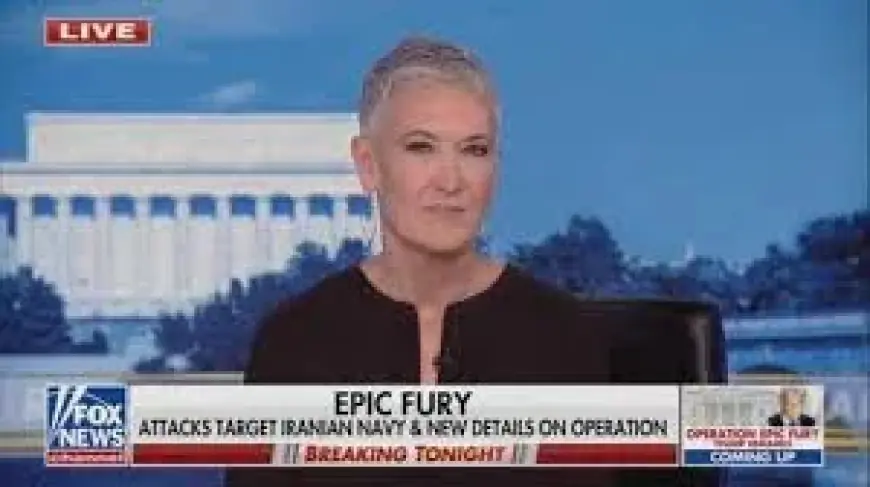
jennifer griffin is linked in recent coverage to a blunt warning about the Middle East conflict’s trajectory, while an “All-Star” panel segment focuses on the U. S. military working toward objectives as Operation Epic Fury continues. Placing those two approaches side by side answers a narrow question: does the current on-air emphasis lean more toward describing aims, or toward acknowledging how uncertain the end state remains?
Operation Epic Fury and the “All-Star” panel’s objectives-first framing
One strand of the current coverage centers on a panel discussion described as an “All-Star” panel, focused on the U. S. military “working toward objectives” while Operation Epic Fury continues. The language presented is operational and directional: the segment foregrounds “objectives, ” and it treats the continuation of Operation Epic Fury as the core reference point for what viewers should track.
That framing inherently privileges measurable intent over speculative outcomes. It does not, in the provided material, spell out what those objectives are or how progress is being assessed. Still, the emphasis is clear: the discussion’s organizing principle is the U. S. military’s active pursuit of defined goals during an ongoing operation.
Jennifer Griffin’s uncertainty-centered line on how the conflict ends
A second strand is captured in a separate headline that foregrounds Jennifer Griffin on covering an “Iran War, ” paired with the line: “We Don’t Know How This Ends. ” Even without additional detail in the provided material, the thrust of the message differs from objectives-first coverage: it pushes uncertainty to the front of the narrative rather than treating it as a secondary caveat.
Another related headline frames the moment as one of “mounting pressure” to end the conflict in the Middle East. Read alongside Jennifer Griffin’s emphasis on an unknown end point, the pressure-to-end theme adds a second layer of tension: audiences are being told there is urgency to stop the conflict, while also being told the ending is not clear.
Jennifer Griffin and Operation Epic Fury: Where the two approaches diverge
Both approaches address the same broad reality: conflict persists, and coverage is trying to explain where it is headed. Yet they diverge on the primary lens. The Operation Epic Fury panel description elevates the idea of progress toward objectives. The Jennifer Griffin headline elevates the idea of unpredictability about the end state, even as pressure builds to end the conflict.
The divergence becomes sharper when the two headlines about pressure and uncertainty are placed against the objectives-based segment. If there is “mounting pressure” to end the conflict, an objectives framing can sound like a roadmap. If “we don’t know how this ends, ” the same roadmap can sound incomplete, or at least insufficient to answer the public’s most basic question: what outcome is realistically attainable. Coverage element (from provided text) Primary emphasis Implied viewer takeaway “All-Star” panel on Operation Epic Fury continuing U. S. military working toward objectives Track stated aims and ongoing operations Jennifer Griffin headline: “We Don’t Know How This Ends” Uncertainty about the conflict’s end state Expect ambiguity and unresolved outcomes Headline: “mounting pressure” to end conflict in Middle East External urgency to stop the conflict Expect escalation of demands for an endpoint
Analysis: The side-by-side comparison suggests a split-screen reality in the current messaging. The objectives-based framing implies a structure and direction to the campaign around Operation Epic Fury. The Jennifer Griffin framing, reinforced by the “mounting pressure” headline, implies that even with objectives in view, the political and strategic endpoint is not settled in a way that can be confidently explained.
The most practical finding from the comparison is about what each approach prepares the audience to expect. An objectives-first narrative primes viewers to look for milestones and progress inside Operation Epic Fury. An uncertainty-first narrative primes viewers to weigh the possibility that developments may not conform to a neat sequence, especially if pressure to end the conflict rises faster than clarity on the ending.
For now, the comparison establishes a clear tension in the coverage: operational focus on objectives coexists with an explicit acknowledgement from Jennifer Griffin that the end state remains unknown. If Operation Epic Fury continues to be described mainly through objectives while pressure to end the conflict intensifies, the comparison suggests the central public debate will hinge less on what the operation is trying to do, and more on whether anyone can credibly define how it ends.