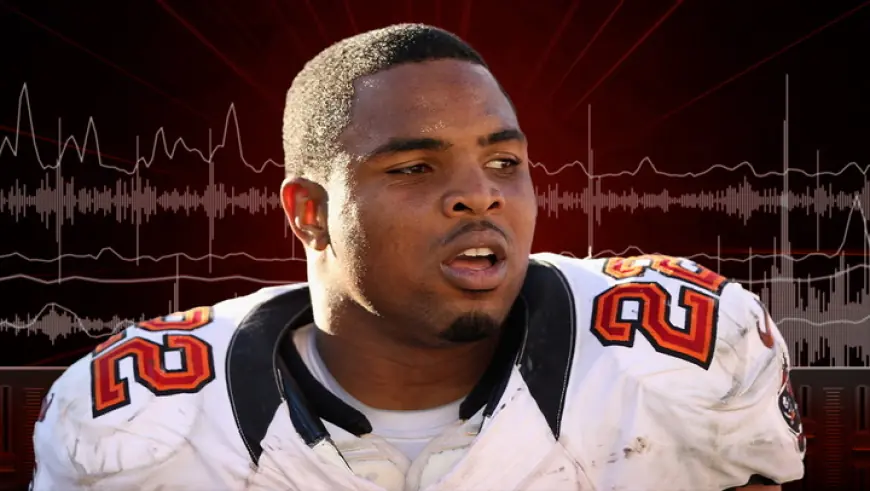
Doug Martin case deepens as family awaits police answers and CTE testing

2026-03-14 01:06:36
Nearly five months after doug martin died while in the custody of the Oakland Police Department, his family is still waiting for answers, and the official cause of death remains unclear. Two parallel tracks now shape what comes next: multiple investigations into the police encounter that preceded his death, and a posthumous medical review of his brain for chronic traumatic encephalopathy (CTE) at Boston University.
Doug Martin’s death and custody timeline
Douglas Martin, a former NFL player who played seven seasons from 2012 to 2019, died on Oct. 18 after what police described as a “brief struggle” with Oakland police officers responding to a home break-in in the East Oakland hills. Police said Martin “became unresponsive” after being taken into custody. Medics transported him to a nearby hospital, where he later died. He was 36.
The pattern suggests the public narrative of the incident is still being built from incomplete material, because key documents and evidence that typically clarify timelines—final autopsy findings, toxicology results, and full body-worn camera video—have not been publicly released.
One central uncertainty runs through every thread of the case: what actually caused Martin’s death. John Burris, the civil rights attorney retained by the family, described the decision-making problem bluntly—whether the death was driven by a medical condition, potential CTE, police actions, or something else. Until the police investigation and coroner’s work are complete, Burris said the cause of death remains unclear.
John Burris and the legal posture
Martin’s family has retained John Burris to represent them, but Burris said they are holding off for now on deciding whether to pursue legal action against the Oakland Police Department or the city. That restraint is not just procedural; it reflects how much of the factual record is still pending. Burris said he is not presuming legal action is needed until “all the reports” have been reviewed.
The figures point to a case in a holding pattern rather than one moving cleanly toward closure. The family is simultaneously waiting on the police department’s investigation, the coroner’s final autopsy report, and the outcome of medical specialists’ CTE evaluation. Each one could influence whether the family views the death primarily through the lens of medical explanation, police conduct, or a combination.
Even the available video evidence appears incomplete. Burris said he has seen some, but not all, of the officers’ body-worn camera footage of the struggle leading up to Martin’s death. He described what he saw as a compilation or summary, and said it does not provide enough perspective to determine whether officer misconduct occurred.
OPD investigation, autopsy, and CTE testing
Several bodies are investigating the incident: the Oakland Police Department’s Homicide Section and Internal Affairs Bureau; the Police Commission’s Community Police Review Agency; and the Alameda County District Attorney’s Office. In addition, the Alameda County Coroner’s Bureau is completing the autopsy report, which Burris said is awaiting a toxicology scan to determine whether Martin had drugs or other substances in his body before he died. Burris said toxicology tests generally take six to eight weeks to be completed.
At the same time, Martin’s family sent his body to Boston University’s Chronic Traumatic Encephalopathy Center immediately after his death so specialists could evaluate his brain for CTE, a degenerative brain disease caused by repeated head trauma. The disease can only be definitively diagnosed after death. Burris said the CTE examination has not yet been completed.
Yet the two tracks—police scrutiny and medical review—do not necessarily answer the same question. The police-focused investigations aim to reconstruct actions, decisions, and conduct during the encounter, while the medical work could help explain vulnerability or underlying conditions that might have shaped what happened physiologically. If the toxicology scan and CTE evaluation arrive before the investigative findings are finalized, the data suggests the case’s public understanding could shift toward medical causation; if investigative conclusions arrive first, attention could remain centered on the custody struggle and what led to Martin becoming unresponsive.
For now, a major evidentiary gap remains: the Oakland Police Department has not made public the body camera videos from the officers who detained Martin. In December, Interim OPD Chief James Beere declined to release the videos, citing an active investigation and saying the footage is exempt from a state law during that period.
The next concrete milestones are the completion of the Oakland Police Department investigation, the Alameda County Coroner’s Bureau autopsy report including toxicology, and Boston University’s CTE evaluation. Until those arrive, the open question at the center of the case remains specific and unresolved: what caused doug martin to become unresponsive after being taken into custody on Oct. 18.