1348 Ex Voto reviews spotlight technical strain and a narrowing design trajectory

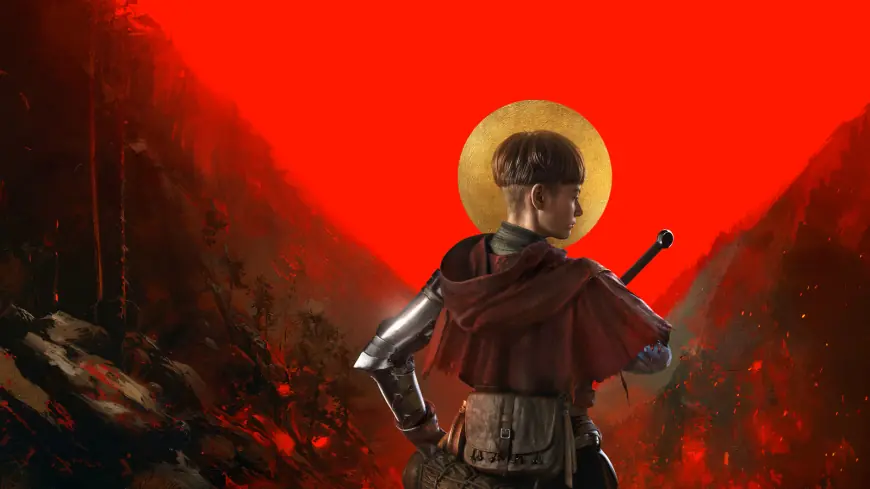
Early critical takes on 1348 ex voto converge on a similar picture: an ambitious, narrative-driven medieval action adventure with flashes of strong acting and striking environments, but repeatedly undercut by a rigid formula and performance and presentation issues. The direction implied by these reviews is a conversation that keeps circling back to execution, as much as it does to the game’s premise and characters.
Developer Sedleo’s 1348 ex voto lands as ambitious, but consistently formula-bound
The most consistent confirmed through-line is the tension between intent and delivery. One review describes “myriad ambitious elements” that “almost come together, ” pairing a “nuanced heroine, ” “complicated subject matter, ” and “brutal combat” in a story framed around knight errant Aeta and postulant Bianca. The opening is presented as sharply acted and tragic, quickly establishing the bond between Aeta (voiced by Alby Baldwin) and Bianca (voiced by Jennifer English), and setting the inciting event: Bianca is kidnapped by bandits after her hometown is pillaged amid a plague affecting the countryside.
Yet both reviews separately return to the same structural critique: the campaign loops through a linear, third-person adventure rhythm that emphasizes moving through environments, brief distractions, and repeated fights against a limited set of enemies. One assessment notes that even as Aeta travels through “beautiful environments” like mountains, forests, and abandoned chapels, the campaign “never strays away from this well-worn formula. ” Another distills the experience to moving from point A to point B and repeating combat across nine levels described as empty.
Aeta, Bianca, and the game’s systems show a trend toward collapsed choice
Beyond the overall structure, the context points to a specific design trajectory: systems that look like they offer variety, but settle into one or two dominant approaches. Combat is described in mechanical terms: Aeta can use one- or two-handed attacks, change sword stances by holding the left shoulder button, and aims to wear down enemy stagger gauges until foes become vulnerable. In practice, the reviews argue most enemies fall in “two or three slashes, ” steering encounters toward the fastest way to break guards before Aeta is overwhelmed. Dodging and parrying exist, but the combat is characterized as insufficiently nuanced to reward broader experimentation.
Progression systems are framed in similarly narrowing terms. The campaign includes weapon components—pommels, blades, handles, and guards—that map to “specific modes of attack. ” Still, one review says that by the end of the short narrative, “superior variants” appear that are so powerful “there is zero point in equipping anything else, ” flattening experimentation. The skill tree is described as encouraging players to “pile points into each and every category” rather than build toward a preferred style. Even trinkets that apply buffs are depicted as making encounters trivial in certain conditions, reinforcing the theme that choices collapse into a small set of optimal outcomes.
PC performance, camera proximity, and visual glitches shape the immediate trajectory
The visible forces driving near-term discussion are not only narrative and combat repetition, but the friction created by performance and presentation. One headline explicitly frames the issue as “poor PC performance, ” and the Spanish-language review details multiple immersion-breaking visual problems, including clipping, lighting that does not apply correctly, and textures that appear flat up close. It also describes a third-person camera that sits so close to Aeta that turning it can induce dizziness, with motion blur settings not fully resolving the disorientation. Movement contributes to that discomfort: Aeta’s pace is described as normal to slow, and the run button is said to create a camera effect that suggests speed without meaningfully increasing it.
Navigation and readability are another concrete pressure point. The Spanish-language review notes the absence of an interface, making it difficult to orient at times, and argues the game would have benefited from clearer environmental guidance to distinguish decoration from climbable or traversable obstacles. It also claims that every non-player character encountered is an enemy, a choice that is said to reduce realism and further narrow the feel of the world.
1348 Ex Voto’s post-release conversation, if these critiques continue, will center on execution
If the current critical trajectory continues… the short-term narrative around 1348 ex voto is likely to remain anchored to how often the game’s ambition is said to be undermined by repetition, constrained build variety, and discomforting camera and visual issues. The context repeatedly contrasts high points—acted character work, a tragic opening, and “beautiful” or graphically impressive vistas—with design and technical friction that disrupts immersion and reduces the incentive to experiment in combat and progression. The result is a directional signal: discussion that treats the premise and characters as potential, but treats execution as the dominant takeaway.
Should a specific context factor shift… the trajectory could pivot if the most concrete friction points—PC performance problems, camera behavior, and prominent visual glitches—were addressed in a way that makes exploration and combat feel less physically uncomfortable and less visually distracting. The context does not confirm any planned fixes or updates, so this remains a conditional scenario rather than an expectation. Still, the reviews highlight these issues with enough specificity that they function as clear levers: if those levers move, the conversation could widen back toward the game’s acting, atmosphere, and character-driven setup rather than circling back to technical strain and repetition.
The next confirmed signal in the context is the continued rollout of reviews that already frame the game through two intersecting lenses: ambitious cinematic intent and a third-person action structure that many moments struggle to elevate. What the context does not resolve is whether any post-launch changes will occur, leaving the near-term direction dependent on how strongly these early critiques define the broader reception.