Rupert Murdoch on screen: two reviews, one dynasty split in interpretation

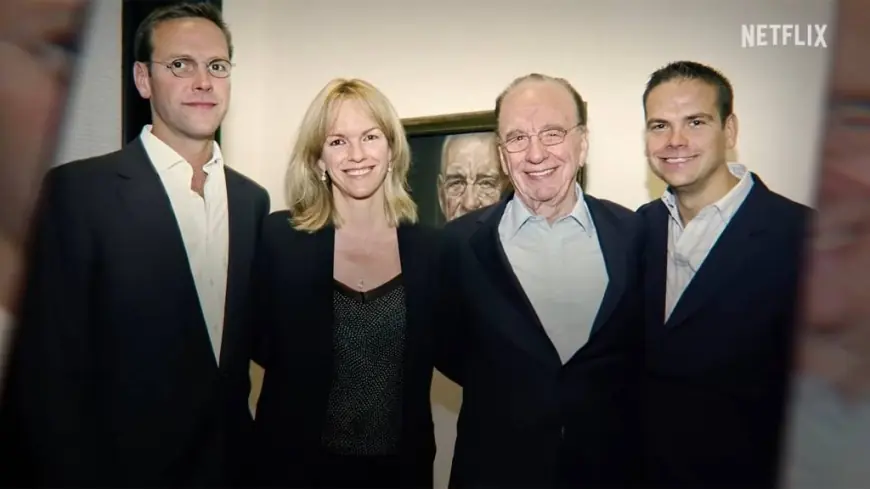
Two new critiques of Dynasty: The Murdochs put rupert murdoch’s power, family dynamics, and cultural footprint in opposing frames. One sees a wearying inventory of nepotism and manipulation; the other hails a definitive accounting of succession and scandal. Side by side, the question is simple: does the series resolve the Murdoch saga or merely reiterate it?
Project Family Harmony in Dynasty: The Murdochs and a bleak portrait
One review casts the four-part documentary as a dispiriting march through dynastic privilege. It leans into the show’s parallels with Succession, mapping Prudence, Lachlan, James, and Elisabeth to their fictional counterparts, then arguing the children’s maneuvers are the least compelling part. The father’s shadow, this review says, swallows the narrative. Its most consequential thread is a secret family plan—Project Family Harmony—to alter a trust and end equal voting rights among the elder siblings after Rupert’s death, consolidating control with Lachlan. The project is framed as a bid to keep the enterprise aligned with conservative politics and prevent the more liberal James from shifting it leftward. That emphasis, paired with recollections of phone-hacking and workplace misconduct scandals within the empire, yields a conclusion: the real story is not cliffhangers or palace intrigue, but the unromantic machinery of influence, power, and the calcifying effects of succession built to last.
Liz Garbus’s four-part film and the case for resolution
A second review calls the documentary a sharp, conclusive chronicle. Directed by Liz Garbus, it draws on thousands of pages of documents, emails, and text messages not previously shown on television, and features a deep bench of journalists, including Jim Rutenberg, Jonathan Mahler, and McKay Coppins. The account links real family events with the meta-drama of Succession: a memo from Elisabeth Murdoch’s representative, Mark Devereux, meant to prevent a fictional implosion, instead triggered a real one. That chain leads to a court battle and a $3. 3bn settlement to siblings who missed out when Lachlan Murdoch was handed control by his father. The film’s texture comes from first-hand recollections of tabloid-era practices and a cameo by Hugh Grant, who recounts life under relentless pursuit. This review’s bottom line: unlike a 2020 three-part predecessor, this four-part telling has what that earlier effort lacked—resolution.
Succession echoes, Lachlan Murdoch, and Hugh Grant: alignment and split
Both assessments agree on several points: the series places the family beside Succession’s universe, the archive is unusually rich, and the on-camera voices include long-time chroniclers and Hugh Grant. Yet, where the skeptical view stresses Project Family Harmony and a grim, politics-first logic of control, the affirmative one stresses Devereux’s memo, the ensuing court fight, and the $3. 3bn settlement as narrative closure. For both, rupert murdoch remains the gravitational center—and that is precisely where their interpretations diverge.
| Dimension | Review One (skeptical) | Review Two (affirming) |
|---|---|---|
| Overall verdict | Exhausting catalogue of nepotism; siblings overshadowed by father | Definitive reckoning that delivers narrative resolution |
| Succession framing | Parallels underscore fatigue rather than drama | Meta loop heightens stakes and payoff |
| Key succession mechanic | Project Family Harmony to secure Lachlan’s control posthumously | Devereux memo sparks court battle and $3. 3bn settlement |
| Evidence base | Reporter analysis and archival footage | Thousands of pages of documents and messages; named journalists |
| Scandal coverage | Phone hacking and workplace misconduct within the empire | Tabloid methods detailed; chilling recollections on tactics |
| Notable participant | Hugh Grant appears amid industry recollections | Hugh Grant recounts being targeted during tabloid heyday |
In analysis, the difference hinges on what counts as closure. The first review treats succession as a structural project—embodied by Project Family Harmony—whose very design resists catharsis. The second treats the documentary’s late-stage plot points—the memo, the court battle, and the $3. 3bn payout—as a genuine endgame, the chapter the earlier 2020 series could not yet write.
The finding: the same footage and reporting can read either as a civics lesson in entrenched power or as the final, documented turn in a long-running family contest. The four-part structure itself provides the next test. If its final chapter sustains the throughline from Project Family Harmony to courtroom resolution, the comparison suggests viewers will see not just familiar scandals, but a complete succession story.