Purdue Vs Nebraska Prediction: What the Big Ten rematch reveals

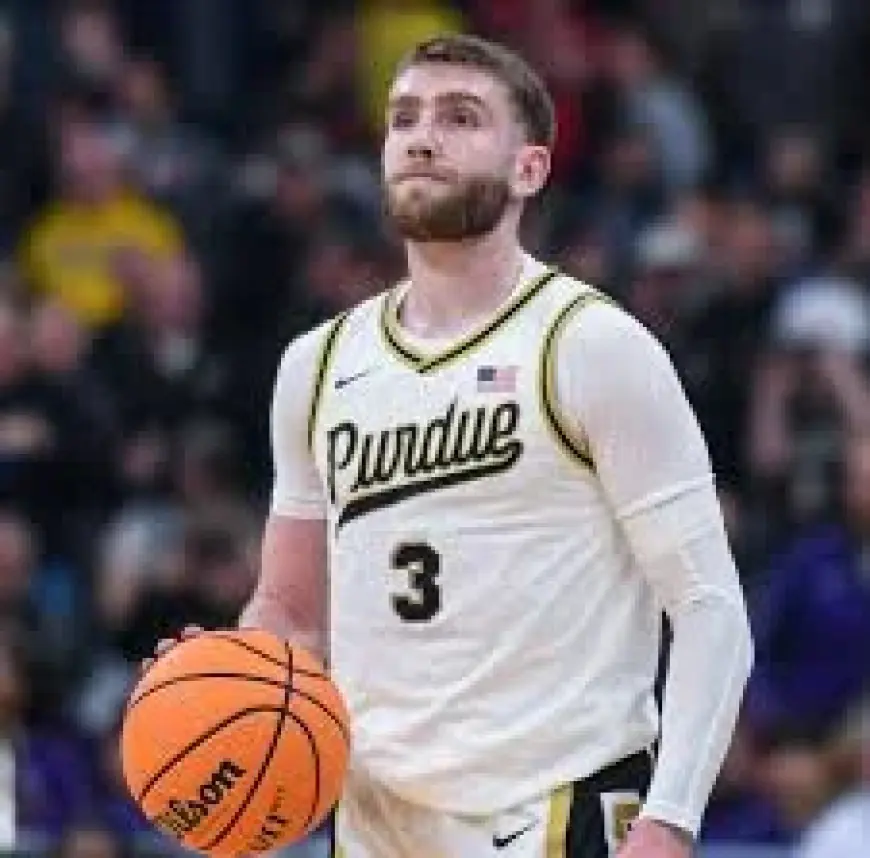
The purdue vs nebraska prediction for Friday night in Chicago hinges on whether Purdue can turn the same perimeter-heavy game plan from the teams’ only meeting into a cleaner, steadier finish. Putting Purdue’s overtime escape against Nebraska next to Purdue’s 81-68 win over Northwestern on Thursday highlights one central question: can Purdue keep control when the second half tightens and the margin shrinks?
Purdue’s Northwestern win: Braden Smith and Oscar Cluff set the pace
Purdue arrived at the quarterfinal with a third-round win over Northwestern, 81-68, powered by Braden Smith’s playmaking and Oscar Cluff’s inside work. Smith delivered 16 assists, and Cluff paired 19 points with 10 rebounds, a combination that kept Purdue’s offense humming and gave it a reliable physical edge. The performance also placed Smith’s season storyline in sharper focus: his 16 assists tied his career-high and left him 31 assists from Bobby Hurley’s all-time assist mark.
Still, Thursday’s win came with a familiar warning sign that matters directly for Nebraska. Purdue built a large lead, then watched it dwindle after halftime—an echo of the team’s earlier experience against the Cornhuskers. Against Northwestern, Purdue could survive that wobble: Northwestern played its third game in three days, did not have its starting center, and even with one final strong game from senior Nick Martinelli, did not have enough firepower to fully chase Purdue down.
That context is the key contrast Purdue has to account for next. Friday’s opponent is a #2 seed, not a bottom-of-the-conference team missing a starting center. If Purdue’s second-half execution slips again, the rematch presents a much narrower margin for error.
Nebraska’s overtime comeback blueprint: defense late, pressure on Purdue’s shot profile
The regular-season meeting already supplied the clearest template for how Nebraska can make Purdue uncomfortable. Nebraska erased a 24-point second-half deficit and pushed the game to overtime, turning a blowout into a possession-by-possession struggle. The fact that Purdue still escaped matters, but so does the mechanism: Nebraska’s defense tightened late, holding Purdue to 80 points by the end of overtime after allowing 40 points in the first 20 minutes.
Style-wise, Nebraska’s overloaded, keep-the-ball-out-of-the-paint approach steered Purdue into a high-volume perimeter night. Purdue took 46 threes and made only 13, below 30%. Nebraska did not win that game by outshooting Purdue from deep either—Nebraska went 12 of 32 from three—yet the Cornhuskers stayed in striking distance because the game narrowed into defensive stops and late execution rather than open-court rhythm.
Nebraska also got notable scoring in that matchup from multiple players: Pryce Sandfort scored 15 points, Jamarques Lawrence had 16, and Rienk Mast scored 18, including late threes that helped even the game at the end of regulation. Nebraska’s ability to find enough offense despite not “doing anything particularly well” elsewhere—while also tightening defensively late—shows how it can make the matchup about patience and possessions.
Purdue vs. Nebraska side by side: the glass vs. the late-game clamp
Lining up the two teams’ shared evidence from their only meeting clarifies what each side is most likely to lean on again. Purdue’s strongest, most repeatable edge was not its three-point shooting; it was the extra chances created by rebounding. Purdue grabbed 21 offensive rebounds, including 10 offensive boards from Cluff, and out-rebounded Nebraska 54-37. That rebounding gap was cited as the reason Purdue could hold on in overtime.
Nebraska’s counterweight was not a single gaudy shooting number; it was the defensive trajectory across the game. Even while turning the ball over 14 times and losing the glass battle, Nebraska made the contest smaller late by forcing Purdue into tougher looks and limiting the damage after Purdue’s fast start.
| Category (regular-season meeting) | Purdue | Nebraska |
|---|---|---|
| Three-point shooting | 13 of 46 (below 30%) | 12 of 32 |
| Offensive rebounds | 21 (Cluff had 10) | Not specified |
| Total rebounds | 54 | 37 |
| Turnovers | Not specified | 14 |
| Biggest swing | Led by 24 in the second half | Forced overtime after comeback |
Analysis: The comparison suggests Purdue’s “floor” in the rematch is set by rebounding and Smith’s ability to generate looks, while Nebraska’s “ceiling” is raised by whether it can reproduce that late-game defensive clamp without giving Purdue so many extra possessions. Put differently, Purdue can survive poor three-point efficiency if it keeps dominating the glass; Nebraska can survive imperfect offense if it keeps shrinking the game late.
Both teams also enter this matchup with similar motivation, based on their late-season arcs. Purdue finished 6-7 over its final 13 games after starting conference play 7-0. Nebraska went 6-5 over its last 11 after starting 9-0. With both dropping in the Big Ten standings, the quarterfinal offers a direct chance to reclaim momentum heading into the NCAA Tournament, where both are described as competing for a 3 seed.
The finding from this purdue vs nebraska prediction comparison is straightforward: Purdue’s path is clearer but narrower—win the rebounding battle again and keep Smith creating efficient shots, or Nebraska’s late-game defensive tightening can turn the rematch into another overtime-level coin flip. The next confirmed test point is Friday night’s quarterfinal in Chicago. If Purdue maintains its rebounding advantage while Nebraska again keeps the paint crowded, the comparison suggests the game will be decided by whether Purdue’s perimeter volume becomes timely makes rather than simply more attempts.