Wbc Games Today: DeRosa’s confidence vs. Team USA’s wake-up call

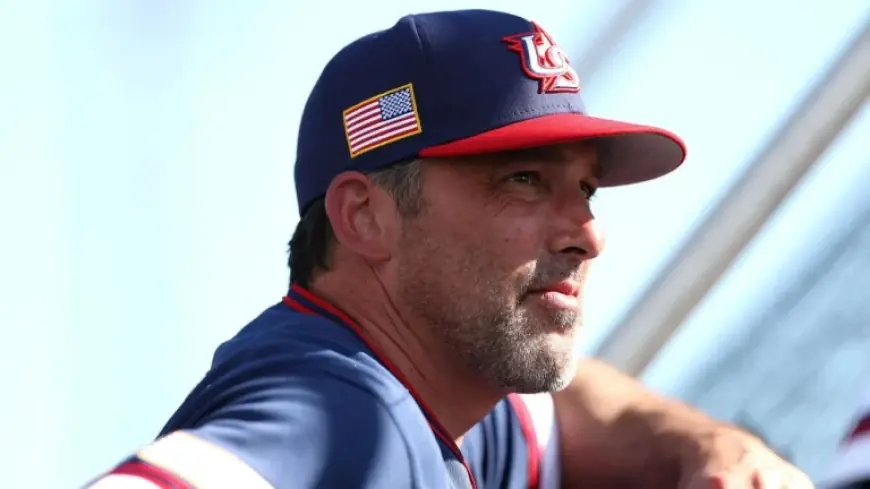
In wbc games today conversation around Team USA, manager Mark DeRosa is drawing a sharper line between what he said before facing Italy and what the tournament’s results forced him to confront. The comparison is straightforward: how did DeRosa’s public certainty about the United States’ path to the quarterfinals stack up against the actual chain of outcomes that followed, including an 8-6 loss to Italy and a quarterfinal berth secured only after Italy beat Mexico 9-1?
Mark DeRosa’s pre-Italy message on “Hot Stove”
DeRosa’s side of the comparison begins with a single, highly visible remark: before Team USA played Italy, he said the United States had already “punched its ticket” to the World Baseball Classic quarterfinals. After the reaction that followed Tuesday’s 8-6 loss to Italy, DeRosa described that earlier remark as an “overly confident statement, ” and he said on Thursday that he knew nothing was guaranteed at the time.
He also framed his thinking as tied to how he felt after Mexico. “And it’s my fault. I felt good about where we were after Mexico, ” DeRosa said Thursday. In other words, the confidence he projected publicly was not presented as a tactical bluff; he later described it as genuine overconfidence, tied to how he assessed the team’s standing coming out of that Mexico game.
That confidence also became inseparable from lineup choices that drew scrutiny after the Italy loss. DeRosa had kept usual starters Bryce Harper, Cal Raleigh, Alex Bregman, Brice Turang, and Byron Buxton out of the starting lineup against Italy. DeRosa later explained he wanted to give starts to Ernie Clement and Paul Goldschmidt because they could end up playing major roles off the bench at some point.
Team USA’s actual path: Italy 8-6, then Italy 9-1 over Mexico
The results provide the other half of the comparison, and they are less forgiving than any pregame confidence. Team USA entered the Italy matchup needing a win to guarantee a quarterfinal spot. Instead, the United States lost 8-6 on Tuesday, and that loss meant it no longer controlled its World Baseball Classic fate. The next day, Wednesday, Italy beat Mexico 9-1, a result that allowed the United States to advance anyway.
The practical effect was a shift from certainty to contingency. Instead of clinching directly against Italy, the United States had to wait through “a series of tiebreakers, ” dependent on the outcome of Italy-Mexico. Only after Italy’s 9-1 win did the quarterfinal become official: Team USA moved on to a Friday quarterfinal matchup with Canada.
DeRosa used the moment to describe a reset. “New lease on life for the boys, certainly, ” he said, before adding that he put the team “in a tough spot. ” He also credited Italy and specifically mentioned Vinnie Pasquantino, calling the loss a “huge wake-up call. ” The tournament structure, not just the single scoreline, is what made the wake-up call feel consequential: the United States went from controlling its route to relying on another game’s outcome.
Wbc Games Today comparison: certainty vs. contingency, and what changed
Placed side by side, DeRosa’s remark and the subsequent results expose the distance between projecting qualification and earning it. The same tournament week included both: a manager saying the United States had effectively advanced, and a sequence in which Team USA needed Italy to beat Mexico to reach the quarterfinals.
| Point of comparison | DeRosa’s pre-Italy posture | What the results produced |
|---|---|---|
| Quarterfinal status | Spoke as if it was already secured | Not guaranteed after the 8-6 loss to Italy |
| Control of fate | Confidence rooted in how things looked after Mexico | U. S. needed tiebreakers and Italy’s 9-1 win over Mexico |
| Consequences of the Italy game | Confidence going in | Described afterward as a “huge wake-up call” |
| Scrutiny point | Sat usual starters (Harper, Raleigh, Bregman, Turang, Buxton) | Lineup decisions questioned after the loss |
| Roster-management constraints | Pitching use limited by MLB-team “guardrails” | Pitching staff changes heading into the quarterfinals were planned |
The comparison also reveals how DeRosa framed responsibility. He did not argue the remark was misinterpreted; he called it overly confident and took blame for putting the team in a difficult position. Yet, he pushed back on the idea that Team USA treated the Italy game casually. He described the clubhouse celebration after a Monday night victory over Mexico as part of building a team quickly, while insisting the group did not lose sight of needing to play well against Italy.
DeRosa’s explanation for resting Harper also underscores that his decisions were not presented as symbolic or complacent. He said Harper had been “struggling a little bit, ” and he wanted Harper to have a day off his feet, get work with Team USA hitting coaches Sean Casey and Matt Holliday, then return. On the pitching side, DeRosa said “guardrails” set by MLB teams constrained which pitchers he could use because teams typically restrict how much players throw due to injury concerns.
Finding: The comparison establishes that Team USA’s quarterfinal advancement was ultimately secured by outcomes that contradicted DeRosa’s earlier certainty, turning a would-be clinch into a reliance on another result. The next confirmed test of that reset is Friday’s quarterfinal matchup with Canada. If Team USA maintains the “wake-up call” approach DeRosa described after the 8-6 Italy loss, the comparison suggests the team will try to convert a contingency-driven escape into a cleaner performance when the quarterfinal arrives.