Boca Raton recount names Andy Thomson mayor, but disputed ballots remain

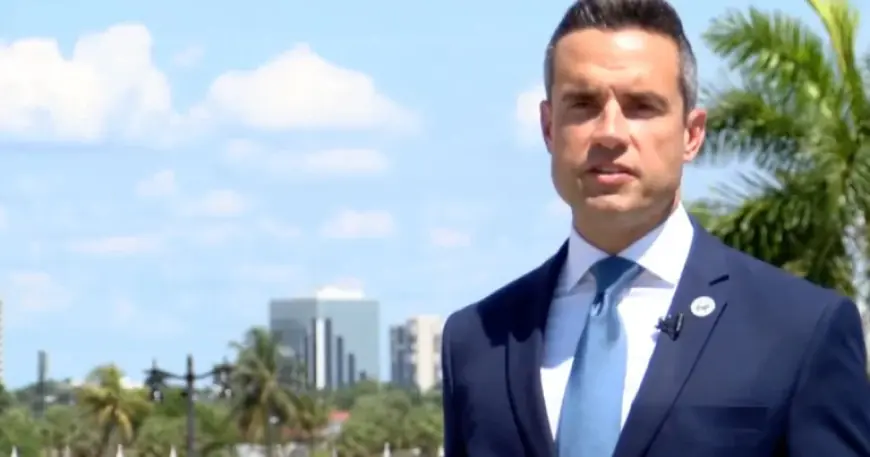
boca raton has a new mayor on paper after a recount in Palm Beach County declared Councilman Andy Thomson the winner by five votes. Yet the official margin sits on decisions that were immediately contested: four additional votes awarded during a manual review of ballots and a late batch of mail-in ballots added to the count overnight that the losing campaign is scrutinizing.
Andy Thomson’s five-vote margin and the four manual votes
Confirmed results from the recount placed Andy Thomson at 7, 572 votes and challenger Mike Liebelson at 7, 567, a five-vote difference. Thomson was declared the winner at about 5 p. m. after a Friday recount of Tuesday’s elections in Palm Beach County.
The recount did not simply reaffirm the earlier tally. During the manual portion, Thomson was awarded four extra votes that were not included before the hand review. Elections officials tied those additional votes to the manual recount of two categories of ballots: “undervotes” and “overvotes. ”
Officials described “overvotes” as ballots where more selections are made than allowed in a contest, and “undervotes” as ballots where no selection is made in that race. The process described in the record is sequential: these ballots are identified during the machine recount, then reviewed during the manual recount. The investigative tension is structural, not rhetorical: when a mayoral race is settled by five votes, the four votes derived from discretionary ballot interpretation become central to the outcome.
Boca Raton ballots: overvotes, undervotes, and a challenge path
Liebelson objected to the decisions that produced the four added votes for Thomson. The context lays out the possible mechanics of a challenge without confirming that a court filing will happen. One described path would be to challenge the canvassing board’s decision to award those four votes to Thomson. Another would be to challenge the board’s decision not to count other ballots because it was too difficult to understand the voter’s intent.
Liebelson already sent a letter to the supervisor of elections stating he intended to challenge the results. Still, the context does not confirm what specific ballots would be presented in a formal challenge, or whether the dispute would focus primarily on the four manually awarded votes, the late-added mail ballots, or both.
What remains unclear is the exact universe of ballots contested beyond the general categories described. The record states the campaign could challenge the decisions, but it does not list ballot totals beyond the four votes awarded during the manual recount or identify how many ballots were deemed too difficult to interpret.
Mike Liebelson’s focus on late mail-in ballots and Wendy Sartory Link’s response
Alongside the manual ballot interpretations, Liebelson’s team is focusing on a group of mail-in ballots that were added to the count overnight. Their stated concern is about how those votes were distributed, describing the dispersion as seeming disproportionate compared with other mail-in ballots.
Palm Beach County Supervisor of Elections Wendy Sartory Link countered that the late jump is normal, explaining that the ballots in question were mail-in ballots dropped off at the location and the last pick-ups at post offices. The context does not provide the size of that overnight batch or the vote breakdown within it, leaving the dispute framed as a disagreement over whether an observed shift reflects routine processing or an anomaly that merits further review.
When asked whether he planned to sue, Liebelson gave no comment at that time. That leaves a narrow but consequential gap between the campaign’s declared intent to challenge and the next concrete step that would test the recount decisions.
Thin margins elsewhere and the Florida recount thresholds
The same canvassing-board recount process applied beyond the boca raton mayoral contest, showing that razor-thin outcomes were not isolated to one race. After a manual recount, the Lake Worth Beach charter referendum question No. 5 recorded 1, 640 “No” votes and 1, 638 “Yes” votes. Following a machine recount, results from the South Palm Beach Town Council election showed Francesca Attardi with 262 votes, Adrian J. Burcet with 237, Sandra Beckett with 233, Monte Berendes with 208, and Elvadianne “Elva” Culbertson with 177.
The context also documents the state rules that triggered recounts. Florida law requires the county canvassing board to order machine recounts when the first unofficial results show a candidate or ballot question defeated or eliminated by one-half of one percent or less of votes cast in that contest. A manual recount must be ordered if the second unofficial results, after the machine recount, show a candidate or ballot question eliminated or defeated by one-quarter of one percent (0. 25%) or less.
Those rules explain why a small shift in ballot interpretation can matter, but they do not resolve the central question in Boca Raton: whether any challenge will change how the canvassing board’s manual decisions are treated, or whether the late-added mail-in ballots will be scrutinized in a way that alters the final certified tally. If a challenge is filed and a reviewing authority changes which ballots are counted, it would establish whether Thomson’s five-vote win stands on the same evidentiary footing as the recount’s final numbers.