Bwi Airport ground stop leaves travelers waiting as equipment issues ripple outward

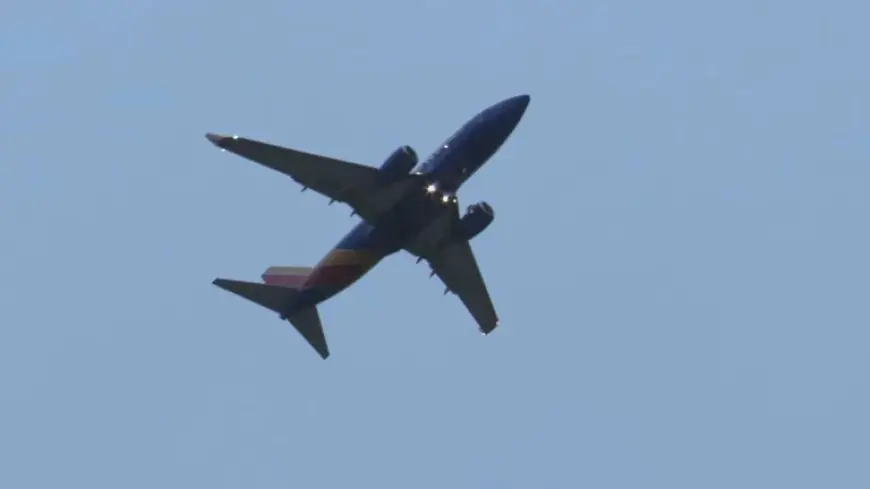
At bwi airport, the day’s travel plans narrowed to one immediate reality: flights could not depart under a ground stop tied to a disruption in the system that keeps aircraft moving safely. The Federal Aviation Administration issued the stop as an equipment outage affected Baltimore/Washington International Thurgood Marshall Airport and spread to other airports across the region, with an expected end time of 7: 00 p. m. ET.
Bwi Airport and nearby terminals caught in the same pause
Baltimore/Washington International Thurgood Marshall Airport was not alone. The ground stop applied to a cluster of major airports whose travelers often share the same airspace and routing: Reagan National (DCA) and Dulles International (IAD) were also placed under a stop. Richmond International Airport was included as well, and the disruption extended beyond the immediate Washington-Baltimore area, touching Philadelphia International Airport.
What that meant on the ground was straightforward. Departures were temporarily halted at multiple airports at the same time, a coordinated pause rather than isolated delays at a single terminal. At Dulles International Airport, departure delays reached 90 minutes and were described as increasing, a sign of how quickly a stop in one part of the system can build into longer waits as flights queue up to leave.
Philadelphia International Airport faced a related but distinct impact: it was placed on a ground delay tied to “equipment outages. ” In practical terms, some airports were fully stopped, while others absorbed the same issue as a slowdown—another way the same underlying disruption can play out across different locations.
Potomac TRACON in Warrenton and the “strong chemical smell” report
The disruption was linked to a federal aviation facility: the Potomac TRACON (Terminal Radar Approach Control) in Warrenton, Virginia, roughly 50 miles outside the nation’s capital. The FAA said a strong chemical smell occurred at that facility, and that report temporarily prompted ground stops at the region’s three major airports: Thurgood Marshall Baltimore-Washington International (BWI), Reagan National (DCA), and Dulles International (IAD).
Potomac TRACON helps manage airspace in the region outside of take-offs and departures, meaning it plays a role in the choreography that keeps flights separated and moving in sequence. When that work is disrupted—whether by an equipment outage or an incident inside the facility—the effect can travel quickly to the airports that depend on it.
The same facility serves Richmond International Airport, which was also under a ground stop. That detail widened the footprint of the event: it was not simply a local airport problem, but a shared regional constraint tied to how air traffic is managed across multiple cities.
FAA ground stop expected to last until 7: 00 p. m. ET
The FAA’s ground stop affecting Baltimore/Washington International Thurgood Marshall Airport and other airports was expected to continue until 7: 00 p. m. ET. Until that time, the day’s travel disruptions remained defined by the same basic limitation: departures would not resume normally until the underlying issue was addressed and the stop lifted.
While the immediate trigger was described in two ways—an equipment outage and, at the Potomac TRACON facility, a strong chemical smell—both descriptions point to the same lived experience for passengers: waiting through an interruption that originates away from the gate, in the infrastructure that makes flight possible.
For now, the situation remained fluid. Both accounts described the event as developing, with more information expected as it became available. For travelers at bwi airport and the other affected terminals, the clearest marker on the day was the expected 7: 00 p. m. ET end time—and the knowledge that even after a stop ends, delays can linger as schedules work to realign.