Rupert Murdoch succession drama on Netflix points to a trust-control showdown

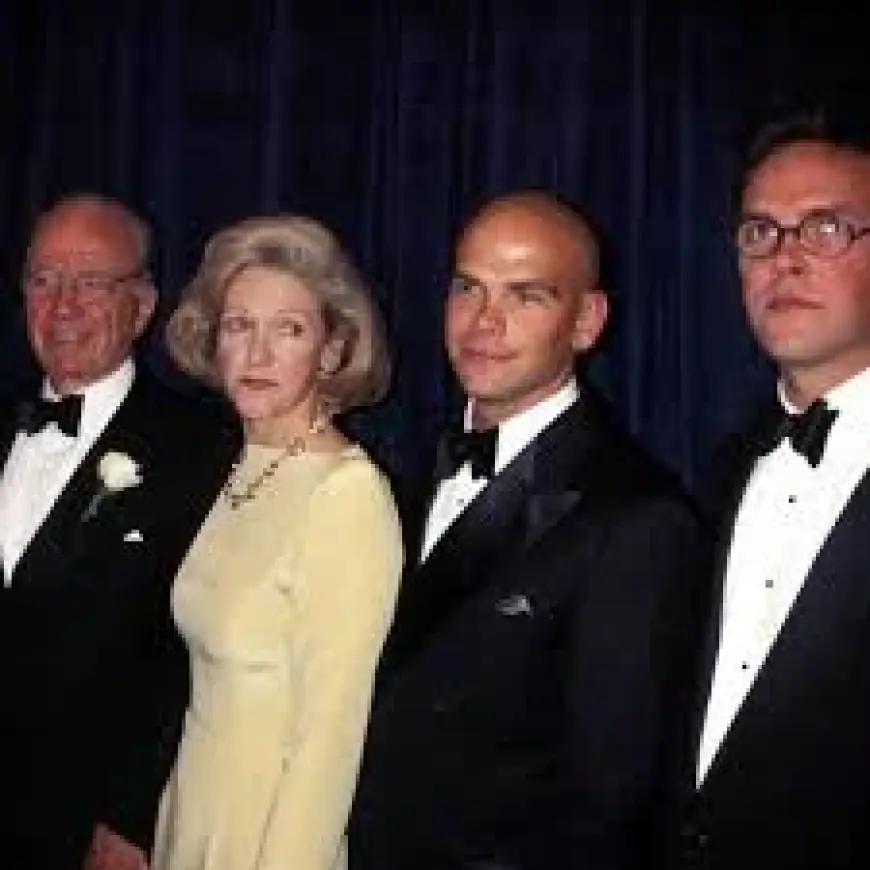
A new four-part Netflix documentary, Dynasty: The Murdochs, puts rupert murdoch’s family succession fight at the center of a broader story about power, politics, and control. The series signals a near-term trajectory where the most consequential struggle is less about personalities than about a specific mechanism: a proposed change to a family trust that would reshape voting rights after rupert murdoch’s death.
Dynasty: The Murdochs spotlights Rupert Murdoch’s children and a trust plan
Dynasty: The Murdochs frames its narrative through a pop-culture lens, opening with a quip that understanding the Murdochs requires understanding Succession, Jesse Armstrong’s drama about media mogul Logan Roy and his warring children. In the documentary’s own structure, the comparison becomes a roadmap: the eldest siblings are matched to fictional counterparts, while the real family’s internal maneuvering is treated as both storyline and stakes.
The documentary centers on “Rupert’s warring children” and specifically “his children’s battle for control of it when he dies. ” It names eldest sibling Prudence, described as independent and from Rupert’s first marriage, alongside Lachlan, James, and Elisabeth. It also states that Rupert’s two younger daughters from his third marriage “aren’t in the running. ” That narrowing of the field sets up a succession contest with clear participants and an even clearer battleground: posthumous control of voting rights within the business.
One concrete, high-impact detail carries the forecast weight. The documentary describes a “secret plan” by Rupert and Lachlan to change a family trust, in a way that would nullify the siblings’ equal voting rights after Rupert’s death and give Lachlan control. In the series’ telling, that effort is labeled “Project Family Harmony. ” Whatever tone the title signals, the described effect is direct: a structural shift away from equal sibling voting power toward a single controlling successor.
Lachlan, James, and Project Family Harmony reveal the political driver
The documentary’s most explicit driver is political orientation. It describes Project Family Harmony as being “about keeping the business operating in the interests of conservative politics, ” while also “stopping the more liberal James pulling it leftwards. ” That framing sets a directional through-line: internal governance changes are portrayed not merely as family preference, but as a bid to lock in an ideological posture.
Elsewhere, the documentary’s account of Rupert’s career is threaded with examples of political influence and editorial repositioning. It cites “populist, right-leaning” revamps of the News of the World and the New York Post, and it describes endorsement of Ronald Reagan, whose deregulation policies, “once he was elected, ” allowed Murdoch to launch the Fox network. The series also portrays a tactical pivot toward Donald Trump as he appeared “set to become a king of his own making, ” contrasting with a prior characterization Rupert had reportedly used about Trump.
These details matter to the succession trajectory because they tie the governance fight to a stated purpose: the trust effort is described as a way to preserve a conservative direction. That makes the contest over voting rights less like a generic inheritance dispute and more like a battle over whether a media business remains aligned with one political worldview or shifts under a different sibling’s influence.
Liz Garbus’s Dynasty: The Murdochs signals two paths for the succession story
Two signals in the context point toward where this story could head next. First, the documentary itself positions the succession endpoint as “the crowning of son Lachlan as his successor, ” indicating a narrative arc in which leadership continuity is emphasized. Second, it also highlights a contested instrument of control, the trust change that would undo equal voting rights after Rupert’s death. Together, those signals suggest that the documentary’s direction of travel is governance-first: who holds decisive votes becomes as important as who holds a title.
If Project Family Harmony continues… the succession story concentrates on whether the trust can be changed in a way that secures Lachlan’s control after Rupert’s death. The documentary’s description of the plan’s goal—nullifying equal voting rights—implies a future in which sibling influence is formally reduced, not simply outmaneuvered in boardroom politics. Because the series frames the purpose as preventing James from pulling the business leftwards, continued pursuit of the plan would keep the internal conflict tied to ideological direction, not only family rivalry.
Should the trust effort fail or stall… the balance of power remains anchored in the “siblings’ equal voting rights” the documentary says exist now. In that scenario, the documentary’s emphasis on sibling maneuvering becomes more than character drama: equal voting rights would keep multiple heirs relevant to decision-making after Rupert’s death, intensifying the stakes of alliances and internal negotiations. The series’ presentation of Prudence, James, and Elisabeth—alongside the assertion that the younger daughters are not contenders—suggests the fight, if unresolved structurally, stays concentrated among a limited set of siblings with durable leverage.
One notable constraint shapes both scenarios: the Murdochs themselves “declined to be interviewed, ” and the review notes “the notable absence of any input from the family. ” The documentary instead relies on longtime Murdoch-profiling journalists, archive material, employees, and a cameo from Hugh Grant. What the context does not resolve is how any of the central family figures would describe the trust plan, the succession endgame, or the political purpose attributed to it, in their own words.
The next confirmed signal is already embedded in the rollout itself: Dynasty: The Murdochs exists as a four-part Netflix documentary directed by Liz Garbus, and it explicitly carries the narrative from Rupert’s beginnings to the “crowning” of Lachlan as successor. For now, the trajectory visible in the context is a succession debate defined by formal voting power and political alignment, with the trust mechanism described as the lever that could decide which sibling’s vision prevails.