Jonathan Owens hangs over the Cam Lewis signing as Chicago role remains undefined

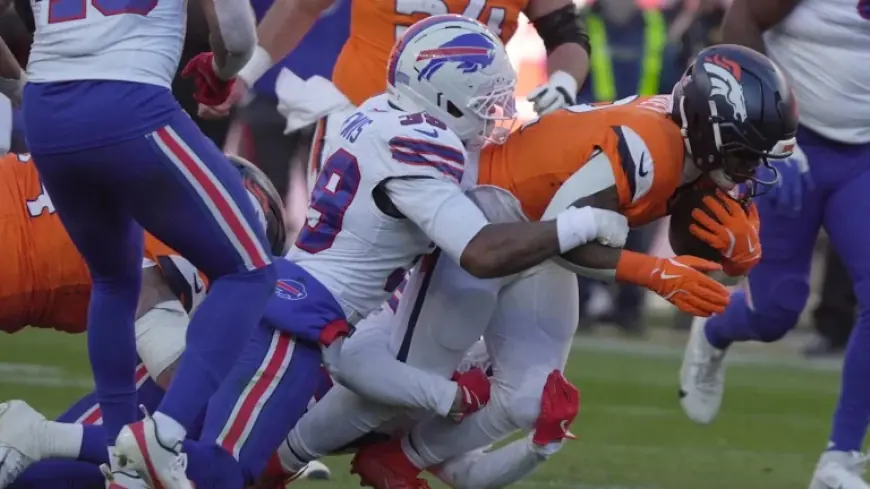
jonathan owens is now part of the question Chicago faces after adding defensive back Cam Lewis on a two-year deal. The signing is framed as potentially meaningful, yet the documented details leave a gap: the move is presented as important, while the team’s intended target role for Lewis is still not confirmed in the record.
Cam Lewis and the Bears’ two-year deal, with snaps and starts on record
Confirmed facts are limited but specific. The Bears signed cornerback and safety Cam Lewis to a two-year contract. Lewis is described as a six-year veteran, age 28, with 76 games played and 10 starts over the last two seasons.
Those details support the idea that this was not a purely procedural addition. In the same set of notes, Kalif Raymond is positioned as the day’s most significant signing, with an already defined role as the primary returner and a projected gadget and deep-threat complement on offense. Lewis is presented as the second-most important acquisition of that group, a status that implies a meaningful defensive plan. Yet the context also underscores that Lewis “may not be considered a needle mover for many people, ” which introduces a tension between the importance assigned to the signing and the uncertainty around how it translates to playing time.
What is confirmed is that Lewis has experience in the slot, described as a role he has had over the past few years. What remains unclear is whether Chicago views him as a slot specialist, a safety option, a depth piece, or a direct replacement for another role entirely.
Jonathan Owens and C. J. Gardner-Johnson: the replacement question the record does not settle
The central gap is stated plainly in the context: Lewis’ signing “raises one question” about who he will be replacing. Two specific names anchor that uncertainty: C. J. Gardner-Johnson and jonathan owens.
On the Gardner-Johnson side, the context ties Chicago’s midseason decision-making to injury. A lingering groin injury opened the door for the team to sign Gardner-Johnson midway through last season, and the move is characterized as one they “certainly didn’t regret. ” The record goes further, noting that a case could be made that Gardner-Johnson was among the team’s most impactful defensive players after he was signed ahead of the Week 9 matchup against Cincinnati.
Still, the same record also states that it “always seemed like” Gardner-Johnson was going to be “one-and-done in Chicago. ” That line supplies a plausible reason Chicago would seek another defensive back, but it stops short of confirming any specific roster consequence or depth-chart plan. The context does not confirm whether Lewis is meant to replicate Gardner-Johnson’s usage, fill his spot in sub-packages, or simply provide an alternative option if that role opens.
On the jonathan owens side, the record does not supply a position label, usage, or performance detail, only that his name is directly connected to the question of whether Lewis is an “upgrade. ” That makes the Owens angle more a signpost than a conclusion: the context establishes that the signing is being interpreted through the lens of whether Chicago’s defensive back depth is improving, but it does not document what benchmark is being used to measure that improvement.
Kyler Gordon’s injuries and the pattern behind why Lewis might matter
A second, more evidence-backed layer of the signing involves Kyler Gordon and the slot. The record says that if Chicago intends to play Lewis in the slot, then Lewis could be “a Kyler Gordon injury from playing a big role” on defense. That phrasing is conditional, but it identifies a pathway to meaningful snaps: Lewis as an insurance policy behind a starter in a specialized role.
The context also documents why the Bears might prioritize that kind of contingency. Gordon is described as one of the better nickelbacks when healthy, and Lewis “definitely won’t challenge him for playing time anytime soon. ” At the same time, Gordon is described as having injury issues throughout his career, missing at least two games every year, and coming off a season in which he played a career-low three games.
Viewed together, those facts outline a documented pattern: Chicago’s defensive back decisions are being narrated through injuries and short-term solutions. Gordon’s health is presented as the variable that could elevate Lewis from depth signing to rotational necessity. Gardner-Johnson’s arrival is also traced to a lingering injury that forced the team to “take a chance” midseason. The context does not confirm that Chicago is planning another similar pivot; it does show how recent circumstances make that kind of pivot plausible.
Even with those clues, the record keeps one core issue unresolved: whether Lewis is primarily a slot contingency for Gordon, a functional replacement for Gardner-Johnson’s departed impact, or a move that changes how the team views jonathan owens within the defensive back group.
The evidence threshold that would resolve the central question is straightforward but absent here: a clear statement of role, alignment, or intended replacement assignment for Cam Lewis. If Lewis is confirmed as a slot-first player in Chicago’s plans, it would establish the signing as direct depth behind Kyler Gordon. If Lewis is confirmed as taking on responsibilities previously handled by C. J. Gardner-Johnson, it would establish the move as a response to that “one-and-done” expectation. If the team confirms Lewis is an “upgrade” relative to jonathan owens, it would establish that the signing is meant to reshape the pecking order rather than merely protect against injury.