Stevens Pass travel checks intensify as snow triggers closures

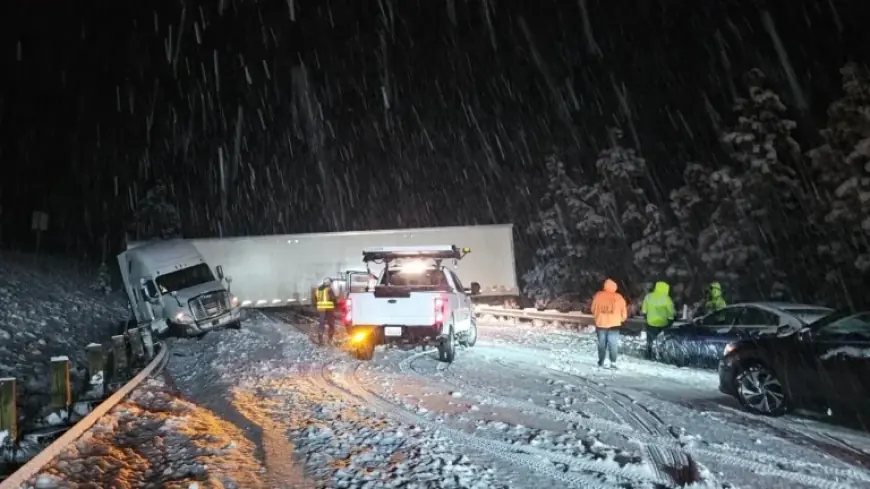
Drivers monitoring stevens pass faced a familiar winter problem Friday morning: fast-changing conditions and limited certainty about when key routes will reopen. Slushy snow in parts of western Washington led to a chain of closures tied to crashes, spinouts, stuck trucks, and fallen trees, tightening the margin for error for anyone relying on Cascade crossings.
While the closures were not centered on one single roadway, the pattern was consistent—multiple corridors near the mountains became unstable at once. The figures point to a systemwide stress test: when several routes degrade simultaneously, the practical question shifts from “Which pass is best?” to “Which route is even moving right now?”
WSDOT closures on I-90
Around 7: 00 a. m. ET, westbound Interstate 90 closed at Easton due to crashes. By 8: 15 a. m. ET, eastbound I-90 closed 20 miles west of the summit near North Bend because of multiple spinouts and crashes, a sequence that effectively pinched travel in both directions through one of the region’s most critical east-west links.
The pattern suggests the main risk was not just snowfall itself, but the way it translated into repeated loss-of-control incidents. Once crashes and spinouts accumulate, closures can become less about clearing snow and more about creating space to manage wrecks and restore safe flow—an operational reality that tends to ripple into nearby routes as drivers detour.
SR 410 near Greenwater
Both directions of State Route 410 were closed at Mud Mountain Road due to snow on the highway near Greenwater, with fallen trees also reported in the area. WSDOT said people should anticipate delays in the surrounding area, and as of 7: 00 a. m. ET, snow plow crews were on the way.
WSDOT also stated there was no estimated time for SR 410 to reopen and urged travelers to seek alternate routes. That lack of a reopening timeline is a concrete signal of uncertainty for trip planning: when crews are still en route and trees are down, reopening depends on more than routine plowing, and timing becomes harder to forecast for drivers checking stevens pass and other crossings for workable options.
SR 18 and White Pass impacts
Eastbound State Route 18 was closed from the Issaquah Hobart Road to the I-90 interchange after multiple semi trucks became stuck, Washington State Patrol Trooper Rick Johnson said. The figures point to a specific chokepoint risk: when heavy trucks lose mobility on a connector route, the impact can cascade into upstream backups and complicate access to alternate routes that drivers might use when I-90 is disrupted.
Separately, at 8: 30 a. m. ET, US 12/White Pass was set to close eastbound near Packwood and westbound near Naches for avalanche assessment. That decision underscores a different kind of constraint than crashes or stuck vehicles: even if pavement conditions improve, hazard evaluation can still stop traffic until the assessment is complete.
The immediate open question left by the closures is timing—WSDOT gave no estimated reopening time for SR 410, while I-90 and SR 18 disruptions hinged on clearing incidents and restoring safe travel. If multiple corridors remain constrained at once, the data suggests more drivers will be forced into fewer viable routes, raising the odds of longer delays across the surrounding network.