Robbie Avila honored as Atlantic 10 player of the year as statistical dip raises questions

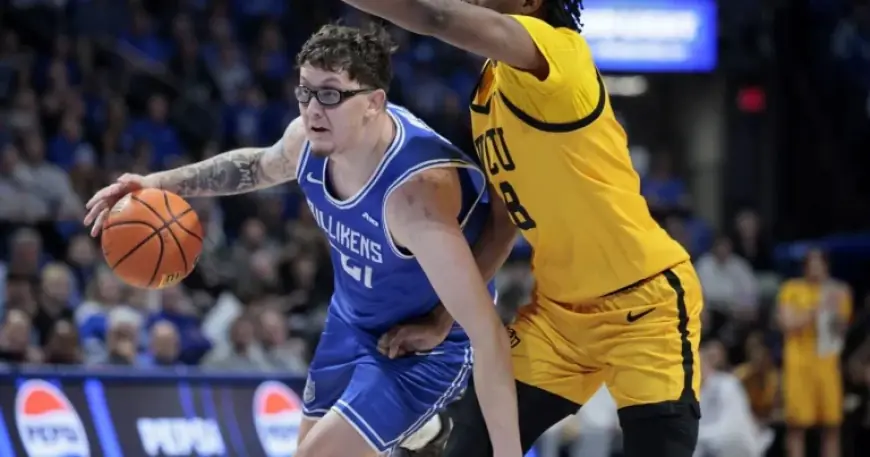
St. Louis University center robbie avila was named the Atlantic 10 Conference player of the year on Wednesday, an honor tied directly to SLU’s first-place finish in the league. Yet the season’s headline also carries a built-in tension: the context states that Robbie Avila’s individual statistics declined compared to last season, even as his role was described as outsized in the team’s rise.
Robbie Avila’s award and SLU’s Atlantic 10 finish
The confirmed fact in the record is straightforward: robbie avila received Atlantic 10 conference player of the year honors on Wednesday after St. Louis University finished first in the conference. The context links those honors not to a statistical peak, but to impact, describing an “outsized role” in SLU’s first-place finish despite a year-over-year drop in his individual numbers.
The surrounding details reinforce how central he was to SLU’s on-court narrative during that stretch. On Wednesday, March 4, 2026, he was pictured driving against Loyola-Chicago guard Daniil Glazkov in the second half at Chaifetz Arena in St. Louis. The same date also includes a scene of SLU head coach Josh Schertz and players, including Robbie Avila, cutting down the nets after a win against Loyola Chicago, with SLU having clinched at least a share of the Atlantic 10 title.
Those are the documented points: the award, the first-place outcome, and a title-clinching milestone that included a public celebration. What is not documented in the context is the actual vote count, the specific criteria emphasized by voters, or any conference release explaining why the statistical decline did not prevent the top individual award.
St. Louis University’s “outsized role” claim versus “stats were down” reality
The central gap is embedded in the wording provided: robbie avila’s “individual stats were down this season compared to last, ” but his role was still portrayed as large enough to merit player of the year recognition. That creates two confirmed facts that pull in different directions: lower individual statistical production, and the conference’s highest individual honor.
The context does not confirm what those statistics were, which categories declined, or whether other players in the conference posted stronger statistical resumes. It also does not confirm whether SLU’s first-place finish was decisive in the voting, or whether the “outsized role” refers to leadership, defensive assignments, matchup attention, or responsibilities not captured by the basic stat line.
Even the timeline around the honor has unresolved edges. The record shows celebratory images tied to March 4, 2026, including the nets being cut after a win against Loyola Chicago and the note that SLU had clinched at least a share of the Atlantic 10 title. The award is said to have been earned “on Wednesday, ” but the context does not explicitly tie the award announcement to the March 4 game day or describe any ceremony connected to that moment. The absence of those details leaves the full sequence of events incomplete.
Josh Schertz, recent results, and the questions the context cannot answer
When the available details are viewed together, they point to a season defined by both achievement and turbulence. After clinching at least a share of the Atlantic 10 title, the context also notes SLU entering the postseason “coming off its worst loss of the season” and having “lost three of its past six games” ahead of a quarterfinal matchup against George Washington on Friday. Those statements are presented alongside the player-of-the-year honor, and they complicate a simple story of uninterrupted dominance.
Another data point sits nearby: SLU “reaches a long-term extension agreement with Josh Schertz, ” with the context attributing the coach’s popularity to “success with the Billikens. ” The record does not confirm whether the extension was finalized before or after the title-clinching celebration, nor does it confirm any connection between the coach’s contract and the timing of postseason awards.
Still, the pattern that does emerge is documented: SLU reached first place and clinched at least a share of the league title; robbie avila’s statistical output fell compared with last season; and yet he was elevated to the conference’s top individual honor. At the same time, the lead-in to the quarterfinal includes a worst-loss marker and a 3-in-6 skid, suggesting that the award and the title share arrived amid uneven recent form.
What remains unclear is the evidentiary bridge between those points. The context does not confirm how the Atlantic 10 weighed team success against individual production, what “outsized role” specifically means in measurable terms, or how other contenders compared. If the conference’s full award rationale is confirmed in a detailed explanation of criteria and vote outcomes, it would establish whether the selection leaned primarily on SLU’s first-place finish, on Robbie Avila’s responsibilities beyond raw totals, or on a combination the current record does not spell out.