Ohio State’s 18th President pick puts transparency and stability in conflict

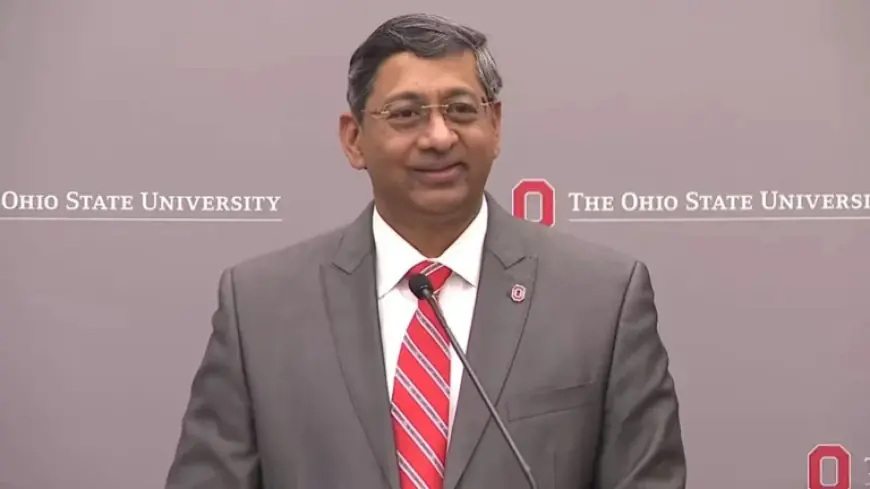
When Ohio State’s Board of Trustees unanimously appointed Executive Vice President and Provost Dr. Ravi Bellamkonda as the university’s 18th president, the speed of the decision became part of the story. For the union representing professors, the appointment was not mainly about Bellamkonda’s credentials. It was about how the university chose him, and what that process signals at a time when the institution faces multiple pressure points.
The American Association of University Professors, which represents faculty, said it was “disappointed and frustrated” by what it described as a closed selection process. A union representative said the process “has not been transparent or inclusive or democratic, ” turning a leadership transition into a public argument over how Ohio State makes consequential decisions.
Dr. Ravi Bellamkonda, the 18th President, steps into a role under scrutiny
Bellamkonda’s new title arrives with immediate expectations. As Ohio State’s 18th president, he takes over while the university navigates issues that have drawn sustained attention inside and outside campus. Those include fallout from the Dr. Richard Strauss sex abuse scandal, protests to remove Les Wexner’s name from campus buildings, and debates involving free speech and DEI.
Federal funding also stands as a concern described as “tighter, ” adding another layer to the list of institutional challenges. In that setting, the AAUP argued that transparency in leadership selection becomes more than a procedural preference. The union framed it as a necessary condition for confronting unresolved problems and rebuilding trust.
A union representative described the moment as an “opportunity for opening up a larger discussion in the community” about what the representative characterized as repression of free speech, the dismantling of diversity, and not listening to survivors, along with “no sense of accountability. ” The selection process, in the union’s telling, was a missed chance to bring those disputes into a more public forum.
Ohio State’s Board of Trustees chose speed over a nationwide search
Ohio State’s Board of Trustees made the appointment unanimously, and the decision was described as swift. That pace became a central point of criticism, especially after university officials were asked why there was not a nationwide search for the next president.
Ohio State spokesperson Ben Johnson pointed to timing and a desire for stability following what was described as an abrupt departure. Johnson also emphasized the institution’s standing and trajectory, saying there is “really good momentum here at Ohio State. ” In his remarks, he called the university “a national leader in almost every facet of higher education, ” and said he believed it would be beneficial “to maintain continuity. ”
In the university’s framing, continuity functions as a safeguard: a way to keep the institution moving without an extended, uncertain transition. In the union’s framing, the same choice reads as a warning sign, reinforcing what it called a “culture of secretiveness. ”
The American Association of University Professors presses a case for openness
The AAUP’s criticism centered on process more than the person. The union said its concerns were not about Bellamkonda’s qualifications, but about what it described as “unwillingness to open up. ” A union representative said, “It’s not necessarily about the person. It’s about the unwillingness to open up, ” arguing that the method of selection matters because it shapes how leadership responds to contentious campus issues.
By calling the process not transparent, not inclusive, and not democratic, the union placed governance itself at the heart of the dispute. The criticism also suggests a deeper disagreement about what stability should look like at Ohio State: whether it is best protected through quick internal continuity, or through a broader search designed to invite community input.
For now, the appointment stands as both a leadership transition and a test of how Ohio State will address demands for openness while managing the list of high-profile issues Bellamkonda inherits. As the 18th president begins his tenure, the arguments sparked by his selection are likely to follow him into the job, shaping the first phase of his leadership as much as the challenges already waiting on his desk.