Old Dominion University Closed Friday After Deadly Campus Shooting in Norfolk

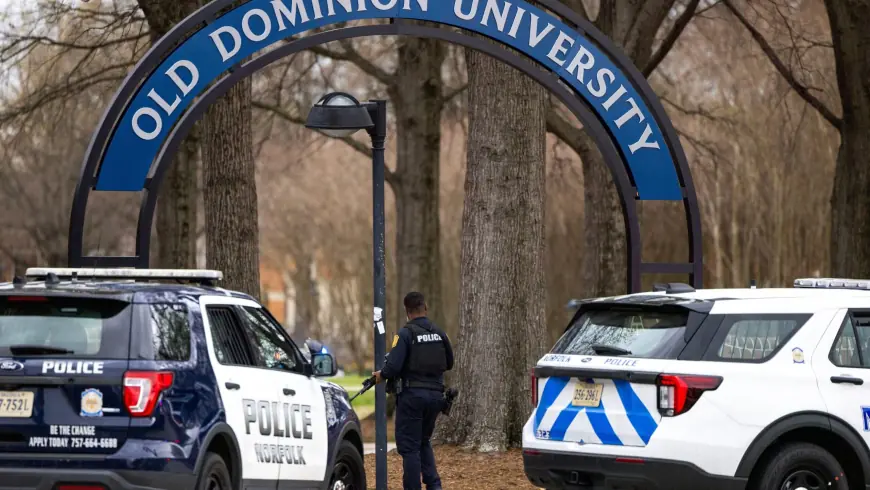
Old Dominion University canceled classes and suspended operations for Friday, March 13, after a deadly shooting on its main campus in Norfolk, Virginia, left one person dead and two others injured. Federal authorities are investigating the attack as an act of terrorism, turning a campus emergency into a major public-safety and national-security case less than a week before many colleges begin spring-break travel.
The university said all locations would remain closed Friday while counseling and support services were expanded for students, faculty, staff, and the wider campus community. The shooting happened Thursday inside Constant Hall, where a gunman opened fire in a classroom before being stopped.
What Happened at Old Dominion University
The attack unfolded late Thursday morning, triggering an active-shooter alert and a rapid law-enforcement response on campus. Within minutes, the immediate threat had been neutralized, but the violence left lasting damage.
One person was killed and two others were wounded. The victim who died was identified as Lt. Col. Brandon Shah, an ROTC instructor and Army veteran. One of the injured remained in critical condition Thursday night, while the other was treated and released.
University leaders described the shooting as a tragedy for the Monarchs community and urged students and employees to use mental-health and support resources as the investigation continues.
Why the Case Is Being Treated as Terrorism
Federal investigators said the shooting is being handled as an act of terrorism after the suspect was identified as Mohamed Bailor Jalloh, a former Army National Guard member with a prior terrorism-related conviction. The case quickly drew broader attention because of that background and because the attack targeted a university classroom.
That designation changes the scope of the investigation. The focus is no longer limited to what happened inside the building. Investigators are also working to determine whether the attacker acted alone, what planning occurred beforehand, and whether any warning signs were missed before the shooting.
The suspect died at the scene after being confronted during the attack.
ROTC Presence Became Central to the Response
The shooting hit particularly hard because the victims and several of the people directly involved were connected to the university’s ROTC program. In the chaotic moments after gunfire erupted, ROTC students helped confront the gunman, an action officials said likely prevented a higher death toll.
That detail has become one of the defining facts of the case. It has also deepened the shock on campus, where a military training environment inside an academic setting turned into the center of a lethal attack.
For Old Dominion, the immediate challenge is balancing grief, trauma support, and campus continuity while investigators continue reconstructing the timeline.
What Friday’s Closure Means for Students and Staff
By closing Friday, the university created a pause point for a campus shaken by violence. The shutdown affects classes and normal operations across all locations, not just the main Norfolk campus. Administrators said the closure is intended to support counseling access and give the community time to process what happened.
That matters because the aftermath of campus shootings often extends well beyond the initial emergency. Students may be dealing with interrupted coursework, housing concerns, transportation issues, and anxiety about returning to classrooms. Faculty and staff face many of the same pressures while also preparing for possible schedule changes next week.
The university has not signaled a longer operational shutdown, but any reopening plan will likely be closely tied to security reviews and the pace of the investigation.
What Happens Next in the Investigation
The next phase centers on motive, preparation, and prevention. Investigators are expected to examine the suspect’s movements before the shooting, how he entered the classroom, whether he had any direct connection to the victims, and what security measures were in place at the building.
There will also be scrutiny of the suspect’s post-prison supervision and whether any behavior in recent months should have triggered intervention. Those questions could stretch well beyond campus and into state and federal systems.
For now, the most immediate reality is that Old Dominion University is mourning a killed ROTC instructor, supporting two wounded survivors, and trying to steady a campus community after one of the deadliest moments in its recent history.