Ilber Ortaylı’s Death Confirms Hospital Timeline and Points to Public Reaction

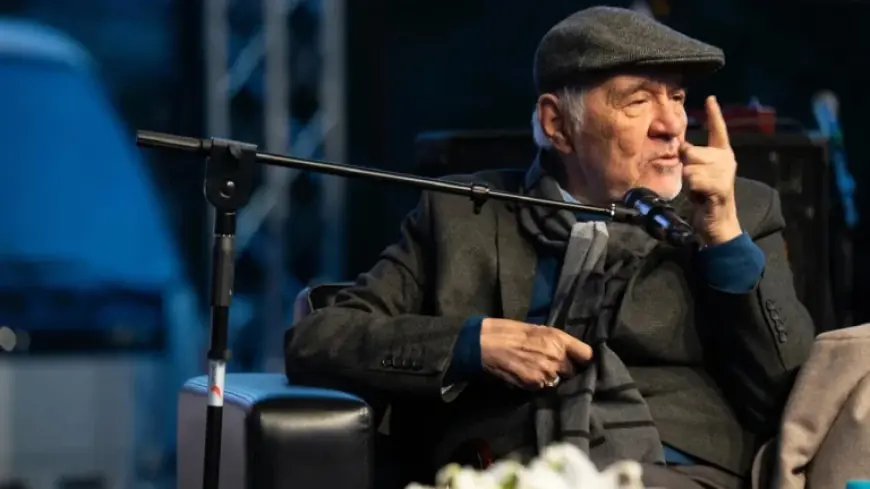
Prof. Dr. ilber ortaylı has died while receiving treatment in hospital, and his family had earlier disclosed that he was intubated. That confirmation, together with public statements from journalists Izzet Capa and Fatih Altayli and a March 12 (ET) update on his condition, points toward a tight sequence of medical updates followed by widespread public response.
Ilber Ortaylı: hospital course, intubation and intensive care status
Officials and family statements in the context establish that Prof. Dr. Ilber Ortaylı had been in intensive care since Sunday and was later intubated. A March 12 (ET) post on his social media account said his condition was stable at that time. The context also notes that he had prior health issues: a prostate operation in January, kidney disease and diabetes were disclosed in the March 12 (ET) communication.
Izzet Capa and Fatih Altayli messages documenting public reaction on March 10 and March 12 (ET)
Journalist Izzet Capa announced the death publicly and framed Ortaylı as a figure who “told an age” in history, using a personal reflection to characterize his impact. Fatih Altayli had written on March 10 (ET) that Ortaylı battled “very serious health problems for several days, ” and asked readers to send prayers or good wishes. Those two named interventions in the context drove an early wave of tributes and framed the timeline of public disclosure.
Topkapi Palace Museum tenure and academic milestones in Ortayli’s career
Context material records a sequence of academic and institutional milestones for Ortayli. He completed a doctorate in 1974 with a thesis titled “Tanzimat Sonrası Mahalli İdareler, ” became an associate professor in 1979, resigned a post in 1982, lectured at multiple universities worldwide, returned to the country in 1989 and gained a professorship. In 2005 he assumed the role of director of the Topkapı Sarayı Museum and served seven years before retiring in 2012.
| Year / Date | Event |
|---|---|
| 1947 | Birth in Bregenz, Austria |
| 1974 | Doctorate with “Tanzimat Sonrası Mahalli İdareler” thesis |
| 1979 | Achieved doçent (associate professor) |
| 1982 | Resigned from a post; taught internationally |
| 1989 | Returned to country and became professor |
| 2005–2012 | Director of Topkapı Palace Museum |
Still, the immediate confirmed sequence in the context is clear: hospital admission, intensive care from Sunday, intubation as stated by family, a March 12 (ET) social media update describing a stable condition, and then the announcement that he died while under treatment.
If this pattern of public updates continues, then one visible trajectory is rapid, closely spaced official and personal communications shaping how the public learns about high-profile medical cases. Should those communications persist in the same form, expectations for near-immediate family or social-media notices, followed by commentary from prominent journalists such as Izzet Capa and Fatih Altayli, will likely remain the dominant rhythm for future developments of this type.
Scenario B: If a specific context factor shifts—namely, if family or official channels release more detailed medical timelines or funeral arrangements—then the public narrative will move from health chronology to commemoration, with an expanded record of Ortayli’s career milestones and institutional affiliations, such as his Topkapı Sarayı Museum directorship and university posts.
What the context does not resolve is the timing and location of any funeral or memorial events, and no further official schedule appears in the material provided. The next confirmed signal in the context is any subsequent statement posted on his social media account or by family representatives; that communication will determine whether coverage shifts to memorial details or remains focused on the sequence of medical updates and public tributes.