KC-135 Crash in Iraq: 4 U.S. Crew Killed as Refueling Plane Goes Down During Iran War

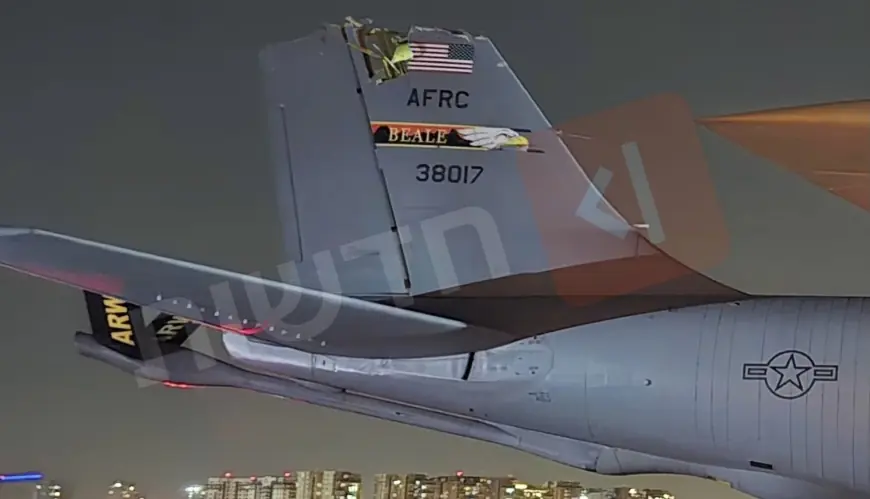
Four American service members are dead after a KC-135 Stratotanker crashed in western Iraq Thursday, marking one of the most significant losses in the ongoing U.S.-led war against Iran. The KC-135 crash has pushed total U.S. military deaths in the conflict to 11.
KC-135 Crash Confirmed: What Happened Over Iraq
At approximately 2:00 PM ET on March 12, the KC-135 refueling plane went down near Turaibil, along the Iraqi-Jordanian border. U.S. Central Command confirmed four of the six crew members aboard were killed, with rescue efforts still underway for the remaining two.
The KC-135 crash occurred in friendly airspace during Operation Epic Fury, the U.S. military's name for the ongoing war against Iran. CENTCOM stated the incident was "not due to hostile fire or friendly fire."
Two KC-135 Stratotanker aircraft were involved in the incident. The second tanker, which is believed to have lost a large portion of its vertical stabilizer, declared an international emergency squawk code of 7700 and landed at Ben Gurion Airport in Tel Aviv Thursday evening.
Mid-Air Collision the Suspected Cause of KC-135 Crash
U.S. officials told investigators they believe the incident may have involved a mid-air collision between the two aircraft. The KC-135 that crashed went down while the damaged second plane safely landed after declaring an in-flight emergency.
The KC-135 Stratotanker does not carry ejection seats, a critical detail that distinguishes it from fighter jets. When a refueling aircraft of this size goes down, crew survivability is severely limited compared to smaller tactical planes.
Despite the CENTCOM statement ruling out hostile fire, the Islamic Resistance in Iraq claimed responsibility for shooting down the KC-135, announcing it brought down the U.S. Army tanker in western Iraq using what it called "the appropriate weapon."
KC-135 Stratotanker: The Backbone of U.S. Air Refueling Operations
The KC-135 Stratotanker is the backbone of the United States' air refueling fleet, with a wingspan of 130 feet. The Air Force is in the process of replacing the aging refueling aircraft, which debuted during the Eisenhower administration, with the newer Boeing KC-46 Pegasus. Despite its age, military officials expect the Stratotanker to operate until 2050 or beyond.
Mobility platforms like the KC-135 have surged to the Middle East to support ongoing operations against Tehran, providing fuel to extend time on station for jets striking Iranian targets. The large plane typically operates outside of contested environments due to its vulnerability.
This KC-135 crash marks the first loss of one of these tankers in support of combat operations since May 3, 2013, when a KC-135 crashed over northern Kyrgyzstan while supporting operations in Afghanistan, killing all three crew members.
Iran War Casualties and Israel Losses Climb
The KC-135 is the fourth U.S. military aircraft lost since strikes against Iran began on February 28. Three U.S. Air Force F-15E Strike Eagles were previously shot down in a friendly fire incident by Kuwait's air defenses, though all pilots in those jets ejected safely.
The KC-135 crash raises total U.S. military deaths in the Iran war to 11, including six service members killed in an Iranian strike on Kuwait and one who died in Saudi Arabia.
Iran's security chief Ali Larijani warned the U.S. would be made "sorry" for the conflict, while Iran's new supreme leader Mojtaba Khamenei called for the Strait of Hormuz to remain closed as a strategic tool. Iran also warned oil prices could climb to $200 a barrel.
The KC-135 crash investigation remains active, with crew identities withheld pending next-of-kin notification.