Stryker Cyberattack Disrupts Orders and Shipping as Handala Claims Iran-Linked Attack

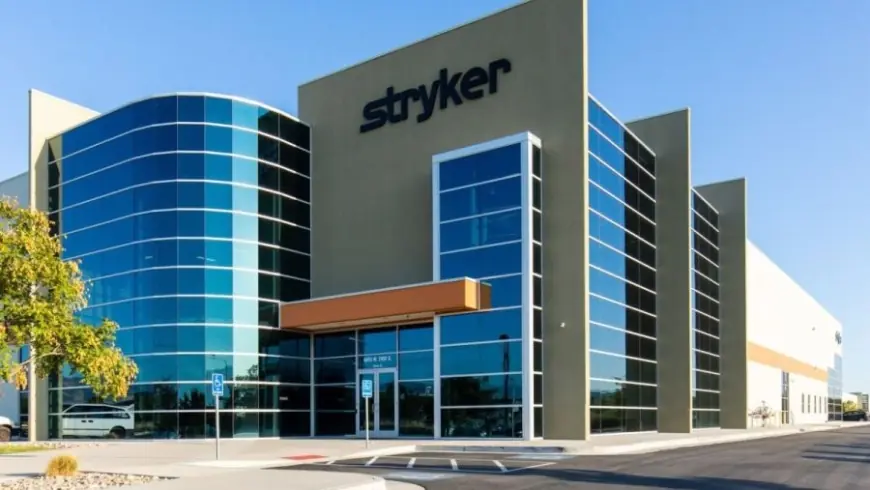
Stryker is still working through a cyberattack that has disrupted parts of its global business, after the medical technology company said the incident hit its Microsoft environment and impaired order processing, manufacturing, and shipments. The attack, disclosed on March 11 and updated late March 12, has been claimed by Handala, a hacking group widely tracked as aligned with Iranian interests.
What Stryker Has Confirmed So Far
The company said the cyberattack caused a global network disruption inside its Microsoft systems and triggered its incident response plan. External advisers and cybersecurity specialists were brought in as the investigation began.
Stryker has also tried to draw a clear line around what has not been hit. It said there was no indication that patient-related services or connected medical products were affected. In its customer update posted at 9:13 p.m. ET on March 12, the company said it believed the incident was contained to its internal Microsoft environment and that it had no indication of ransomware or malware at that stage.
That distinction matters because Stryker is a major supplier of medical and surgical equipment, and any suggestion that clinical systems or connected devices were compromised would have raised a more immediate patient-safety concern.
Handala Ties the Breach to a Wider Iran Cyber Campaign
Handala has publicly claimed responsibility and framed the operation as retaliation tied to the current conflict involving Iran, the United States, and Israel. Security researchers have for some time linked the group’s branding and tactics to Iranian state-aligned cyber activity, even when it presents itself in activist language.
The Stryker incident stands out because it pushes that cyber campaign more directly into a large U.S. corporate target with real operational consequences. Analysts following Iranian cyber operations have described Handala as a disruptive actor that blends political messaging with destructive techniques, including data wiping and public claims intended to amplify fear and confusion.
Not every public claim by such groups can be taken at face value, and some details circulated online remain unverified. But the operational disruption at Stryker itself is no longer in doubt.
Why Stryker Was a Significant Target
Stryker is not a niche supplier. It is one of the largest medical technology companies in the U.S., with roughly 56,000 employees and operations in 61 countries. That scale means even a disruption confined to internal business systems can ripple across hospitals, distributors, and clinical customers waiting on equipment, components, and support.
The attack also highlights a broader risk in healthcare and medtech: a company does not need to lose control of a clinical device to face serious fallout. If staff cannot access internal systems, process orders, coordinate manufacturing, or move products through logistics channels, the commercial and operational damage can build quickly.
That is why the market’s first read on the breach focused less on dramatic hacker claims and more on the practical bottlenecks Stryker itself acknowledged.
Stryker Stock Reacts as Financial Impact Remains Unclear
Stryker stock fell after the attack came to light earlier this week, reflecting concern over how long the disruption might last and whether it could affect revenue timing. By Friday, March 13, the shares were trading at about $337, well below where they had opened the week.
For investors, the key unanswered questions are straightforward: how quickly the company can fully restore normal operations, whether delayed shipments will spill into future reporting periods, and whether any data theft or additional remediation costs emerge from the investigation.
So far, Stryker has not quantified the financial hit. That leaves the market in a familiar posture after a major cyber event: trading on uncertainty while waiting for a more detailed assessment from the company.
A Warning Sign for Iranian Cyber Attacks on U.S. Firms
The breach has landed at a moment when officials and private-sector analysts are warning that Iranian cyber attacks could widen as regional conflict intensifies. Recent activity attributed to pro-Iranian or Iran-linked groups has ranged from disruptive intrusions to attempts aimed at infrastructure and surveillance systems.
In that context, the cyber attack on Stryker looks important for two reasons. First, it shows that a high-profile U.S. healthcare supplier can be hit hard even without a conventional ransomware playbook. Second, it suggests that politically motivated attacks can still produce immediate business disruption without the attackers needing to hold systems hostage for payment.
For now, Stryker’s recovery timeline remains the central issue. The company says the investigation is ongoing, and customers are watching for signs that ordering, production, and shipping are moving back toward normal. Until that happens, the Stryker cyberattack will remain one of the clearest examples yet of how fast geopolitical tension can spill into corporate operations.