Mercedes Dominance in Shanghai Reshapes F1 Schedule for Sprint Weekend

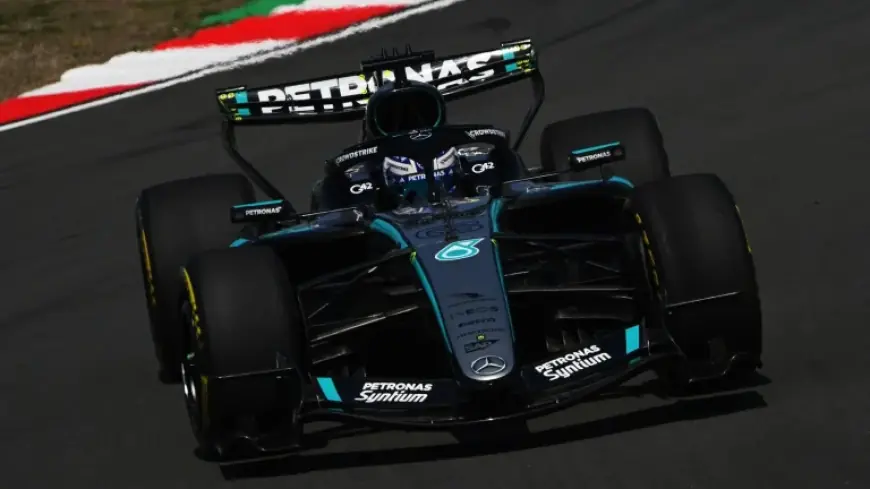
George Russell topped the sole practice session at the Shanghai International Circuit with a 1: 32. 741s lap, while Lewis Hamilton collided with Lando Norris and spun, creating an uneven running plan for several teams. That session result and the single-practice format signal how the early-season pecking order could force strategic tightening in the f1 schedule for Sprint qualifying and the weekend ahead.
George Russell and Mercedes lead Shanghai practice with a 1: 32. 741s lap
Russell’s 1: 32. 741s put him a tenth clear of team-mate Kimi Antonelli, repeating the one-two pattern Mercedes showed at the season-opener in Australia. Mercedes’ one-lap strength is confirmed by those lap gaps: Lando Norris was half a second slower in third and Oscar Piastri a couple of tenths further back in fourth. That comparative edge between Shanghai and Melbourne positions Mercedes as the primary benchmark for Sprint Qualifying preparation.
Lewis Hamilton and Lando Norris collision alters tyre plans and session rhythm
Hamilton collided with Norris after appearing not to see the McLaren at Turn 16, then spun at Turn 6, producing a lock-up that flat-spotted his tyres and forced an earlier switch to the soft compound. Charles Leclerc was more than eight tenths off Russell in fifth, while Hamilton ended the session 1. 3s off the pace in sixth. Red Bull’s Max Verstappen was 1. 8s off in eighth, behind Haas driver Oliver Bearman, and British rookie Arvid Lindblad completed only six laps before a technical issue stopped his run.
F1 Schedule: Chinese GP Sprint Qualifying and Shanghai International Circuit questions
With only one practice session before Sprint Qualifying, teams face a compressed preparation window for the Chinese GP Sprint Qualifying and the rest of the weekend. The Shanghai International Circuit’s 1. 2km back straight and technical, heavy-braking sections — plus the resurfacing ahead of 2025 noted in the track guide — combine with the new Straight Mode aerodynamic setting introduced for 2026 to create multiple setup trade-offs in a short f1 schedule window.
For example, Aston Martin completed a combined 38 laps between Fernando Alonso and Lance Stroll but still showed a deficit, with Alonso three seconds off the pace in 18th, and Williams had interrupted running when Carlos Sainz missed the first half of the session because of a data issue before getting late laps. Those operational interruptions, paired with Russell’s clear one-lap pace, compress how teams can test Straight Mode and tyre behavior before Sprint Qualifying.
Should the current trend continue: If Mercedes keeps the one-lap advantage demonstrated by Russell’s 1: 32. 741s and the repeat one-two with Antonelli, teams that are a half-second or more adrift will be forced to adopt aggressive setup gambits in the f1 schedule for the Sprint weekend, prioritizing single-lap pace over longer-run data during the scarce practice time.
Should a specific factor shift: If incidents like Hamilton’s collision with Norris or technical stoppages such as Arvid Lindblad’s six-lap session recur across teams, then the visible direction could change — teams hampered by damage or data problems may opt to preserve tyres and focus on race trim rather than risking further incidents in Sprint Qualifying preparation.
What the context does not resolve is how Straight Mode will affect tyre wear and race-stint performance across the Sprint weekend, given that only one practice session was available to test the new aero setting and the resurfaced track. The next confirmed milestone in the provided f1 schedule is Sprint Qualifying later on Friday, which will reveal whether Mercedes’ one-lap form converts into starting positions and how teams adapt after limited running.