Nasa Satellite Crash Earth: Van Allen Probe A re-enters over Pacific

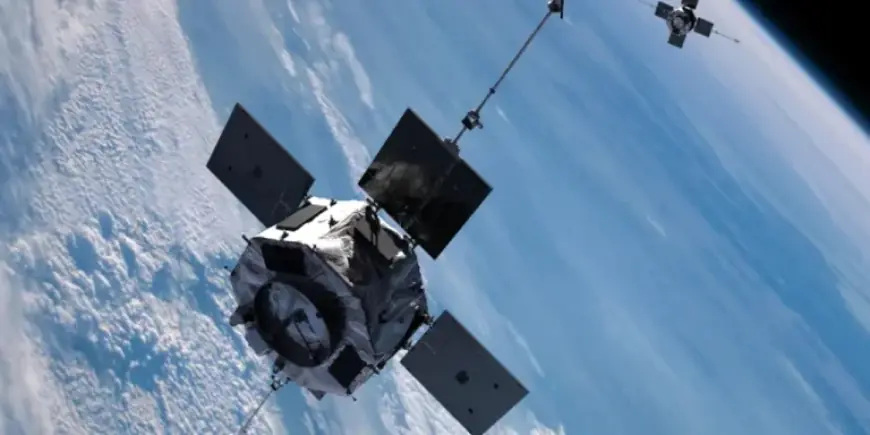
nasa satellite crash earth became a real-world event Wednesday when the 1, 300-pound Van Allen Probe A re-entered the atmosphere over the Eastern Pacific at 6: 37 a. m. ET, as confirmed by the U. S. Space Force. The timing—about 12 hours later than first predicted, yet still inside forecast error—underscored how difficult it remains to pin down the final moments of an uncontrolled return from orbit.
Most of the spacecraft was expected to burn up during re-entry, though some components may have survived. NASA assessed the chance of a piece causing harm to a person on Earth at 1 in 4, 200 and characterized that as a low risk, a key detail that frames why these events are monitored closely even when the most likely outcome is a harmless breakup over water.
Nasa Satellite Crash Earth timeline
The re-entry was confirmed over the Eastern Pacific region around 6: 37 a. m. EDT (6: 37 a. m. ET). That was roughly 12 hours later than originally predicted but still within the expected margin of error, a reminder that small changes in conditions can shift the moment and location of a spacecraft’s final descent. Scientists had initially predicted re-entry around 7: 45 p. m. EDT on March 10 with a 24-hour margin of error, making the eventual confirmation consistent with the uncertainty baked into the forecast.
The pattern suggests that the headline drama of a “plunge” can mask a more technical reality: the outcome is rarely in doubt—disintegration is expected—while the exact timing and footprint are the variables planners must manage. In this case, the eastern Pacific splashdown area, described as south of Mexico and west of Ecuador, reflects the fact that broad ocean regions are often where re-entries are ultimately observed or confirmed.
U. S. Space Force confirmation at 6: 37 a. m. ET
The U. S. Space Force confirmed the probe’s re-entry and pinpointed it in the eastern Pacific, with coordinates cited as approximately 2 degrees south latitude and 255. 3 degrees east longitude. While most of the spacecraft was expected to burn up, the acknowledgement that “some components may have survived” keeps attention on debris survivability, not just the re-entry moment itself.
NASA’s stated 1-in-4, 200 chance of a piece causing harm to a person on Earth is a quantitative attempt to communicate risk without implying zero danger. The figures point to a narrow but nonzero public-safety dimension that accompanies even low-risk events, especially when a return is uncontrolled and the breakup process cannot be guided to a precise corridor.
Van Allen Probe A mission legacy
Van Allen Probe A and its twin, Van Allen Probe B, launched in 2012 to study Earth’s two permanent radiation belts—rings of charged particles trapped by Earth’s magnetic field—by flying through them from 2012 to 2019. The mission was designed to last two years but went on for almost seven, ending after the spacecraft ran out of fuel and could no longer orient themselves toward the Sun.
The mission produced discoveries that NASA highlighted as significant, including first data showing a transient third radiation belt that can form during times of intense solar activity. The analytical takeaway is that the spacecraft’s end-of-life does not end its value: the dataset gathered across 2012 to 2019 remains central to understanding how particles are gained and lost in the belts, and it continues to inform ongoing work related to space weather and effects that can damage technology.
One thread connecting mission science to re-entry mechanics is timing. After the mission closed in 2019, analyses indicated re-entry in 2034, but that estimate was calculated before the current solar cycle, which was described as more active than expected. The context presented attributes the earlier-than-expected return to increased atmospheric drag beyond initial projections, which sped up the descent.
For now, nasa satellite crash earth is a reminder that spacecraft retirement is not just a calendar date. It is a physics-driven process that can shift as conditions change, complicating predictions even when the safety risk remains low. Van Allen Probe B is not expected to re-enter Earth’s atmosphere before 2030, leaving a clear, named next milestone in the same spacecraft family—one that will be watched through the lens of how well forecasts hold against the same uncertainties that shaped Probe A’s final hours.