Tennessee Titans vs External Coverage: Design Intentions Versus Contextual Framing

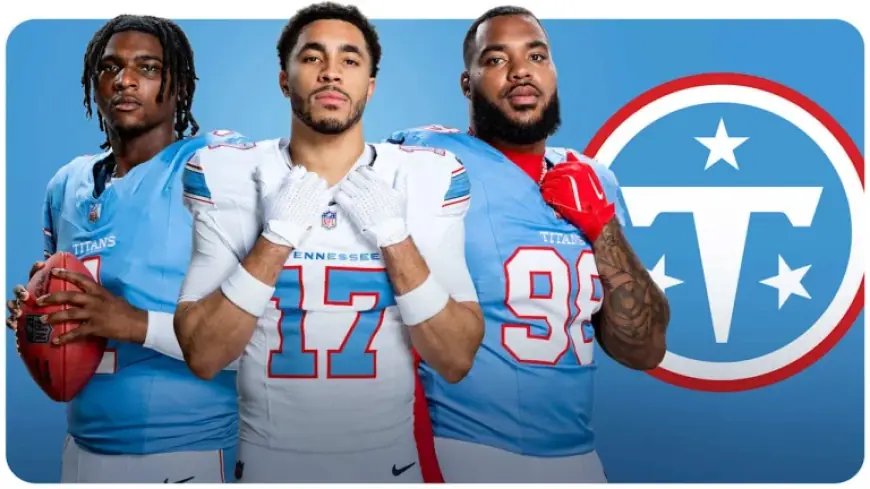
The Tennessee Titans unveiled a new logo and uniforms in a team release noting ties to the franchise’s Oilers past and its Nashville home. How does that official presentation compare with external coverage that emphasized the helmet color change and larger team context?
Tennessee Titans: Official unveiling, design choices and stated heritage in Nashville
The team release, posted on the franchise’s social channels Thursday night, framed the redesign as an evolution that “pays homage to the Luv Ya Blue Days as the Oilers” and to the organization’s nearly 30-year history in Tennessee. Burke Nihill, the team’s president and CEO, said the initiative builds on legacy and sets a course for decades; Erin Swartz, senior vice president of brand marketing, described “Titans blue” as a unique color identified through throwback jersey sales and fan focus groups. The release details specific uniform standards: Titans blue jerseys with white pants as the primary home look, white jerseys as the primary road look, and the option to wear white at home.
Robert Saleh and external coverage: helmet swap, a secondary logo and roster context
External reporting highlighted different elements of the change, noting the ditching of the bowling-ball blue helmet in favor of a white helmet and a revamped logo in Oilers-style blue. That coverage also flagged a newly described secondary logo called “The Football, ” which combines a “T” and “N” inside a football shape, and connected the redesign to team developments: a coaching staff led by Robert Saleh, major free-agent additions, and the presence of top prospects such as 2025 No. 1 overall pick Cam Ward and defensive tackle Jeffery Simmons. The external piece also placed the change relative to past moves, noting the franchise switched helmets in 2018 and pointing to the club’s move from Houston to Tennessee in 1997 and its renaming after two seasons as the Oilers in 1999.
Where the Tennessee Titans’ narrative and external accounts align and diverge
Both the franchise release and outside coverage agree on concrete visual choices: white helmets, a redesigned white “T” inside a Titans-blue circle with three white stars, and the removal of flame elements from the primary mark. The team emphasized placement details, noting TITANS is stitched above home numbers while TENNESSEE appears above road numbers, and described number-color pairings with red outlines. Yet divergence appears in emphasis: the official message centers heritage and fan-driven color preference, while external coverage foregrounds the helmet color swap and links the redesign to organizational events such as coaching changes and roster moves.
That split shows up in phrasing and context. The team used language about building on legacy and creating tools for fans to “stand out” in stadiums, and it described helmet hardware specifics like a white facemask and a unique stripe. External accounts, by contrast, put the uniform news alongside a timeline of franchise changes, referencing the last major uniform change in 2018 and the forthcoming move into a new stadium one year after the coverage.
What the divergence reveals about control of the narrative and what to watch next
Factually, the franchise controls precise design details and the messaging that links those details to history and fan preference; outside coverage interprets the same facts as part of a broader team story that includes coaching, roster and facilities. Analysis: the official release prioritizes brand continuity and fan identity, while external reporting prioritizes immediacy and connections to roster and stadium developments. If the team maintains its heritage-first messaging in merchandise and game presentation, that will reinforce the franchise’s framing. The next confirmed event that will test which narrative gains traction is the team’s move into a new stadium, scheduled to occur one year after the external coverage noted this change. If the uniforms dominate the visual and commercial rollout there, the franchise narrative will likely hold; if reporting there emphasizes the helmet change alongside coaching and roster milestones, the external framing will likely persist.