Asteroid Hit North Sea Tsunami: New Study Recasts Silverpit Crater Debate

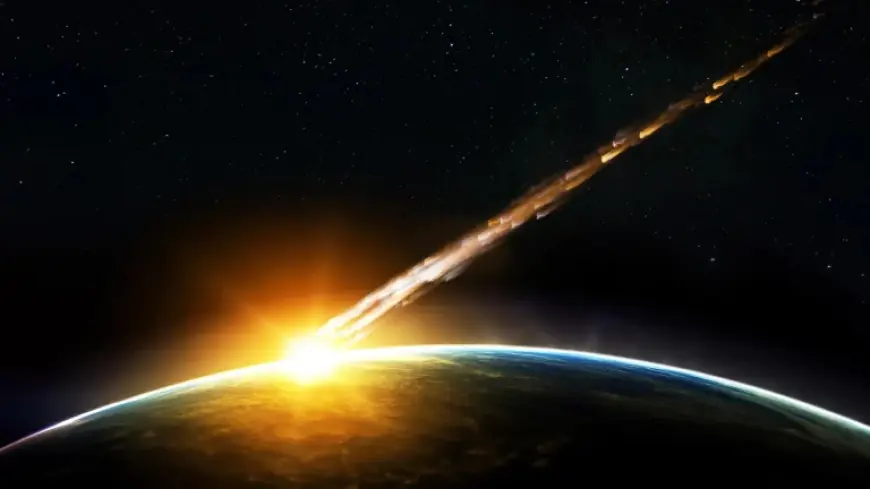
Confirmed: New research finds the Silverpit structure beneath the southern North Sea formed when an asteroid or comet struck roughly 43 to 46 million years ago. Documented: that finding — central to the Asteroid Hit North Sea Tsunami narrative — collides with earlier scientific votes and differing model estimates of how large any resulting wave would have been, a tension this article explores.
New seismic imaging and Silverpit’s shocked minerals
Confirmed: Researchers led by Dr. Uisdean Nicholson combined newly available seismic imaging with microscopic analysis of rock fragments and computer modelling to build the clearest case yet that Silverpit is an impact crater. The record in the context shows samples taken from an offshore oil well revealed rare ‘shocked’ quartz and feldspar crystals at the same depth as the crater floor; those microscopic minerals form only under pressures generated during asteroid impacts, which the team described as proof of impact.
Confirmed: Silverpit lies about 700 meters beneath the seabed and roughly 80 miles off the coast of Yorkshire, and the evidence in the context places a roughly 160-meter-wide space rock striking the seabed at a shallow angle from the west. The study combined imaging, sample analysis, and modelling to arrive at that reconstruction.
Asteroid Hit North Sea Tsunami: Conflicting wave estimates from models
Documented: The published material in the context connects the impact reconstruction to a massive tsunami, but separate elements of the record present different size estimates for that wave. One documented modelling outcome in the context describes a wave exceeding 100 metres (330 feet) in height. In a distinct set of simulations cited in the same coverage, the impact is modelled as throwing up a 1. 5-kilometre-high wall of seawater and shattered rock that then collapsed to unleash a colossal tsunami across the region.
Open question: The context does not confirm how these two numerical depictions relate to one another, which simulation used which initial conditions, or which estimate the lead team endorses as the most likely. Confirmed: the plain statement in the record is that the impact triggered a massive tsunami, but the scale ranges widely across documented accounts in the context.
Dr. Uisdean Nicholson, NERC support and the 2009 Silverpit vote
Confirmed: The investigation was led by Dr. Uisdean Nicholson of Heriot-Watt University and supported by the Natural Environment Research Council. The team described finding shocked minerals at the crater floor as decisive evidence that overturns earlier scepticism.
Documented: The context records that a 2009 gathering of geologists voted largely against the asteroid impact explanation for Silverpit. That earlier vote and the more recent evidence now sit in direct tension: what was once rejected has been reasserted as proven by new data. Documented: at least one contributing modeller characterized the new simulations as a decisive result that ends the prior debate.
Closing: What would resolve the central question is clearer alignment between the seismic and sample evidence and the different simulation outputs documented in the record. If the published modelling tied to the Silverpit study transparently details the assumptions behind each simulation and reconciles why one set yields a wave exceeding 100 metres while another produces a 1. 5-kilometre wall, it would establish the most likely scale of the Asteroid Hit North Sea Tsunami from the documented impact scenario.