Gasoline prices now vs. past peaks: what inflation-adjusted history shows

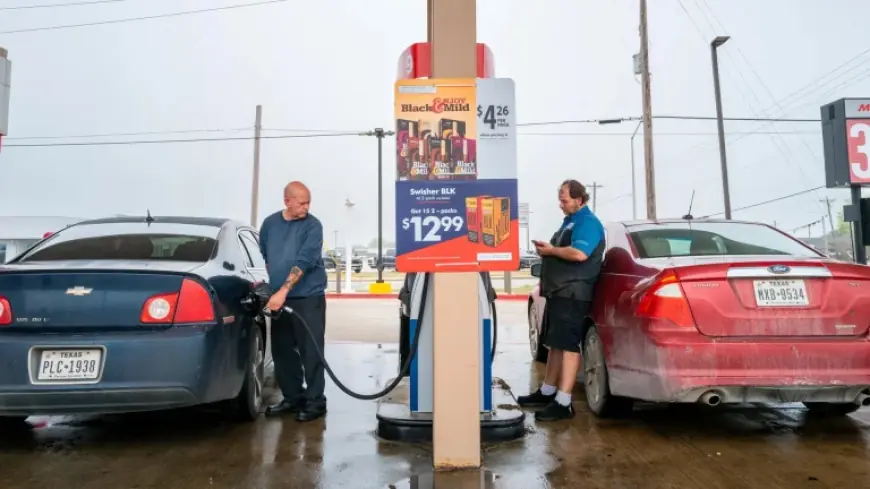
American drivers are confronting higher gasoline costs tied to the economic fallout from the war with Iran, while AAA data shows spring break season is lifting demand and nudging the national average upward. Putting today’s price level beside inflation-adjusted highs from earlier shocks answers a sharper question: are current pump prices historically extreme, or simply rising quickly from a recent baseline?
AAA’s March 12, 2026 snapshot of gasoline and oil-market pressure
AAA said in Washington, DC on March 12, 2026 that the national average for a gallon of regular gasoline jumped nearly 35 cents since last week, with current prices described as similar to the spring of 2024. The update tied the seasonal rise to spring break, warmer weather, and more drivers on the road.
AAA also pointed to crude oil’s role in the run-up: prices have surpassed the $100 per barrel mark multiple times in recent days. Still, the same release noted that at the close of Wednesday’s formal trading session, WTI rose $3. 80 to settle at $87. 25 a barrel. On the supply side, AAA cited Energy Information Administration data showing gasoline demand increased last week from 8. 29 million b/d to 9. 24 million, while total domestic gasoline supply fell from 253. 1 million barrels to 249. 5 million. Gasoline production increased last week, averaging 9. 9 million barrels per day.
In response to rising prices, the U. S. announced a release of 172 million barrels of oil from its strategic reserves over four months. AAA described that step as part of a broader International Energy Agency effort to release 400 million barrels of oil, billed as the largest emergency release in the agency’s history.
Inflation-adjusted history: 2005, July 2008, and June 2022 versus today
A separate inflation-adjusted look at long-run price cycles frames today’s national average as elevated but not near the highest levels seen in earlier periods. In that review, Tuesday’s average was $3. 54 per gallon, up more than 70 cents from $2. 81 in January 2026, which served as the baseline month for the comparison.
The same historical review described steep, event-driven spikes. Hurricane Katrina shut down production at oil refineries along the Gulf Coast, reducing refinery capacity and limiting how much crude oil could be processed into gasoline. Gas hit $2. 90 at the time, or $4. 77 in 2026 terms, and inflation-adjusted prices remained higher than today’s average throughout the following three years.
The clearest peak in that history came in July 2008, when oil reached $147 per barrel and gasoline cost an inflation-adjusted average of more than $6 per gallon. Later that year, as the 2008 financial crisis hit, inflation-adjusted gasoline prices fell to $2. 61 by year-end. Afterward, inflation-adjusted gasoline prices stayed higher than today’s average from 2009 to 2014, only moving back below $3. 50 in 2026 terms once the U. S. shale boom took off and OPEC decided against cutting oil production in 2014.
More recently, gasoline reached $5. 46 per gallon in June 2022 when adjusted for inflation, as Russia’s invasion of Ukraine and subsequent U. S. sanctions on Russian oil strained global markets while post-pandemic travel heated up.
Where the comparison lands: level versus speed, and what that reveals
Placed side by side, the two views—AAA’s near-term market and seasonal indicators, and the longer inflation-adjusted history—show a split outcome: today’s level looks below earlier inflation-adjusted extremes, but the pace of increase stands out against decades of changes. The historical review stated that in less than two months, the cost of a gallon of regular gasoline increased by more than it did in the past 30 years when adjusted to today’s dollar.
| Data point | Earlier reference in context | Current reference in context |
|---|---|---|
| National price level | July 2008: inflation-adjusted average above $6 | Tuesday: $3. 54 per gallon |
| Another major spike | June 2022: $5. 46 per gallon (inflation-adjusted) | January 2026 baseline: $2. 81 |
| Shock example tied to disruption | Hurricane Katrina: $4. 77 in 2026 terms | AAA: nearly 35-cent jump since last week |
| Demand and supply signals (weekly) | Demand: 8. 29 million b/d; Supply: 253. 1 million barrels | Demand: 9. 24 million b/d; Supply: 249. 5 million barrels |
Analysis: The comparison suggests the current squeeze is more about momentum and timing than a record-setting inflation-adjusted price level. AAA’s data emphasizes a classic seasonal pattern—spring break demand rising while domestic supply slips—while the inflation-adjusted timeline emphasizes how quickly prices can move when shocks compound. The war with Iran is explicitly tied to today’s economic fallout in the historical review, yet the numbers shown still sit well below the inflation-adjusted peaks of July 2008 and June 2022.
One additional layer in the context points to sensitivity in household budgets. Patrick De Haan, head of petroleum analysis at GasBuddy, said American drivers typically only start driving less once the cost of filling their tank eats away a significantly higher percentage of their monthly income. He pegged the current share at about 2. 2%, and said behavioral shifts begin near 3% and intensify at 4%.
The finding from placing these two pictures together is straightforward: today’s gasoline prices are rising fast relative to a recent January 2026 baseline, but the inflation-adjusted level remains below earlier crisis-era highs cited in the same history. The next test of that finding is the next round of weekly demand and supply readings—especially whether demand keeps climbing from 9. 24 million b/d as supply stays below 249. 5 million barrels. If the spring break-driven demand increase maintains its pace while supply continues to fall, the comparison suggests the speed of the rise could matter more to drivers than the fact that the inflation-adjusted level is still under past peaks.