Black Ops Royale launches, signaling a new direction for Warzone’s gameplay

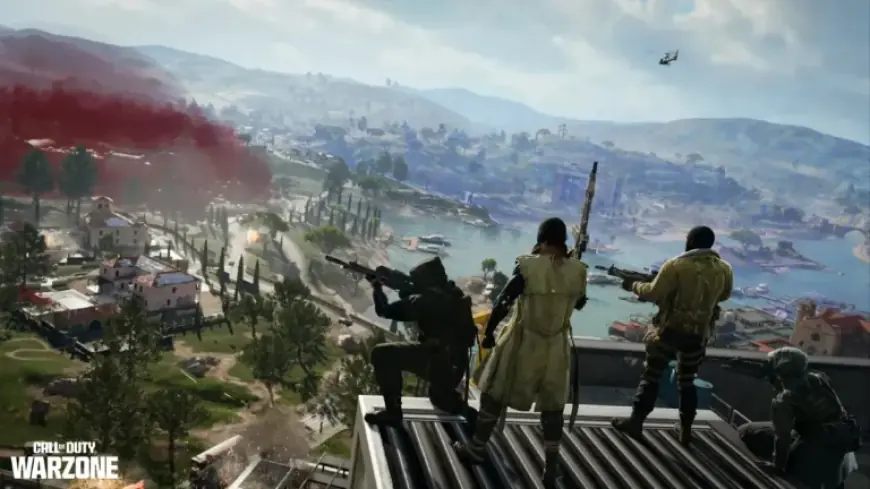
black ops royale has just launched, marking what is described as a huge step in a new direction for Call of Duty: Warzone. The launch arrives with developer attention focused on how the mode “takes the Blackout experience and evolves it, ” and it puts specific design changes—Avalon’s makeover and a reworked approach to weapons—at the center of the shift now underway.
Jason Rhode and Raven Software frame Black Ops Royale as an evolution of Blackout
Black Ops Royale is positioned as a deliberate evolution of an earlier “Blackout” style experience, and one of the featured voices attached to that framing is Jason Rhode, identified as Lead Producer at Raven Software. In an interview format tied to the launch, the discussion centers on the development perspective behind the mode and the practical questions that naturally follow when a major live game introduces a new ruleset and feel.
The questions raised in the interview point to a core tension the team is confronting in public: how to adapt to a different style of battle royale after extensive time spent “creating the current iteration of Warzone, ” and how to make the case for change to an audience that may resist it. Even without detailed answers provided in the context, the topics chosen—learning curves, map changes, weapon systems, hidden surprises, and player acceptance—show the priorities being emphasized as the mode debuts.
Avalon makeover and weapon-system changes are the concrete signals inside Black Ops Royale
Two specific mechanical pillars stand out as the clearest signals of where Black Ops Royale is trying to push Warzone. First, the map Avalon is said to have needed “a little makeover to work best for this mode, ” with a direct question posed about what caused that realization. That implies the mode is not simply a playlist swap; it required an environment tuned to support the intended pacing and gameplay patterns.
Second, the biggest perceived change highlighted in the interview prompt revolves around weapons. The interview questions describe a system where “nothing really customized by the player, ” where “weapon builds upgraded by kits, ” and where there are “bullet drop changes. ” Taken together, those details indicate a shift away from player-driven customization toward more in-match progression and a different feel for shooting and engagement distances.
Another explicit element is the expectation of discoverability and replay value within Avalon. The interview prompts ask whether the team has “hidden any new surprises in Avalon” and references “Havens Hollow’s easter eggs. ” Even as gameplay systems are reworked, the launch conversation is also tying the mode’s appeal to exploration and secrets—an approach that can reinforce early adoption by giving players a reason to search the map beyond simply chasing wins.
Warzone’s player-retention test: change management for Black Ops Royale
The most immediate trajectory visible from the context is that Black Ops Royale is being introduced not just as content, but as a change-management challenge. One of the questions put plainly is, “Players don’t always like change. How will Black Ops Royale win over Warzone players?” That framing matters because it suggests the launch is being judged on conversion—getting existing Warzone players to accept, and potentially prefer, the new design direction.
If the current emphasis continues, the near-term trend looks like a public-facing focus on explaining and justifying the new structure: why Avalon needed rework, why customization is reduced, why kits matter, and why bullet behavior has been adjusted. Those are the specific levers named in the context, and they are also the most likely to define early sentiment—because they affect every match and every engagement, not just edge-case moments.
If the shift toward kit-upgraded builds and reduced customization continues… Black Ops Royale’s identity will increasingly be defined by how players adapt to the new weapons loop described in the interview prompt: fewer player-defined setups, more progression through kits, and shooting that reflects the stated “bullet drop changes. ” In that scenario, the mode’s staying power would hinge on whether that package feels coherent and rewarding across typical play, since it touches both player agency and gunplay feel.
Should the focus on Avalon secrets and surprises land with players… the mode could build a secondary pull beyond its core mechanics. The explicit mention of “easter eggs” and a direct question about hidden surprises suggests an intended layer of discovery. If that resonates, it may help offset resistance to gameplay changes by giving the community additional goals and conversation points inside the map.
The next confirmed signal in the context is the launch itself, paired with the official framing that it “takes the Blackout experience and evolves it, ” and the continued spotlight on Jason Rhode and Raven Software as key voices explaining the transition. What the context does not resolve is how players are actually responding, or what specific answers Rhode provided to the questions about Avalon, weapons, and winning over Warzone players—details that would clarify whether the launch narrative is matching lived gameplay experience.