Jeff Kaplan Overwatch exit details point to an ultimatum over layoffs

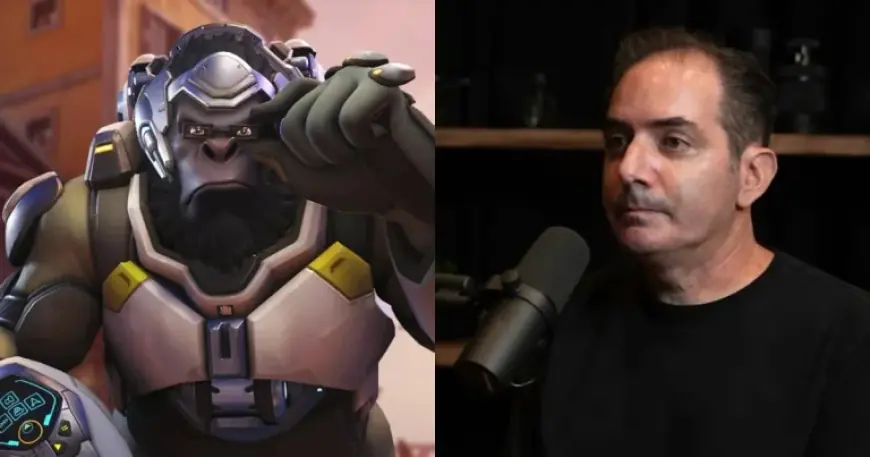
jeff kaplan overwatch is back in the spotlight after Jeff Kaplan described the moment he says pushed him to leave Blizzard in 2021: an ultimatum delivered in a meeting with the company’s CFO that linked revenue targets to the potential layoff of 1, 000 people. The account ties Kaplan’s departure to escalating corporate pressure around monetization and the Overwatch League, and it reframes his exit as a breaking point rather than a routine leadership change.
Jeff Kaplan Overwatch and the CFO meeting
Kaplan’s description centers on a meeting in the CFO’s office in which he was told Overwatch had to hit a specific, undisclosed amount of money and then sustain recurring revenue thereafter. The actual figures were left redacted because of a confidentiality agreement Kaplan signed with Blizzard that he indicated remains in effect. He said the CFO also attached a human consequence to that plan: if the revenue push failed, Blizzard would lay off 1, 000 people, and “that’s going to be on you. ” Kaplan characterized the exchange as “the biggest” insult moment of his career and said it felt surreal to be placed in that position.
The timeline Kaplan cited for the revenue demand included a date that was “2020” and was “going to slip to 2021, ” indicating that the pressure was not a one-off conversation but a target tied to a specific internal horizon. The pattern suggests the ultimatum functioned less as a performance metric and more as a lever: it turned a business goal into a personal burden for the game’s director. Kaplan said the moment “ultimately broke” his resolve and pushed him toward leaving a company he had expected to retire from.
Dennis Durkin, Armin Zerza, and accountability
Kaplan did not name the CFO in his comments, but Dennis Durkin is identified as having held the CFO role at Blizzard between 2019 and May 2021, with Armin Zerza taking over from April 2021 to May 2025. Separately, Kaplan said, “Luckily for Blizzard, that CFO is no longer there, ” a line that underscores how personally he viewed the confrontation and how closely he linked the ultimatum to one executive’s approach. Even without a named individual in the original account, the detail that the CFO changed during the period Kaplan referenced puts his complaint in a concrete organizational window.
That personnel context matters because Kaplan framed the decision to leave as driven by leadership expectations rather than by the creative direction of the game alone. The figures point to a broader tension inside Blizzard at the time Kaplan describes: the financial mandate was explicit, recurring, and connected to staffing outcomes. For a director who said he thought he would stay at Blizzard permanently, the implication is that the relationship fractured not over design disagreements, but over governance—who ultimately controlled the terms under which Overwatch would be judged successful.
Overwatch League, Twitch demands, and lost development time
Kaplan also linked the tightening financial pressure to the Overwatch League, describing it as a leadership focus that became, in his view, a “major derail. ” He said excitement around the league became “too much” and that it was overmarketed to the people buying teams, including claims made to investors that it could be more popular than the NFL. That level of hype, he argued, created more demanding stakeholders and intensified expectations that Overwatch itself would generate money quickly.
In Kaplan’s telling, a broadcasting rights deal with Twitch compounded the strain. He described work such as Twitch integration, spectator camera controls, and a large volume of Overwatch League team skins as resource-intensive and technically challenging. He also said those demands left the development team stretched thin, pushing other plans “out the window. ” The pattern suggests a cascading tradeoff: the more resources pulled into building league- and broadcast-adjacent features, the less capacity remained for “new world events” and even for keeping momentum on Overwatch 2, leaving the team “treading water. ”
Kaplan acknowledged that he believed in Overwatch 2 and disputed the idea that he cared only about PvE, saying he had a plan and a team working on world updates. Still, his broader point was blunt: the environment became dominated by an impulse to “make lots of money really fast. ” For jeff kaplan overwatch watchers, the account offers a direct explanation for why a high-profile leader might walk away even while still believing in the project—because the development roadmap, as he described it, was being repeatedly reshaped by external financial commitments and investor expectations.
Kaplan is now working at his new studio, Kintsugiyama, on an action-survival shooter titled The Legend of California, an open-world game set on the mythical Island of California during the gold rush era. Another description characterizes the project as an open-world survival game set to release in Early Access sometime this year, but no date or time is specified. If Kaplan’s account holds, the data suggests his Blizzard exit was not a retreat from game-making, but a move away from a model of accountability where revenue targets and layoff threats were fused into a single directive.