Rutgers Vs Ucla matchup sets up Big Ten Tournament pressure test in Chicago

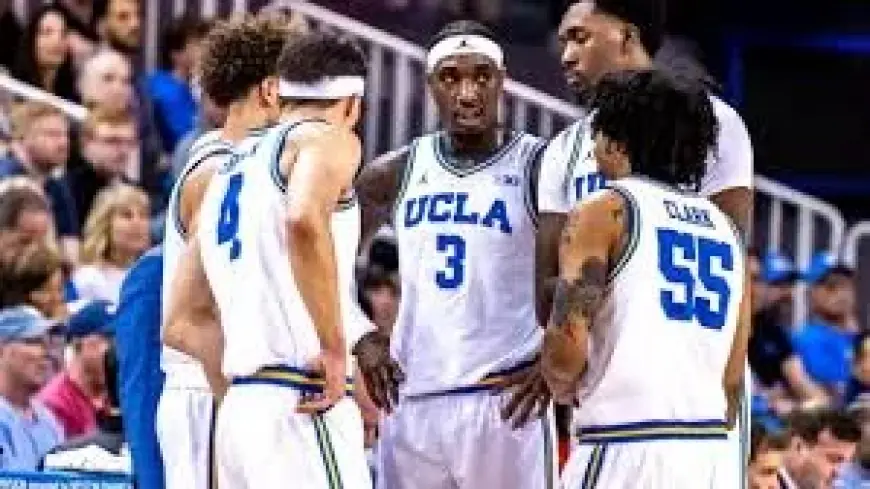
rutgers vs ucla is set for Thursday evening at the United Center, where No. 6-seed UCLA (21-10, 13-7 Big Ten) faces No. 14-seed Rutgers (14-18) in the third round of the Big Ten Tournament. Rutgers arrives after beating Minnesota 72-67 on Wednesday night. The confirmed bracket setup, paired with UCLA’s recent run and efficiency markers, signals a game likely decided by execution rather than surprise variables.
United Center stakes for Rutgers Vs Ucla: a clear quarterfinal route
The immediate structure is straightforward: UCLA’s first Big Ten Tournament game comes against Rutgers, and the winner’s next step is already defined. With a win on Thursday, UCLA would advance to face No. 3-seed Michigan State (25-6) in the quarterfinal round on Friday night. That creates a compressed decision window for both teams, with Thursday’s result directly shaping who stays on schedule for a higher-seeded matchup.
Timing is also specifically framed. UCLA’s Thursday game is anticipated for 6 p. m. PT, following the prior contest by roughly 25 minutes. The venue detail underlines the stage: the United Center is listed at a capacity of 20, 917, and this marks UCLA’s first game there since it faced Ohio State in the CBS Sports Classic in December 2018.
UCLA Bruins form under Mick Cronin points to repeatable edges
UCLA enters with a defined trendline: the Bruins have won four of their last five games heading into Thursday night’s contest against Rutgers. They also closed the regular season tied with Purdue for sixth place in the Big Ten standings, securing the No. 6 seed in the tournament tiebreak. For coach Mick Cronin, the season benchmark is explicit as well: UCLA has won 21 or more games for the fifth time in seven seasons under his leadership.
Several team indicators in the context point to where UCLA’s advantages have come from. Through games played Monday night, UCLA ranked No. 2 in the Big Ten in 3-point percentage at 38. 2% (behind Purdue). The Bruins also ranked No. 3 in the Big Ten in 3-point percentage defense (1. 2%) and posted a 1. 79-to-1 assist-turnover ratio that ranked No. 4 in the conference through Monday, March 9. In a tournament setting, that combination of shot-making, perimeter resistance, and ball security is the kind of profile that tends to travel even when shooting variance shows up.
There is also a split in results that frames what needs to hold up in Chicago. UCLA went 17-1 at home, but compiled a 4-9 record in road and neutral-site games. The United Center is a neutral site, so the current direction of travel hinges on whether UCLA’s recent momentum can override that broader split. Still, the recent record in February and March provides a narrower lens: UCLA is 6-3 across nine games in those two months, including 2-0 in March.
Donovan Dent and Tyler Bilodeau provide the clearest on-court signals
The context highlights two central performance signals for UCLA, and both point to decision-making and spacing. Donovan Dent ranked No. 4 in the nation and third in the Big Ten in assists per game at 7. 5 through Tuesday, March 10. More recently, through the last five games, Dent totaled 53 assists and two turnovers while averaging 15. 2 points per game in that span. Over the last 15 games, he has 127 assists and 22 turnovers, a 5. 8-to-1 ratio, reinforcing a trend toward high-control offensive orchestration.
On the scoring side, Tyler Bilodeau has a defined consistency pattern: he has scored in double figures in 26 of 29 games, with nine games of 20 or more points. He also earned third-team All-Big Ten Conference acclaim for the second straight season. The spacing component is clear in the numbers: through Tuesday, March 10, Bilodeau led all Big Ten players in 3-point percentage at 46. 2% (60-for-130). With UCLA already ranking No. 2 in the league in team 3-point percentage, Bilodeau’s efficiency becomes a visible driver of how the Bruins can separate in a one-and-done environment.
Based on context data:
- UCLA seed/record: No. 6 seed, 21-10 (13-7 Big Ten)
- Rutgers seed/record: No. 14 seed, 14-18
- Rutgers last result: beat Minnesota 72-67 on Wednesday night
- UCLA recent form: won four of last five games
- UCLA perimeter marker: 38. 2% team 3-point percentage (No. 2 Big Ten)
- Dent recent control: 53 assists, 2 turnovers in last five games
If UCLA’s recent ball security continues… the combination of Dent’s low-turnover playmaking (53 assists to two turnovers over the last five games) and the team’s No. 4 Big Ten assist-turnover ratio offers a grounded path to dictating pace and shot quality against Rutgers. That scenario is rooted in the context’s most consistent indicators: UCLA’s passing efficiency and a perimeter attack supported by both team and individual 3-point percentages.
Should UCLA’s road and neutral-site pattern reassert itself… the 4-9 record away from home and on neutral floors becomes the pressure point in Chicago, where the Bruins must translate their recent run into a setting that has been less forgiving this season. That is not a prediction of outcome, but a context-based risk factor that sits alongside UCLA’s strong recent form.
The next confirmed milestone is the Thursday third-round game at the United Center, with a quarterfinal meeting against Michigan State on Friday night available to the winner. What the context does not resolve is how Rutgers matches up stylistically beyond its 72-67 win over Minnesota, since no additional Rutgers performance markers are provided. For now, the most visible trajectory runs through UCLA’s efficiency signals and whether they hold on a neutral court in a tightly scheduled tournament bracket.