Jim Boeheim blames player performance and NIL for Autry firing

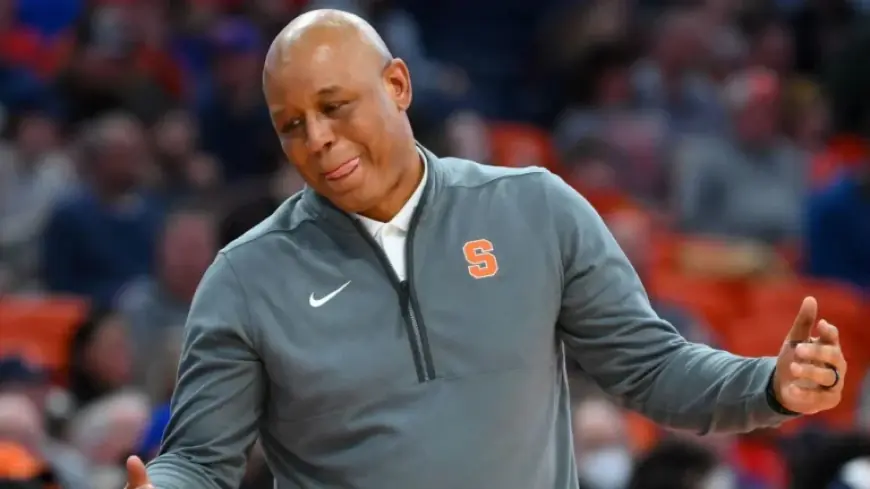
Syracuse fired Adrian Autry on Wednesday, ending his three-year tenure as the program’s head coach and successor to jim boeheim. Boeheim publicly defended Autry as “a good coach, ” arguing the dismissal followed a season in which Syracuse’s best players underperformed and the program lagged behind peers in NIL resources. The comments sharpen the debate over what Syracuse is actually trying to fix next.
Jim Boeheim defends Adrian Autry
Boeheim acknowledged the basic reality of the job—“the head coach is responsible” for results—while insisting the season’s outcomes were driven heavily by the play on the floor. Speaking Wednesday on the ACC Network, he said Autry “got in a situation where his best players just didn’t play the way they needed to play, and it cost him his job. ” In a separate Wednesday interview with Cuse Sports Talk, Boeheim went further, saying Autry was “let down” by his star players and adding that Autry himself “is not going to say this. ”
The pattern suggests Boeheim is not just evaluating Autry’s record, but also pushing back on a narrative that a coaching change alone explains Syracuse’s slide. By framing the firing around player performance, he effectively shifts the lens from tactics to roster outcomes—who produced, who didn’t, and what a coach can realistically overcome in one season.
J. J. Starling and Donnie Freeman cited
Boeheim did not identify the players he meant in either interview, but the context offered around the team’s production points to two prominent names: J. J. Starling and Donnie Freeman, described as Syracuse’s two leading returning scorers from last season. Starling, a senior guard who scored a team-high 17. 8 points per game last season, averaged 10. 9 points per game this season. Freeman, a 6-foot-9 sophomore, increased his scoring average from 13. 4 points last season to 16. 5 this season, but was down in “virtually every other statistical category, ” including rebounding and shooting percentages.
On the ACC Network, Boeheim emphasized the broader point with a comparison: if a team’s two best players have “really, really bad years, ” winning becomes unlikely, citing Duke as an example with Cam Boozer and Isaiah Evans. The figures point to why Boeheim keeps returning to a two-player framing: Starling’s scoring drop is a clear, measurable decline, while Freeman’s mixed profile allows the argument that points alone did not translate into all-around impact.
That also spotlights a difficult implication for Syracuse’s next step. If the program believes its core issue is player performance rather than coaching, then changing the head coach risks treating the symptom while leaving the underlying roster problem unresolved.
NIL money becomes part of Syracuse debate
Boeheim also tied Syracuse’s challenges to NIL resources, explicitly comparing the program to Boston College and Georgia Tech—two other ACC schools that fired their coaches after rough seasons. “If you don’t have enough resources, that puts you behind, ” he said on the ACC Network, describing BC, Georgia Tech, and Syracuse as “three of the [lowest for] NIL money in the league. ”
One concrete number entered the conversation: The Daily Orange recently reported Syracuse spends around $8 million on its basketball roster this season. Boeheim contrasted that figure with what he characterized as the current market reality, saying “Football is crazy now” and that “big-time schools are paying $35-40 million, ” while basketball sits at “$10-20 [million] — some at 20, some at 15, some at 10. ” The pattern suggests Boeheim is arguing that coaching evaluation can’t be separated from the program’s spending position, especially if Syracuse is competing against teams operating with larger NIL pools.
Still, Syracuse’s decision to fire Autry signals that leadership is willing to make a coaching change even amid those constraints. Autry, a former four-year Syracuse starter under Boeheim and later his associate head coach, took over in 2023 when Boeheim retired. The Orange went 15-17 this season and failed to reach the NCAA tournament under Autry, and he finishes with a 49-48 overall record. Syracuse also finished with consecutive losing seasons for the first time since 1968.
The open question now is which diagnosis will shape Syracuse’s next hire: if jim boeheim’s framing holds, the data suggests the next coach will be judged quickly not just on wins, but on whether Syracuse can secure more NIL resources and get top-end players to perform at a level that matches ACC expectations.