Jj Mccarthy vs Kyler Murray: what Minnesota’s QB pivot reveals

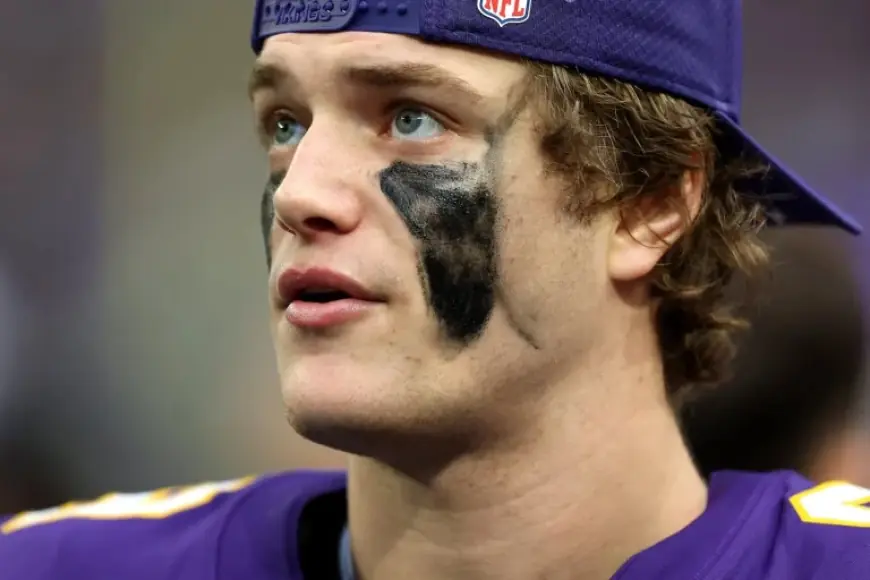
jj mccarthy sits at the center of Minnesota’s quarterback debate as the Vikings weigh a new path against the one they just tried. On one side is a 22-year-old, highest-drafted quarterback in franchise history handed the starting job; on the other is a reported push to add Kyler Murray after his release. The comparison answers one question: is Minnesota recommitting to a long-term development plan, or reverting to its familiar pattern of external solutions?
jj mccarthy and the Vikings’ “traditional ideal” experiment
Minnesota’s recent decision-making framed jj mccarthy as a deliberate break from the Vikings’ unusual quarterback history. Rather than placing the franchise tag on Sam Darnold or offering him a market-rate extension a year ago, the Vikings let him leave in free agency for Seattle and “pursued the more traditional NFL ideal. ” That meant giving the starting quarterback job to J. J. McCarthy, the 22-year-old they had made the highest-drafted quarterback in franchise history the year before.
The commitment went beyond depth-chart language. The team spent $348 million in cash on what was described as a veteran-laden incubator for McCarthy, aiming to build on a 14-3 season while the quarterback developed after a knee injury ended his rookie year. The results, as described in the context, were mixed: McCarthy missed seven games because of injury and threw one more interception than touchdown passes, while Minnesota finished 9-8 and ended the season a half-game out of a playoff tournament won by the Seahawks and Darnold. In the same arc, Darnold ultimately hoisted the Lombardi Trophy after a Super Bowl LX win over the Patriots.
Still, the Vikings entered the new league year this week “exploring all possibilities” at quarterback. At the NFL combine, Executive Vice President of Football Operations Rob Brzezinski and head coach Kevin O’Connell referred to a “baseline” level of quarterback play that, when they’ve had it under O’Connell, has typically produced playoff teams. Their 2025 thesis was built on the idea that McCarthy could reach that level in his first starting season; their 2026 approach was described as hoping they will get it from McCarthy or someone else.
Kyler Murray, Kevin O’Connell, and a new external option
Against that internal-development framing, the Vikings’ reported pursuit of Kyler Murray marks a clear counterweight. Ian Rapoport confirmed Minnesota is taking a “hard run” at adding Murray following his release from the Arizona Cardinals on Wednesday, March 11. Rapoport described the Vikings as “the favorite” and “the team to beat, ” while noting Murray wants to hear directly from other teams and will take his time.
In the same context, ’s Louis Riddick drew the stakes sharply: if Murray lands in Minnesota, he said the McCarthy era in Minnesota is over, adding, “It’s over for JJ [McCarthy]. ” He also referenced that Minnesota moved up to 10 to pick McCarthy, then concluded it would be time to move on from him under that scenario.
The competitive landscape in the context points to Pittsburgh as Minnesota’s “most dangerous” competition “at a glance. ” The Steelers were described as signaling an intention to win in 2026 by hiring Mike McCarthy as head coach, rather than choosing a younger candidate who could grow into the job through a roster rebuild. The Steelers were also connected to a potential reunion with Aaron Rodgers heading into his age-43 season and to interest in Kirk Cousins, whom the Atlanta Falcons released Wednesday as he approaches his age-38 campaign.
Financially, the Murray chase is portrayed as a specific kind of opportunity. Murray is described as likely to sign a one-year agreement for the veterans league minimum of $1. 3 million, with the Cardinals paying the balance of the $36 million they owe Murray in 2026 regardless. In that framing, the primary competition becomes roster talent and winning prospects. The Steelers’ receiving and tight end options were listed as DK Metcalf, Michael Pittman Jr., and Pat Freiermuth. Minnesota’s were listed as Justin Jefferson, Jordan Addison, and TJ Hockenson, alongside the promise of playing under Kevin O’Connell.
March 11 as a turning point: the Vikings’ two QB models side by side
Set next to each other, the Vikings’ jj mccarthy plan and the potential Murray plan illuminate the same organizational pressure point: Minnesota wants “baseline” quarterback play that produces playoff teams under Kevin O’Connell, but it is weighing whether that baseline is more reliably purchased than developed.
| Comparison point | J. J. McCarthy track | Kyler Murray track |
|---|---|---|
| How Minnesota gets the QB | Drafted (moved up to pick him at No. 10) | Pursuit after release by Arizona on March 11 |
| Age described in context | 22 | 29 for the upcoming season |
| Recent performance snapshot | Missed seven games; one more interception than touchdown passes | Started five games last year before being shut down due to a foot injury |
| Minnesota’s stated approach | “Traditional NFL ideal” with a developed starter | “Exploring all possibilities” and potentially adding a veteran |
| Cost framing in context | $348 million in cash spent on roster support | Possible one-year veterans minimum of $1. 3 million |
| Immediate consequence stated | Could get another shot to lead in 2026 | Riddick: landing in Minnesota ends McCarthy era |
Analysis: the table shows why March 11 reads like a franchise fork. The McCarthy path reflects a willingness to invest heavily in the roster while accepting development volatility at quarterback. The Murray path reflects a willingness to chase a quicker “baseline” solution, aided by an unusually low salary number in the context, even if it effectively strands a recent top-10 pick.
That tension is amplified by the Vikings’ financial constraints described around the combine. Even after contract restructures for Justin Jefferson, Christian Darrisaw, Byron Murphy Jr., and T. J. Hockenson, the Vikings’ cap constraints were described as pointing them toward an affordable veteran quarterback. Brzezinski’s comment that the team spent nearly $100 million more in cash than it allocated to the cap over the past two years, and that “that bill’s coming due, ” fits more cleanly with a veteran-minimum pursuit than with an expensive veteran acquisition.
The comparison establishes one clear finding: Minnesota’s public commitment to a “traditional” in-house quarterback is now competing with a more familiar Vikings pattern of acquiring a quarterback from outside the organization, and the Murray pursuit represents the sharper, more immediate bet on “baseline” play. The next confirmed test arrives as Murray takes his time and wants to hear directly from other teams after his March 11 release; if Minnesota maintains its push and lands him on the veterans minimum structure described, the comparison suggests jj mccarthy becomes secondary to a roster-first attempt to win in 2026.