Tina Shepherd’s Turn Shows What Friday 13th Could Have Become

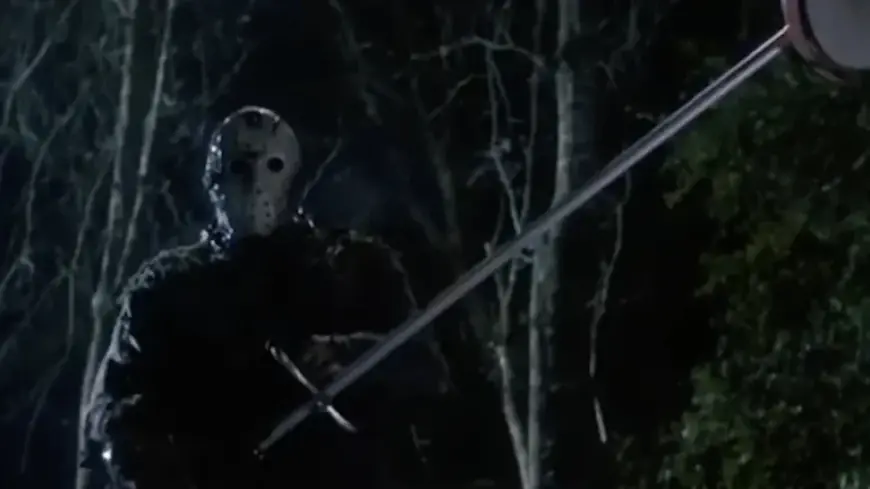
When Jennifer Banko’s Tina Shepherd appears early in Friday the 13th Part VII: The New Blood, she brings telekinesis into a series built on a single, lethal presence. That pivot — a direct clash between Tina and Jason Voorhees — offered a new path the franchise did not follow, even as studio choices and prior sequels reshaped Jason’s role.
Tina Shepherd’s moment in The New Blood and the franchise’s human focus
The New Blood opens on flashbacks and then introduces young Tina Shepherd, a blond child played by Jennifer Banko, whose telekinetic powers and an abusive parent echo another famous cinematic teenager. The story sets Tina against Jason Voorhees, moving beyond the pure slasher setup and putting a named, human figure at the emotional center. That human detail — Tina’s powers and history — is the concrete change the film stages for the characters and for viewers.
Before Tina’s arrival, the franchise repeatedly shifted who occupied the center. Pamela Voorhees was the motivator in the original, and later films repositioned Jason himself in ways that left the narrative logic thin. The New Blood’s use of a specific troubled teen gave audiences a different kind of engagement than the usual procession of victims.
Paramount’s choices and the arc of Jason Voorhees in friday 13th
Paramount Studios shaped that arc by authorizing key turns: ordering Jason’s death in a third entry, allowing sequels after the Final Chapter proved profitable, and later resurrecting Jason as a zombie in Jason Lives. Those studio decisions placed Jason in different states — human, dead, undead — and altered what the series could sustain. The studio’s moves meant the franchise could reinvent Jason’s role but also could abandon experiments like the one staged in The New Blood.
Writer Victor Miller and director Sean S. Cunningham established the original template by leaning on familiar holiday-slasher mechanics, and effects by Tom Savini helped sell the shocks that made early entries profitable. The financial result of that first film, which returned tens of millions on a small budget, created an imperative: keep making sequels. That imperative, driven by box office results, guided Paramount when it folded Jason into different concepts instead of committing to the monster-versus-monster idea The New Blood offered.
Friday 13th Part VII as a monster-fight experiment and its legacy
Friday the 13th: The New Blood explicitly pits Jason against another monster: Tina Shepherd, a troubled teen with telekinesis modeled in part on Carrie. That monster mash gave Jason a level of direction and excitement the franchise later lacked. The film demonstrates that the series could have evolved into a lineup of monster-versus-monster encounters rather than repeating the same slasher formula.
For a time, Jason found other modes. A New Beginning placed someone else under the mask, and Jason Lives turned him toward gothic horror and humor. Yet the specific path The New Blood suggested — a continuing series of confrontations between Jason and other extraordinary figures — was not pursued. The next time Jason regained that kind of clear, antagonistic momentum was in a crossover that reunited him with another marquee monster.
That later crossover shows the franchise could circle back to the idea of fights between named, monstrous opponents. But The New Blood remains the concrete instance in the series where a human-scale figure, Tina Shepherd, was given a narrative engine distinct from Jason’s usual role as an almost inexplicable force.
Back in the opening scene, Jennifer Banko’s Tina Shepherd is not a background victim. She is the named, human detail the film uses to change the rules. The confirmed next milestone for the franchise after that experiment was a later film in which Jason again found dramatic focus against another monster, underscoring that The New Blood’s direction had been a viable alternative the series ultimately set aside.