Thomas Medlin case: Timeline evidence compared with the search effort

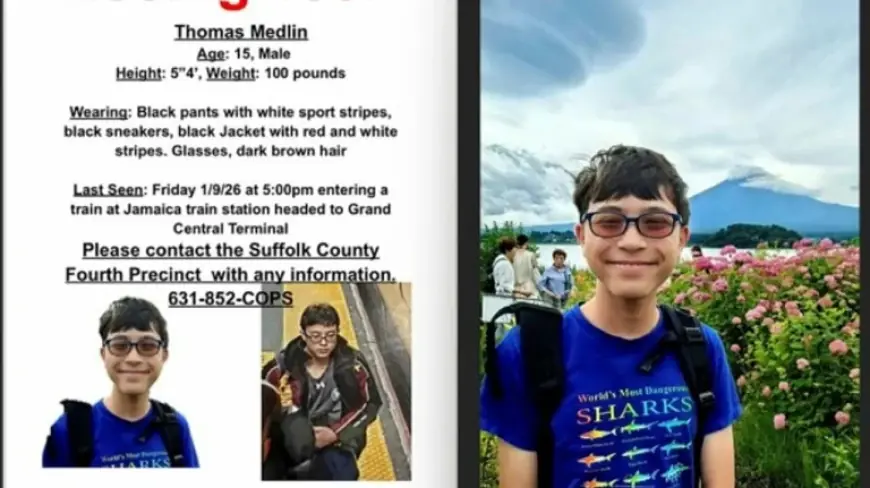
thomas medlin, a 15-year-old from St. James, was found dead after his body was recovered from the water off Red Hook, Brooklyn, police said. The investigation produced a tightly timed sequence of surveillance and phone activity on Jan. 9, while the public response stretched for weeks as volunteers and online observers searched for answers. Placed side by side, what does that contrast reveal about how this case moved from disappearance to identification?
Thomas Medlin: A short, minute-by-minute trail on Jan. 9
Investigators described a narrow window of confirmed activity tied to thomas medlin on the day he went missing. Police said he left the Stony Brook School on Jan. 9 at around 3: 30 p. m. and was seen at Grand Central Station that afternoon. Later, surveillance video recorded him on the pedestrian walkway of the Manhattan Bridge at about 7: 06 p. m. that evening.
Digital evidence then tightened the timeline further. Police said the last activity on his cellphone occurred at about 7: 09 p. m. A nearby surveillance camera recorded a splash in the water at around 7: 10 p. m., roughly a minute later. In other words, the most concrete trail described by investigators compresses into minutes: the bridge sighting, the final phone activity, and then the splash captured on camera.
That tight sequence also sets clear boundaries on what is confirmed versus unknown. Police did not describe any additional sightings after the bridge footage, and the final phone activity time functions as the last confirmed digital signal cited in the case.
Red Hook recovery and Thursday identification: A longer path to certainty
While the Jan. 9 evidence is precise, the move from disappearance to confirmation unfolded over a much longer span. Police said thomas medlin had been missing since Jan. 9 and that his body was recovered from the water off Red Hook in Brooklyn on March 7. Authorities confirmed his identity on Thursday, meaning the recovery and the identification did not occur at the same moment.
The gap between recovery and identification mattered because it shaped when investigators could publicly close the loop. One account said the body was found on Saturday but was not identified until Thursday. The confirmed identification on Thursday also anchored other investigative statements made at that time, including that detectives had remained in communication with Medlin’s family to bring closure.
Police described investigative steps that continued beyond the initial timeline, including extensive video canvassing and review of digital evidence. Detectives also executed subpoenas and search warrants, examined multiple social media and online gaming profiles, and conducted forensic examinations of electronic devices associated with Medlin. That examination determined those platforms were not connected to his disappearance, police said.
Jan. 9 evidence vs. weeks of searching: What the comparison shows
Comparing the tightly timed Jan. 9 trail with the longer search and investigation highlights a central feature of the case: the most time-specific indicators arrived early, but confirmation came later. The public-facing timeline from the bridge is measured in minutes, yet the process of recovery and identification extended into March and a Thursday confirmation.
| Category | Jan. 9 confirmed trail | Search, recovery, and investigation |
|---|---|---|
| Time specificity | 7: 06 p. m. bridge video; 7: 09 p. m. last cellphone activity; ~7: 10 p. m. splash | Weeks of effort; March 7 recovery; Thursday identification |
| Primary proof types | Surveillance video, cellphone activity, camera-recorded splash | Video canvassing, digital evidence review, device forensics, subpoenas and search warrants |
| Public response described | Not tied to the minute-by-minute sequence | Hundreds of people searched in lower Manhattan; countless social media posts |
| What it established | A last known location on the Manhattan Bridge and a rapid end to recorded activity | Recovery off Red Hook and formal confirmation of identity |
| Criminal-activity assessment | Not addressed within the timeline itself | No indication of criminal activity; platforms examined were not connected to the disappearance |
One side of the comparison shows clarity: times around 7: 06 p. m., 7: 09 p. m., and about 7: 10 p. m. The other side shows duration: an extended investigation and a community response that included hundreds of people fanning out across lower Manhattan in the weeks after the disappearance, plus widespread online attention from family, friends, and strangers.
Analysis: The divergence suggests that a precise initial trail does not necessarily translate into immediate resolution. The timeline evidence narrowed where investigators focused, yet the case still required substantial investigative work before authorities could confirm identity and address key questions such as whether criminal activity appeared connected.
The comparison establishes a clear finding: in the case of thomas medlin, investigators cited a sharply defined final sequence on Jan. 9, but the process that produced formal certainty ran on a separate clock, ending with a March 7 recovery and a Thursday identification. The next confirmed milestone that tests that finding is the Suffolk police statement itself on Thursday, which paired the identification with investigative conclusions, including no indication of criminal activity and a determination that examined social and gaming platforms were not connected. If that assessment maintains as the case remains framed by those findings, the comparison suggests the early minute-by-minute evidence will stand as the defining public record of his last known movements.