Juste Pour Rire vs. Julien Lacroix: What the partnership reveals about comeback

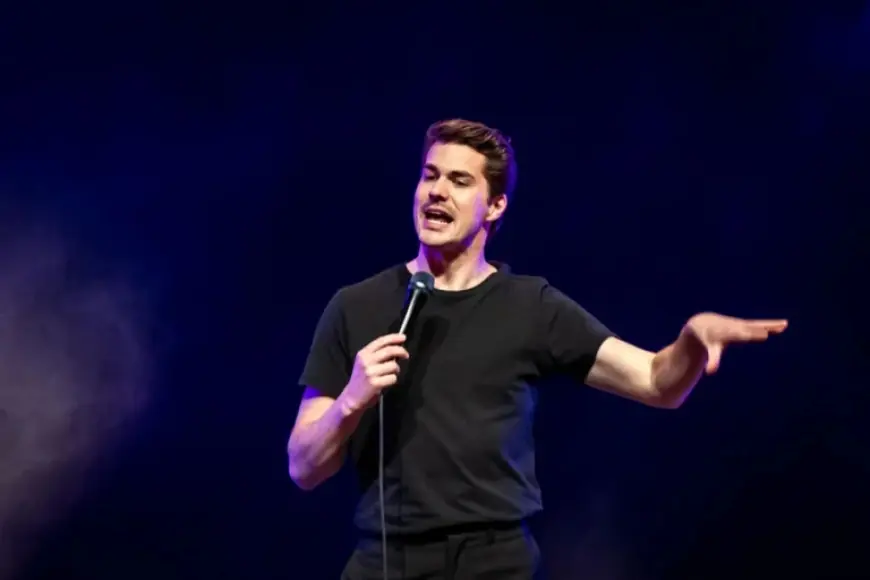
Juste Pour Rire has announced it will produce the next solo show of comedian Julien Lacroix, and Lacroix is currently touring a series of rodage performances that extend until November; the comparison asks what this producer partnership reveals about the nature and risks of his comeback.
Juste Pour Rire’s rationale for producing Julien Lacroix
Juste Pour Rire frames the move as a strategic expansion of its role as a producer of solo shows and a desire to “accompany” major artists closely under its wing, a position articulated by Sylvain Parent-Bédard. The organization cites the quality of Lacroix’s writing, the solidity of his material, and the public response to recent shows as reasons for the partnership. Juste Pour Rire also says it recognizes “the path he has traveled” and the evolution in his process, and it plans to announce further collaborations in the coming months.
Julien Lacroix’s independent comeback and touring facts
Julien Lacroix returned to the stage after withdrawing from the public sphere in 2020 following an investigation by Le Devoir and allegations of sexual misconduct. He staged a solo comeback show, Le temps au temps, in 2024, mounting more than 150 performances that drew nearly 40, 000 spectators. He is currently running a roughly twenty-show tour of rodage performances across Quebec cities, named stops ranging from Gatineau to Saguenay and including other regional centres, with the run scheduled to continue until November.
Juste Pour Rire and Julien Lacroix: alignment, divergence, and measurable stakes
On alignment, both parties point to audience response as a central metric. Juste Pour Rire cites the public reaction and the solidity of Lacroix’s material; Lacroix’s track record shows crowds: his earlier pre-2020 one-man show had drawn more than 100, 000 spectators, and Le temps au temps reached almost 40, 000 across 150 performances. On divergence, Juste Pour Rire brings institutional backing, a stated production plan, and a pledged role to develop solo shows at scale, while Lacroix’s recent comeback was independently produced and tested through a prolonged series of rodage dates.
| Metric | Julien Lacroix (recent) | Earlier show / context |
|---|---|---|
| Audience reach | Nearly 40, 000 spectators for Le temps au temps | More than 100, 000 for his first one-man-show before 2020 |
| Number of performances | Over 150 performances for Le temps au temps | Not specified for first one-man-show in this context |
| Current activity | About twenty rodage shows across Quebec, running until November | Historic success prior to 2020 allegations |
These data points show that Lacroix already drew substantial audiences independently, while Juste Pour Rire offers an institutional channel to amplify and professionalize future touring and production. The partnership therefore shifts the balance from an artist-led comeback through rodage testing toward an organized production rollout backed by a major producer.
Still, the partnership rests on contested ground: Lacroix was the subject of allegations tied to a 2020 investigation, and Juste Pour Rire states it undertook an analysis before announcing the collaboration and recognizes his evolution over the past years. The organization explicitly links its decision to values such as responsibility and the capacity for evolution, and it says other signings will follow.
Analysis: Placing Juste Pour Rire’s institutional commitment beside Lacroix’s independent recovery clarifies that the collaboration converts demonstrated audience interest into a formal production strategy. Juste Pour Rire supplies production scale and a platform to broaden tour deployment; Lacroix supplies recent proof of public engagement through more than 150 performances and a current rodage tour through Quebec.
Finding and test: This comparison establishes that the partnership is a bet that institutional production will convert Lacroix’s independent audience momentum into a larger, organized tour pipeline. The next confirmed event that will test this finding is Lacroix’s ongoing series of rodage shows that extend until November. If Lacroix maintains public turnout and the rodage shows continue to develop the material through November, the comparison suggests the partnership will likely scale his comeback into a broader produced tour.