Emanuel Wilson set to leave Packers, but the record on demand diverges

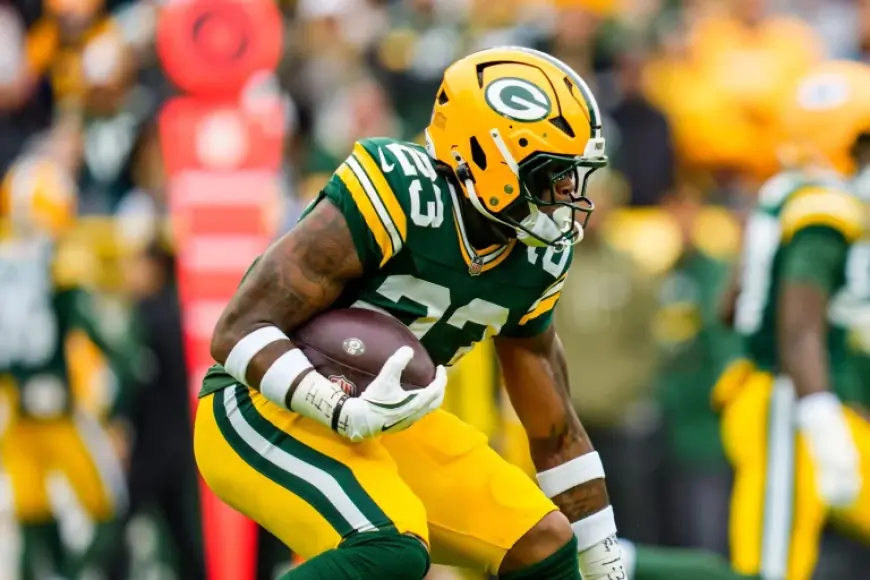
emanuel wilson is expected to sign with a team other than the Green Bay Packers after the club declined to offer him a restricted free agent tender valued at about $3. 5 million. Yet the publicly stated expectations around his next landing spot outpace what is actually documented: one account says no teams were noted as interested, while another frames multiple potential suitors without confirming any contact.
Emanuel Wilson, the Packers’ declined tender, and the March 11 free-agency shift
The confirmed point of departure is Green Bay’s decision not to retain the running back at the tender price tied to his restricted free agent status. The Packers declined to offer a one-year tender that would have paid Wilson $3. 5 million next season, a figure also described as a one-year, $3. 52 million offer. With that tender not extended, Wilson became a free agent on March 11, able to sign with any team.
One account attributed to Milwaukee Journal Sentinel reporter Tom Silverstein states that Wilson will not be coming back to the Packers in 2026 and is expected to sign with someone other than Green Bay soon. The same description also states that Wilson had not agreed to a deal with another club at the time of that update.
Green Bay’s roster math and internal planning also appears in the record. The team made a two-year, $4. 85 million commitment to another restricted free agent running back, Chris Brooks. Brooks is described as a blocking back who also contributes on special teams, a contrast used to explain why a backup running back who does not contribute on kicking units can be difficult to justify on the roster at a veteran price point.
Giants, Cowboys, and Seahawks mentions vs. the absence of confirmed interest
The most visible tension in the record is between “expected to sign soon” and the absence of identified bidders. One passage states that Silverstein did not note any teams showing interest in Wilson, even while stating that the veteran back is expected to sign somewhere soon. That is a confirmed gap in what is documented: an expectation of movement without any publicly named negotiating partner.
At the same time, a separate thread presents a list of potential destinations and team-by-team rationales: the New York Giants, Dallas Cowboys, and Seattle Seahawks are framed as teams that could have interest. The context does not confirm that any of those teams have contacted Wilson, offered terms, or scheduled a visit. The context also does not confirm whether the player’s representation has engaged with those clubs. What is documented is the mismatch between a speculative market map and the explicit note that no interested teams were identified in the underlying account.
The difference matters because it changes what can be responsibly inferred about Wilson’s leverage. A tender decision tells readers what Green Bay would not pay for a one-year return, but it does not by itself establish what other teams will pay, when a deal will occur, or which club is actually at the front of the line. The context does not confirm the size, length, or structure of any offer to Wilson from any team.
Packers depth chart projections and the comp-pick detail that shapes incentives
Green Bay’s internal options are described as giving the team flexibility to add or not add competition later. MarShawn Lloyd is projected as the Packers’ number two ball-carrier in 2026, with Pierre Strong Jr. and Damien Martinez also mentioned as candidates for the role. Those names are presented as part of a crowded internal competition, not as an explicit replacement for Wilson’s production. What remains unclear is how the Packers weigh that competition against Wilson’s prior output, because the context gives rationale about role fit and special teams value, not a direct statement from the team.
The record also contains a technical point that can influence both team behavior and public expectations: Green Bay will not receive a compensatory draft pick for Wilson leaving because he will not count as a compensatory free agent. The context explains that restricted free agents who are not tendered are treated similarly to cap casualties in the compensatory pick formula, meaning teams that lose such players do not get rewarded and teams that sign them are not penalized. That detail supports a documented pattern: Wilson’s exit is not positioned as a move Green Bay can later recoup through compensatory draft accounting.
On the player-performance side, the context supplies production that complicates the “castoff” framing without contradicting it. Wilson is described as a reliable backup over the past two seasons with a 4. 5 yards per carry career average. His 2024 line is listed as 502 rushing yards and four touchdowns, followed by 496 rushing yards and three touchdowns in 2025. One highlighted game places his peak output in Week 12 of last season: 107 rushing yards and two touchdowns while filling in for an injured Josh Jacobs. At the same time, he is described as not offering much as a pass-catcher, though not a liability, and his biggest strength is power running between the tackles and near the goal line.
Placed side by side, the record shows two things at once: Green Bay’s roster-building logic emphasized special teams and blocking utility at a lower annual figure, while Wilson’s recent rushing production is presented as meaningful for a backup. The context does not confirm whether that production drew concrete offers; it only outlines why some teams “could have interest. ”
The next definitive data point would be a confirmed signing, which would establish where emanuel wilson lands and whether the market priced him above, below, or near the tender level Green Bay declined. If the terms of that deal are confirmed, it would establish whether the Packers’ decision was primarily about role fit at the tender number, or whether the broader market validated that price point.