NASA’s Van Allen Probe A Reentered Over Pacific, Not in a Populated Crash on Earth

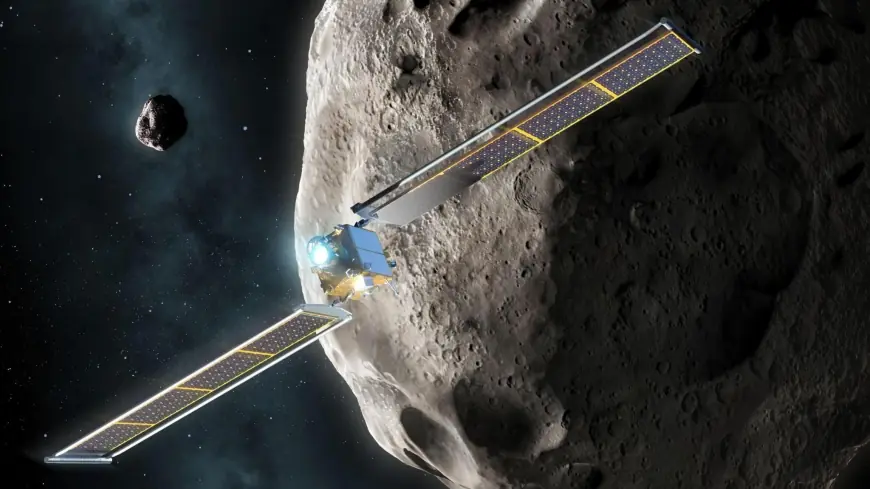
A long-retired NASA science satellite that sparked fresh online searches about a possible “crash into Earth” has already made its final descent, and the confirmed outcome was far less dramatic than some of the viral phrasing suggested.
Van Allen Probe A, a 1,323-pound spacecraft launched in 2012 to study Earth’s radiation belts, reentered the atmosphere at 6:37 a.m. ET on Wednesday, March 11. The spacecraft came down over the eastern Pacific Ocean, west of the Galapagos Islands, after solar activity sped up its orbital decay years earlier than expected.
That means the satellite did not slam into a city, strike a school or produce the kind of catastrophic ground impact that some search terms implied. Most of the spacecraft was expected to burn up during reentry, though NASA had said some components could survive the trip through the atmosphere.
Why People Were Searching for a NASA Satellite “Crashing Into Earth”
The spike in attention came after warnings that an old NASA spacecraft was about to make an uncontrolled reentry. That language often sounds more alarming than the event itself, especially when it spreads online without context.
In practical terms, uncontrolled reentry means the spacecraft was no longer being actively steered to a precise landing point. It does not automatically mean a disaster on the ground. In this case, NASA assessed the risk of harm to anyone on Earth as low, roughly 1 in 4,200, even before the spacecraft came down.
Once the reentry was confirmed Wednesday morning, the broad outline became much clearer: the mission was over, the spacecraft had descended over the Pacific, and no major populated-area impact was reported.
What Van Allen Probe A Was Built to Do
The spacecraft was part of the Van Allen Probes mission, a two-satellite NASA project launched in August 2012 to study the radiation belts that surround Earth. Those belts, known as the Van Allen belts, are filled with charged particles trapped by Earth’s magnetic field and play an important role in space weather.
The twin spacecraft operated far longer than originally planned. Although the mission was designed for about two years, the probes kept returning scientific data until 2019.
Their work helped scientists better understand how high-energy particles move and change during solar storms, how radiation near Earth can shift rapidly, and how space weather can affect satellites, astronauts and technology systems.
Why the Satellite Came Down Early
Van Allen Probe A was not expected to reenter until around 2034. Instead, it came down roughly eight years sooner.
The key reason was stronger solar activity. As the Sun became more active, Earth’s upper atmosphere expanded. That created more drag on satellites in low enough orbits, gradually pulling them closer to Earth. For an aging, fuel-depleted spacecraft like Van Allen Probe A, that extra atmospheric drag accelerated the final descent.
That same process has affected many objects in orbit during the current solar cycle, but Van Allen Probe A drew unusual attention because of its NASA connection and the way reentry warnings can quickly turn into alarmist headlines.
Did Any Debris Reach the Ground?
NASA had said before reentry that most of the spacecraft would burn up, but some pieces might survive. That is not unusual in reentry events involving heavier hardware.
As of Thursday, the confirmed public focus has been on the reentry itself rather than on any verified ground damage or injuries. The spacecraft’s descent over the eastern Pacific sharply reduced concern about harm to people or property.
That distinction matters because the phrase “satellite crash” can suggest a direct, destructive strike. What happened here was a monitored atmospheric reentry over ocean, not a confirmed disaster zone.
What Happens to the Other Van Allen Probe Now
Van Allen Probe B, the mission’s twin spacecraft, remains in orbit but is no longer operational. Its reentry is expected later, with current estimates placing that no earlier than 2030.
That means Wednesday’s event was not the end of the broader mission’s orbital story, only the end of one half of it.
For now, the main question behind the search surge has a straightforward answer. NASA’s Van Allen Probe A did return to Earth this week, but it reentered over the Pacific Ocean after nearly 14 years in space. It was a real reentry event, not the kind of populated-area crash that some of the most urgent search phrases appeared to suggest.