Sierra Leone women prisoners step out free after football-based reform support

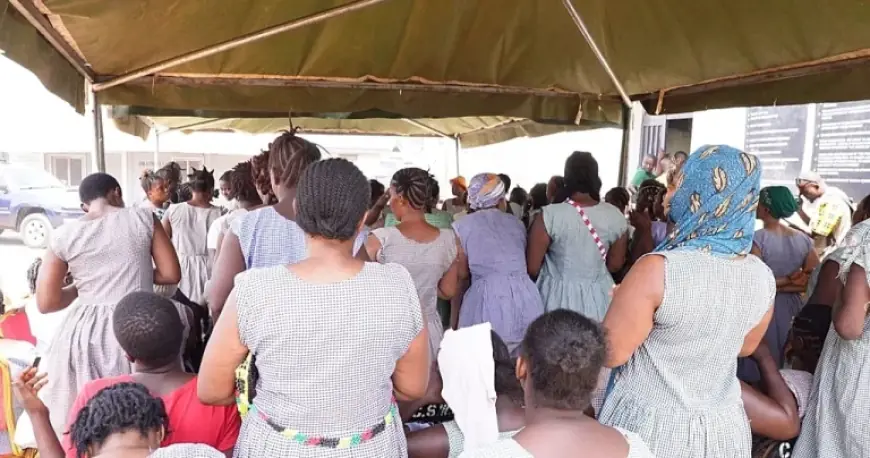
Sento, a mother of two, had been serving a one-year prison sentence until a few days ago. On International Women’s Day, her time behind bars ended, as four women were granted freedom through Sierra Leone’s Correctional Services. Their release followed an intervention tied to a programme that uses football as a tool for rehabilitation and social change.
Sento’s release inside Sierra Leone’s prison system
Sento described being arrested for loitering near a makeshift structure. She said authorities did not want anyone around the area because criminals and drug users usually sat there, and she was taken to a cell when she had no one to help. She also said her husband tried to arrange her release but could not find anyone to assist him.
Her story sits alongside three other women who were released at the same time by Sierra Leone’s Correctional Services. The moment landed on International Women’s Day, giving a defined point on the calendar to a change that, for the women involved, is measured more simply: leaving detention and returning to life outside.
Isha Johansen and the Football for Reform Initiative’s five-year push
The women’s release followed an intervention by the Football for Reform Initiative, a gender empowerment programme that uses football as a tool for social change and rehabilitation. Isha Johansen, the founder of Football for Reform, said she has had a relationship with the Freetown Women’s Correctional Center for the past five years. In that period, she said the initiative secured the release of about a hundred female inmates.
Johansen also said women held there have been able to engage in skills training while in the center, with the programme providing that support, and she expressed hope that they can gain gainful employment. She added that many of the women end up in prison simply for being in the wrong place at the wrong time.
Supporters of the initiative framed the project around compassion, rehabilitation, and the chance to reintegrate into society. Still, even that framing carries an implied test: whether the supports that start inside a correctional facility can continue once a woman walks back into the routines and demands of daily life.
Susan Baby Koker and the missing tools inside Sierra Leone Correctional Service facilities
Authorities at the Sierra Leone Correctional Service said more than 200 women are currently held in female facilities across the country, serving various fines and sentences. Within that system, Susan Baby Koker, Deputy Director General of the Sierra Leone Correctional Service, described the limits her facilities face when it comes to rehabilitation.
She said women are there to be rehabilitated, but that many of the tools to do that work are often not available. She listed items such as beads, sewing machines, plumbing machines, and carpentry machines, explaining that skills like carpentry can translate into work after release, including starting a workshop in town.
The Football for Reform initiative is now pushing for increased legal representation for women in detention across Sierra Leone. For women like Sento, the next stage is not described in court terms or programme language. It is the practical stretch after release—leaving a cell behind, carrying the story of how they got there, and stepping into whatever help is available beyond the prison gates.